
How Vaping May Affect Your Digestive System and What You Can Do About It
Acid reflux is a common digestive complaint, often associated with diet, stress, or lifestyle habits. As vaping becomes more widespread, many users begin asking the same question: Can vaping cause acid reflux? Some notice heartburn after vaping, others experience throat irritation, nausea, or a sour taste in the mouth.
While vaping is often discussed in relation to lung health, its potential impact on the digestive system is less understood. This article takes a science-based, practical look at how vaping may influence saurer Reflux, what symptoms to watch for, and whether quitting or reducing vaping could help.
Wichtigste Erkenntnisse
- Vaping may worsen acid reflux symptoms in some people, especially when nicotine is involved
- Nicotine can relax the lower esophageal sphincter, making reflux more likely
- Some heavy vapers report digestive discomfort, nausea, and throat irritation
- Reducing nicotine strength or quitting vaping may improve symptoms for certain users
- Research is ongoing, and vaping is not proven to cause GERD directly
What Is Acid Reflux?
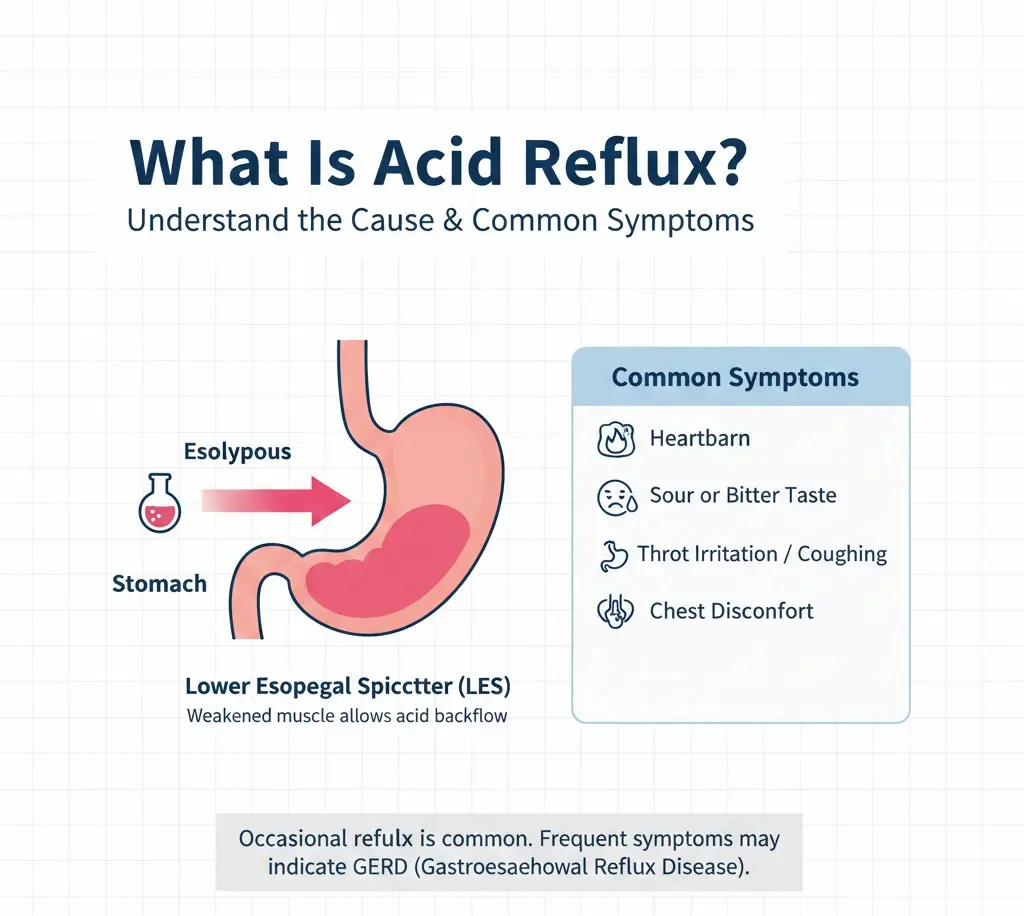
Acid reflux occurs when stomach acid flows backward into the esophagus, the tube that connects your mouth to your stomach. This backflow can irritate the esophageal lining and cause uncomfortable symptoms.
Common acid reflux symptoms include:
- Heartburn (burning sensation in the chest)
- Sour or bitter taste in the mouth
- Regurgitation of food or liquid
- Throat irritation or coughing
- Chest discomfort, especially after eating or lying down
Occasional acid reflux is common and usually not serious. However, frequent or persistent reflux may develop into gastroesophageal reflux disease (GERD), a chronic condition that requires medical management.
Can Vaping Cause Acid Reflux?
Kurze Antwort:
Vaping does not directly cause acid reflux in everyone, but it may increase the likelihood or severity of symptoms, particularly in users who vape frequently or use nicotine-containing products.
The relationship between vaping and acid reflux is still being studied. Current evidence suggests that vaping may influence reflux indirectly through nicotine effects, swallowing patterns, and irritation of the throat and esophagus.
How Nicotine From Vaping Affects Acid Reflux
Nicotine plays a central role in the connection between vaping and digestive discomfort.
Nicotine and the Lower Esophageal Sphincter (LES)
The lower esophageal sphincter is a ring-like muscle that acts as a valve between the stomach and esophagus. Its job is to stay closed after food enters the stomach, preventing acid from flowing upward.
Nicotine has been shown to:
- Relax smooth muscle tissue
- Reduce LES pressure
- Increase the chance of acid escaping into the esophagus
This same mechanism is well documented in cigarette smoking and is one reason smoking is a known risk factor for acid reflux and GERD.
Does Nicotine Increase Stomach Acid Production?
Nicotine may also stimulate gastric acid secretion. Increased acid levels, combined with a relaxed LES, create conditions where reflux is more likely to occur.
Higher nicotine concentrations and frequent vaping sessions may amplify this effect, especially in people who already experience digestive sensitivity.
Does Vaping Cause Digestive Issues Beyond Acid Reflux?
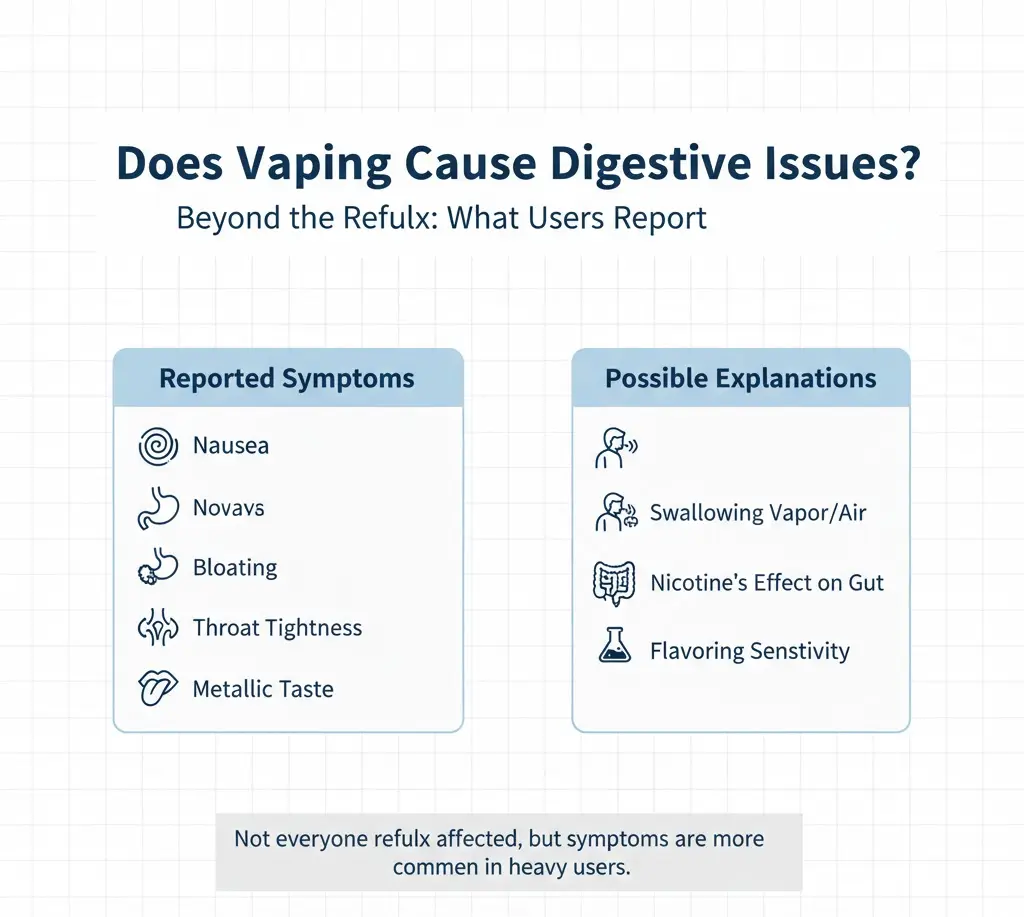
In addition to reflux symptoms, some users report other digestive complaints linked to vaping.
Reported digestive-related symptoms include:
- Übelkeit
- Stomach discomfort
- Blähungen
- Throat tightness
- Acidic or metallic taste
Possible explanations include:
- Swallowing vapor and saliva during inhalation
- Nicotine’s effect on gut motility
- Sensitivity to certain flavoring compounds
- Increased air intake during vaping, leading to bloating
Not everyone experiences these symptoms, but they appear more commonly among heavy or frequent users.
What Are the Symptoms of Vaping Too Much? (Where They Come From, and Why They Happen)
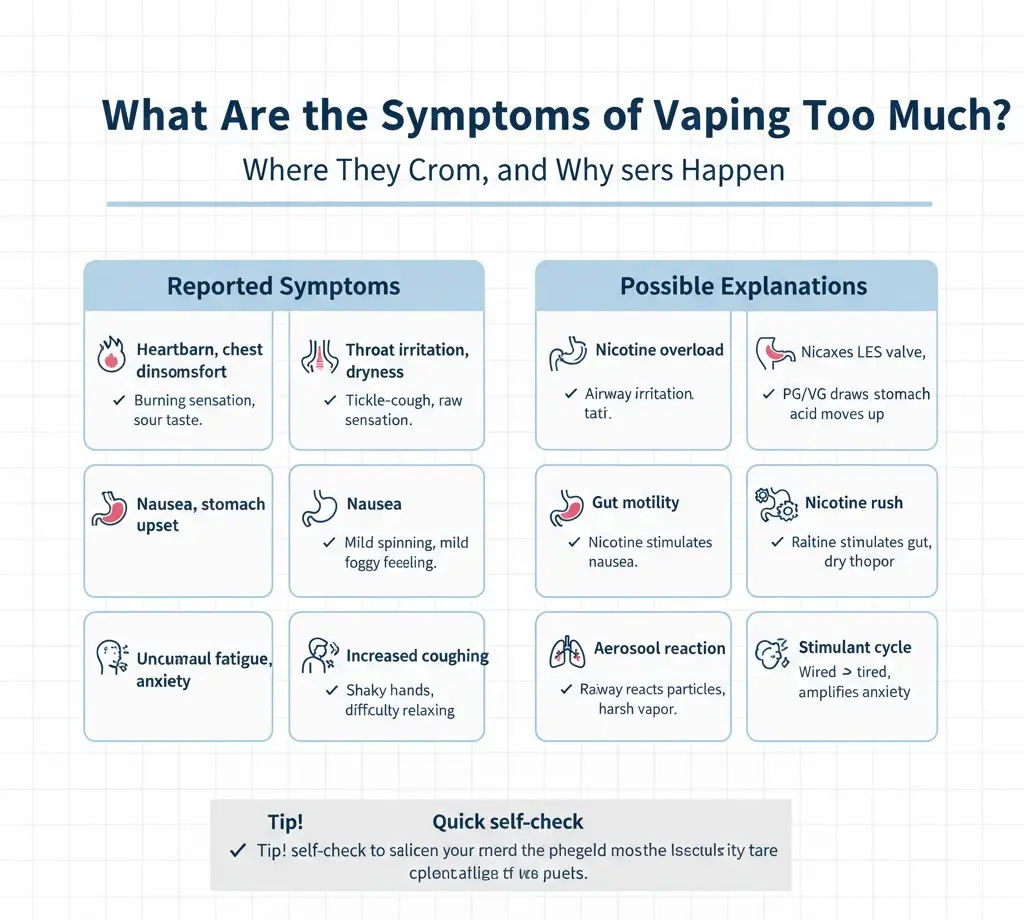
“Vaping too much” isn’t a strict number for everyone. It usually means your body is getting more nicotine and aerosol exposure than it can comfortably tolerate, especially within a short time window. The symptoms people call “over-vaping” often come from three overlapping causes:
- Nicotine overload (your nervous system and gut reacting to stimulation)
- Airway irritation (aerosol, dry throat, coughing)
- Reflux triggers (nicotine + swallowing vapor + pressure changes)
Below are the most common symptoms—and the mechanism behind each one.
1) Heartburn, chest discomfort, or a sour/acidic aftertaste
This is where vaping can overlap with acid reflux. Nicotine may relax the lower esophageal sphincter (LES)—the “valve” between your stomach and esophagus. If that valve relaxes too much, stomach contents (acid) can move upward more easily. Some users also swallow small amounts of air during frequent vaping, which may increase pressure in the stomach and promote reflux. What it feels like: burning behind the breastbone, bitter/sour taste, throat clearing, or “something coming up.”
2) Throat irritation, dryness, and frequent throat clearing
Vape aerosol is not “dry air,” but it can still create dryness and irritation because many e-liquids contain Propylenglykol (PG), which is hygroscopic (it draws moisture). Frequent inhalation, especially in dry environments or with high-PG formulas, may leave the throat feeling scratchy. What it feels like: dryness, tickle-cough, needing to clear your throat often, or a “raw” sensation.
3) Nausea, stomach upset, or a “queasy” feeling
The digestive system has many nicotine receptors. Nicotine can stimulate the autonomic nervous system and affect gut motility, which is why some people feel nauseated—especially when vaping on an empty stomach or using higher nicotine strengths. What it feels like: queasiness, mild dizziness with nausea, stomach “turning,” sometimes even sweating.
4) Headaches, dizziness, or lightheadedness
These are classic signs of nicotine overexposure for many users. Nicotine can temporarily raise heart rate and blood pressure, and it can also cause a “rush” sensation in sensitive individuals. If you’ve ever heard the phrase “nic-sick,” this is often what people mean. What it feels like: mild spinning, pressure headache, foggy feeling, or needing to sit down.
5) Increased coughing or short-term breathing irritation
Some coughing is simply your airway reacting to aerosol particles, throat dryness, or technique (strong inhales, chain vaping, or deep puffs). Also, if a device runs hotter or airflow is too tight, the vapor may feel harsher and trigger coughing. What it feels like: cough right after a hit, coughing fits, chest tightness that improves with breaks.
6) Unusual fatigue, jitteriness, or anxiety-like sensations
Nicotine is a stimulant. Too much can make you feel wired, restless, or oddly tired afterward due to the “up-then-down” cycle. For people prone to anxiety, nicotine can sometimes amplify physical symptoms like a fast heartbeat. What it feels like: shaky hands, jittery energy, difficulty relaxing, or a crash later.
Quick self-check: Is it likely “too much vaping”?
- Symptoms appear soon after vaping (minutes to an hour)
- Symptoms improve if you stop for a few hours or reduce nicotine
- Symptoms return when you chain vape or use higher-strength nicotine
Tipp: If you want to test whether nicotine is the driver, one practical approach is to reduce frequency and switch to a lower nicotine option for a few days and track symptom changes.
What Organ Is Most Affected by Vaping? (A System-by-System Explanation)
People ask, “What organ is most affected by vaping?” because vaping is inhaled, so it makes sense to start with the lungs. But vaping exposure doesn’t stop at the lungs. Nicotine and aerosol components can influence multiple body systems through absorption into the bloodstream and through local irritation.
1) Lungs and Airways (Most directly exposed)
The lungs are the first contact point. Vapor passes through the mouth and throat into the bronchial tubes and lungs. This is why the strongest and most studied effects relate to:
- airway irritation
- Husten
- mucus changes
- short-term inflammation markers
Not every user experiences noticeable symptoms, but the lungs remain the primary exposure site.
2) Heart and Blood Vessels (Nicotine-driven effects)
Nicotine can increase:
- heart rate
- blood pressure
- sympathetic nervous system activity (your “fight-or-flight” response)
That’s why heavy nicotine intake can feel like palpitations or jitters for some people. Cardiovascular effects matter most for users with existing heart risk factors.
3) Brain and Nervous System (Dependence and stimulation)
Nicotine has a strong effect on reward and learning pathways. Over time, frequent nicotine exposure can shape:
- cravings and withdrawal patterns
- concentration changes (temporary)
- irritability when not vaping
This is why dependence is a central concern: it affects behavior and usage frequency, which then affects exposure to everything else.
4) Digestive System (Indirect but relevant for reflux)
The digestive tract may be affected mainly by nicotine and technique. The main pathways include:
- Nicotine relaxes the LES (reflux mechanism)
- Nicotine stimulates gastric acid secretion (in some users)
- Swallowing vapor/air, increasing stomach pressure
- Throat and esophagus irritation from reflux episodes
So while the digestive system is not the “first” organ exposed, it can still be meaningfully impacted—especially in users already prone to reflux, gastritis, or sensitive digestion.
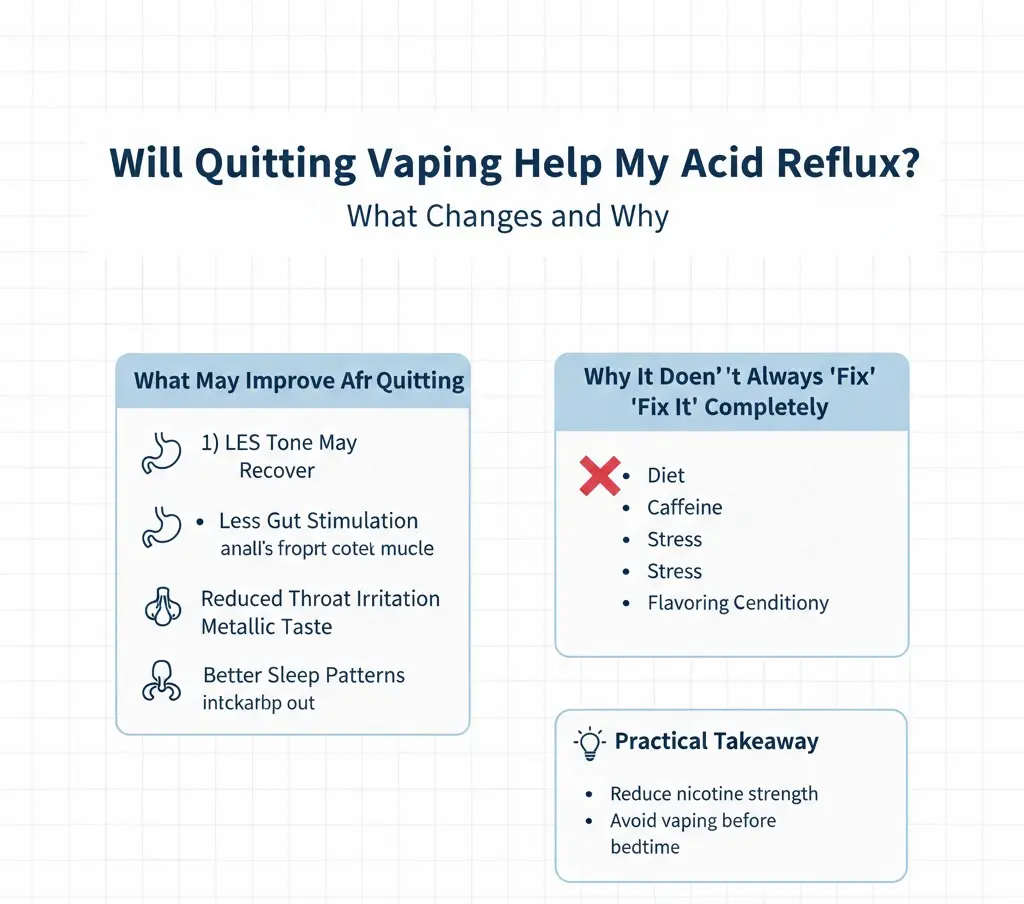
Will Quitting Vaping Help My Acid Reflux? (What Changes and Why)
If vaping is contributing to reflux symptoms, quitting—or even reducing nicotine—may help. The reason is not “detox magic,” but a series of straightforward physiological shifts that can happen when nicotine exposure drops.
What may improve after quitting or reducing vaping
1) LES tone may recover
If nicotine was relaxing your LES, reducing nicotine may allow that sphincter to maintain better closure. A stronger LES generally means less backflow into the esophagus.
2) Less stimulation of stomach acid and gut motility
Some people find that after cutting nicotine, they have fewer episodes of “acid surge,” nausea, or stomach irritation, particularly if they were vaping on an empty stomach or using high nicotine strengths.
3) Reduced throat irritation and less throat-clearing
Even if reflux has multiple causes, reducing airway dryness and irritation can make symptoms feel less severe. Many people confuse reflux with “throat irritation,” and the two can reinforce each other.
4) Better sleep patterns (which helps reflux)
Late-night vaping can worsen reflux because reflux tends to get worse when you lie down. Quitting helps if it also reduces the habit of vaping near bedtime.
Why quitting doesn’t always “fix it” completely
Acid reflux is often multi-factorial. Even if vaping plays a role, symptoms may still persist due to:
- diet triggers (spicy, fatty, acidic foods)
- caffeine or alcohol
- Stress
- weight changes
- hiatal hernia or existing GERD
Practical takeaway: If symptoms improve significantly after reducing nicotine or stopping vaping, that suggests vaping was a meaningful contributor—even if it wasn’t the only cause.
Tipp: If you’re not ready to quit entirely, a structured reduction plan often works better than “randomly vaping less.” For example:
- Reduce nicotine strength by one step
- Avoid vaping within 2–3 hours of bedtime
- Slow down frequency (space sessions out)
- Stay hydrated and monitor triggers
Other Factors That Can Worsen Acid Reflux in Vapers
It’s important not to blame vaping alone. Acid reflux is influenced by many lifestyle factors.
Common reflux triggers include:
- Spicy, fatty, or acidic foods
- Alcohol and caffeine
- Late-night vaping or eating
- Lying down shortly after vaping
- Stress and anxiety
- High-nicotine e-liquids
When several of these factors combine, symptoms may become more noticeable.
How to Reduce Acid Reflux Symptoms If You Vape
If you vape and experience reflux, small adjustments may help reduce discomfort.
Practical tips:
- Verringern Sie Ihre Nikotinstärke
- Avoid vaping before bedtime
- Stay upright for at least 30 minutes after vaping
- Drink water to reduce throat dryness
- Take breaks between vaping sessions
- Pay attention to flavors that worsen symptoms
These steps are not medical treatment, but many users find they help manage mild symptoms.
Vaping vs Smoking: Acid Reflux Risk Comparison
Smoking has a stronger, well-established link to acid reflux and GERD due to:
- Higher nicotine intake
- Combustion toxins
- Chronic irritation of the esophagus
Vaping may reduce exposure to some harmful byproducts of smoking, but nicotine remains a shared risk factor for reflux symptoms.
When Should You See a Doctor?
Seek medical advice if you experience:
- Persistent heartburn
- Chest pain not clearly related to reflux
- Difficulty swallowing
- Symptoms lasting more than 2–3 weeks
- Vomiting or unexplained weight loss
These symptoms may indicate a more serious digestive condition that requires professional evaluation.
Final Thoughts: Can Vaping Cause Acid Reflux?
Vaping is not proven to directly cause acid reflux, but evidence suggests it may worsen symptoms in some individuals, particularly due to nicotine’s effects on the digestive system.
Key points to remember:
- Nicotine can relax the esophageal valve
- Digestive responses vary between users
- Reducing or quitting vaping may help some people
- Langfristige Forschung ist erforderlich
Understanding your body’s response and making informed adjustments can help reduce discomfort and improve overall well-being.
Häufig gestellte Fragen (FAQ)
Can vaping cause acid reflux?
Vaping may worsen acid reflux symptoms in some people, especially due to nicotine’s effect on the esophagus.
Does vaping cause digestive issues?
Some users report nausea, bloating, or stomach discomfort, particularly with high nicotine intake.
Will quitting vaping help acid reflux?
For certain individuals, reducing or quitting vaping may improve reflux symptoms.
What organ is most affected by vaping?
The lungs are most affected, but the digestive system may also be impacted indirectly.
Is nicotine the main cause of reflux from vaping?
Nicotine appears to be the primary contributor, though other factors like swallowing vapor and flavor sensitivity may play a role.、
Sie können mehr lesen
Wie man Vape-Tricks macht (Schritt-für-Schritt-Anleitung für Anfänger)
Wie man ein Vape inhaliert: Lernen Sie den richtigen Weg, um sicher und reibungslos zu verdampfen
Lösen Vapes Rauchalarme aus? Ein klarer und einfacher Leitfaden