
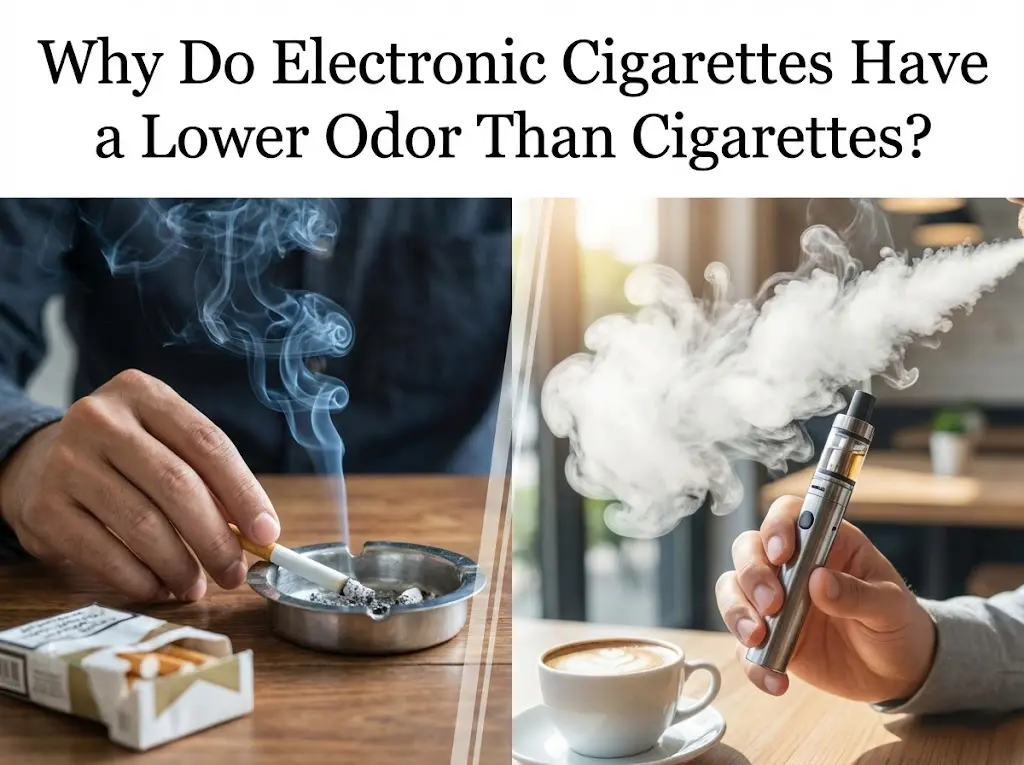
Los cigarrillos electrónicos, o vapes, se han convertido en alternativas populares al tabaquismo tradicional. Una de las observaciones más comunes es que vaporizar tiende a producir mucho menos olor que fumar cigarrillos. Para muchas personas que se pasan al vapeo, el olor más ligero y sutil es una gran ventaja, sobre todo cuando se vapea en espacios públicos o con otras personas. Pero, ¿por qué el vapor de los cigarrillos electrónicos tiene un olor tan diferente al del humo de los cigarrillos tradicionales?
En este artículo, analizaremos por qué los cigarrillos electrónicos desprenden un olor más bajo, la ciencia que lo sustenta y cómo se compara con el fuerte y persistente olor del humo de los cigarrillos.
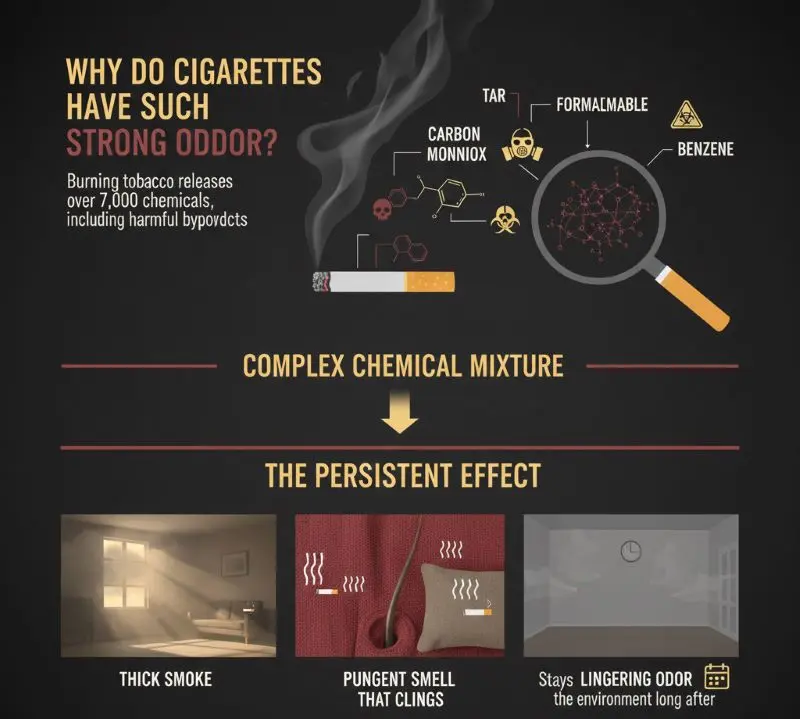
¿Por qué los cigarrillos tienen un olor tan fuerte?
El humo de los cigarrillos está compuesto por una compleja mezcla de sustancias químicas que se liberan al quemar el tabaco. Cuando se enciende un cigarrillo, el proceso de combustión produce más de 7.000 sustancias químicas, incluidos subproductos nocivos como:
- Alquitrán
- Monóxido de carbono
- Formaldehído
- Benceno
Estas sustancias químicas son las principales responsables del intenso olor que desprenden los cigarrillos. Cuando el tabaco se quema, libera estas sustancias en el aire, creando:
- Humo espeso que puede verse perdurar en el aire
- Olor áspero y penetrante que se pega a la ropa, el pelo y las superficies
- Olor persistente que permanece en el ambiente mucho tiempo después de haber fumado el cigarrillo
Debido al proceso de combustión, que genera reacciones químicas, el humo de los cigarrillos es muy concentrado y permanece durante mucho tiempo. Por eso el humo de los cigarrillos tiene un olor tan fuerte y desagradable.
¿Por qué Cigarrillos electrónicos ¿Tiene menos olor?
A diferencia de los cigarrillos, los cigarrillos electrónicos no implican combustión. En su lugar, vaporizan un líquido (e-líquido) que contiene nicotina y aromas. El proceso de vaporización es muy diferente al de la combustión, y esta es la razón clave por la que los cigarrillos electrónicos tienen un olor significativamente menor en comparación con los cigarrillos tradicionales.
He aquí por qué el vapor del cigarrillo electrónico produce un aroma mucho más ligero:
1. Sin combustión, sin subproductos nocivos
Cuando se quema un cigarrillo, los subproductos químicos que libera, como el alquitrán y el monóxido de carbono, son muy olorosos y duraderos. Sin embargo, con los cigarrillos electrónicos no se produce combustión. En su lugar, el e-líquido se calienta y se convierte en vapor.
Como resultado:
- El vapor de los cigarrillos electrónicos contiene menos sustancias químicas nocivas que el humo de los cigarrillos.
- No hay alquitrán ni monóxido de carbono en el vapor del cigarrillo electrónico, lo que hace que el vapor sea menos áspero y más agradable.
El vapor producido por un cigarrillo electrónico es mucho más limpio porque se vaporiza a temperaturas más bajas, lo que reduce la producción de sustancias químicas de olor fuerte. La ausencia de combustión es la razón por la que los cigarrillos electrónicos tienden a tener un olor más suave y menos persistente en comparación con el tabaco.
2. Vapor más limpio y controlado
Los cigarrillos electrónicos están diseñados para producir un vapor más limpio porque los ingredientes están específicamente diseñados para vaporizar a temperaturas más bajas.
Como resultado:
- Las sales de nicotina y las mezclas PG/VG crean un vapor suave y ligero, lo que reduce significativamente la acritud del aroma en comparación con el tabaco de combustión.
- Los componentes del e-líquido, como el PG y el VG, son inodoros por naturaleza o tienen un olor mínimo en comparación con la compleja mezcla de subproductos que se liberan durante la combustión de los cigarrillos.
3. Liberación química limitada
Los cigarrillos electrónicos sólo vaporizan líquidos que contienen nicotina y aromatizantes. Dado que los e-líquidos no producen las reacciones químicas asociadas a la combustión, la liberación de subproductos de fuerte olor es limitada.
Por el contrario, los cigarrillos liberan miles de sustancias químicas en el aire debido a la combustión del tabaco, creando un olor penetrante que se adhiere a las superficies y persiste durante horas.
4. Sin olor a tabaco
Los cigarrillos tienen un marcado olor a tabaco, que es uno de los principales responsables de su fuerte olor. Los cigarrillos electrónicos no contienen tabaco real, sólo aromas de tabaco. Por este motivo, los cigarrillos electrónicos no desprenden el fuerte olor a tierra asociado a los cigarrillos tradicionales. En cambio, producen un olor mucho más sutil y menos perceptible.
Factores que contribuyen al menor olor de los cigarrillos electrónicos
Varios factores contribuyen a reducir el olor producido por los cigarrillos electrónicos:
1. Composición de PG y VG
Los dos ingredientes principales del e-líquido, el propilenglicol (PG) y la glicerina vegetal (VG), son responsables de muchas de las diferencias de aroma entre los cigarrillos electrónicos y el tabaco tradicional.
- PG: Conocido por su capacidad para transportar el sabor, el PG produce un golpe de garganta más agudo y un vapor más fino. Crea un sabor más pronunciado y una sensación más fuerte en la garganta, pero su olor suele ser más suave que el del humo.
- VG: El VG produce nubes de vapor más gruesas y grandes y una experiencia más suave y menos áspera. La dulzura y suavidad del VG suavizan aún más el aroma del vapor, haciéndolo menos intenso que el humo del cigarrillo.
El equilibrio de PG y VG en el e-líquido determina la densidad del vapor, la suavidad de la inhalación y el olor general producido.
2. E-líquido Aromatizante
Los e-líquidos suelen contener aromas alimentarios como fruta, menta, caramelo e incluso tabaco. Estos aromas pueden ser más suaves y dulces que el fuerte y terroso olor a tabaco que desprenden los cigarrillos encendidos.
Por ejemplo:
- Los e-líquidos con sabor a fruta producen un aroma dulce y fresco.
- Los e-líquidos de menta y mentol proporcionan un aroma fresco y refrescante.
- Los e-líquidos con sabor a tabaco suelen tener un aroma suave y terroso.
Los aromas utilizados en los e-líquidos suelen ser menos agresivos que el amargor ahumado del tabaco encendido.
3. Sales de nicotina frente a nicotina libre
Las sales de nicotina son otro factor clave para reducir el olor del vapor del cigarrillo electrónico. Las sales de nicotina son más suaves y producen menos irritación en la garganta, lo que resulta en una experiencia más suave con un olor menos perceptible.
En comparación, la nicotina de base libre, que se utiliza normalmente en los e-líquidos de mayor potencia, puede producir un golpe de garganta más fuerte, contribuyendo a un aroma de vapor más notable.
Las sales de nicotina también se absorben más rápidamente en el torrente sanguíneo, proporcionando una experiencia de vapeo más suave con menos olor persistente.
4. Densidad y dispersión del vapor
Los cigarrillos electrónicos suelen producir nubes de vapor más pequeñas y concentradas que los cigarrillos. El humo del cigarrillo es más grande y más visible, y tiende a permanecer en el aire durante mucho más tiempo.
En cambio, el vapor del cigarrillo electrónico es mucho más ligero y se dispersa más rápidamente en el aire circundante.
Dado que el vapor de los cigarrillos electrónicos es menos denso y no permanece en el aire tanto tiempo como el humo de los cigarrillos, se percibe como menos oloroso.

¿El vapor del cigarrillo electrónico no tiene olor?
Aunque el vapor del cigarrillo electrónico tiene menos olor que el humo del cigarrillo, sigue produciendo un olor suave. La intensidad del olor variará en función del sabor del e-líquido. Por ejemplo:
- Los sabores mentolados tienen un aroma fresco y mentolado.
- Los sabores frutales como el mango o las bayas producen una fragancia dulce y afrutada.
- Los sabores a tabaco suelen tener un aroma suave y terroso.
Aunque el olor del vapor del cigarrillo electrónico suele ser menos intrusivo que el del humo del tabaco, puede ser detectable, sobre todo en espacios cerrados.
¿Por qué se percibe el vapeo como menos oloroso?
El vapeo se percibe como menos oloroso por varias razones:
- La ausencia de combustión se traduce en menos subproductos nocivos como el alquitrán, el monóxido de carbono y otras sustancias químicas presentes en el humo de los cigarrillos.
- Las nubes de vapor más pequeñas hacen que el vapor se disperse más rápidamente y no permanezca tanto tiempo como el humo del cigarrillo.
- Los sabores utilizados en los e-líquidos son generalmente más agradables y menos abrumadores que el aroma áspero y ahumado de los cigarrillos.
Cómo minimizar el olor a vapor
Aunque los cigarrillos electrónicos producen menos olor que los cigarrillos, todavía hay formas de minimizar aún más el olor:
- Elija líquidos con mayor VG para obtener un vapor más suave y menos picante.
- Vapea en zonas bien ventiladas para que el vapor se disperse rápidamente.
- Utiliza sistemas de cápsulas discretos con un flujo de aire ajustado para reducir la producción de vapor.
- Limpie el aparato con regularidad para evitar la acumulación de residuos, que puede aumentar el olor.
Perspectivas de la FDA y los CDC sobre el olor de los cigarrillos electrónicos
Tanto la FDA como CDC reconocen que, aunque los cigarrillos electrónicos producen menos sustancias químicas nocivas que el tabaco, no están exentos de riesgos. Los CDC afirman que el aerosol de los cigarrillos electrónicos puede contener sustancias nocivas, aunque menos que el humo de los cigarrillos.
El FDA también reconoce que los cigarrillos electrónicos contienen nicotina, que es adictiva, y aunque pueden ayudar a reducir la exposición a las sustancias químicas nocivas del humo de los cigarrillos, siguen entrañando riesgos para la salud.
⭐ FAQ - Olor de los cigarrillos electrónicos
1. ¿Por qué los cigarrillos electrónicos huelen menos que los cigarrillos?
Los cigarrillos electrónicos no queman tabaco, sino que vaporizan un líquido, por lo que producen menos sustancias químicas y un olor más sutil.
2. ¿Pueden los cigarrillos electrónicos no tener olor?
No, los cigarrillos electrónicos siguen teniendo un ligero olor basado en el sabor del e-líquido, pero generalmente es menos perceptible que el humo del cigarrillo.
3. ¿Afecta la nicotina de los e-líquidos al olor?
La nicotina en sí no contribuye mucho al olor, pero las formulaciones de sales de nicotina tienden a producir un vapor más suave con un olor menos perceptible.
4. ¿Cómo afectan los aromas de los cigarrillos electrónicos al olor?
Los aromatizantes del e-líquido, como la fruta o el mentol, pueden crear aromas agradables pero menos penetrantes que el áspero olor del humo del tabaco.
5. ¿Permanece el vapor del cigarrillo electrónico como el humo del tabaco?
No, el vapor del cigarrillo electrónico se dispersa más rápido que el humo del cigarrillo y no se pega a la ropa, el pelo o los muebles.
6. ¿Puedes reducir el olor de tu vape?
Sí, utiliza líquidos de mayor VG, vapea en espacios bien ventilados y opta por sistemas de cápsulas discretos con un flujo de aire más ajustado.
SnagVape: Marca recomendada para Smooth Nic Salt E-Liquids
Si busca un experiencia de vapeo inspirada en el tabaco que proporciona un golpe de garganta realista, suave tracción MTLy sabor sutil, SnagVape ofrece una gama de vaporizadores desechables de alta calidad. Sus dispositivos se centran en ofrecer una experiencia satisfactoria con bajo olorpor lo que son ideales para quienes están dejando de fumar.
Más información
¿Cuáles son los componentes del e-líquido del cigarrillo electrónico? (Guía científica completa)
¿Es malo fumar para la piel? Una guía sencilla y clara para vapeadores
¿Causa el vapeo hemorragias nasales? Una guía clara y sencilla