
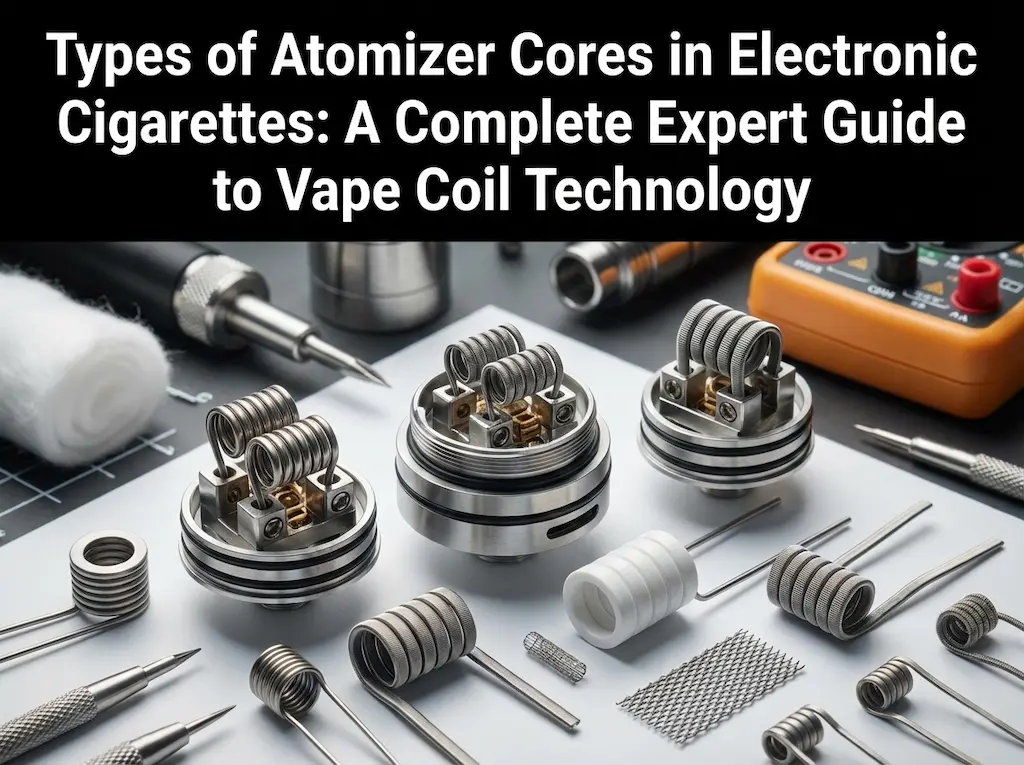
Il nucleo dell'atomizzatore, comunemente conosciuto come svapare bobina-è il componente più critico di una sigaretta elettronica. Trasforma l'energia elettrica in calore, vaporizzando l'e-liquid e determinando l'intensità del sapore, la produzione di vapore, il colpo in gola e l'esperienza complessiva.
Sebbene le bobine di vaporizzazione possano sembrare semplici dall'esterno, la loro architettura interna e i meccanismi di riscaldamento variano notevolmente. Di seguito riportiamo una panoramica professionale dei principali tipi di nucleo dell'atomizzatore utilizzati nei moderni dispositivi di vaping.
1. Come funzionano i nuclei dell'atomizzatore
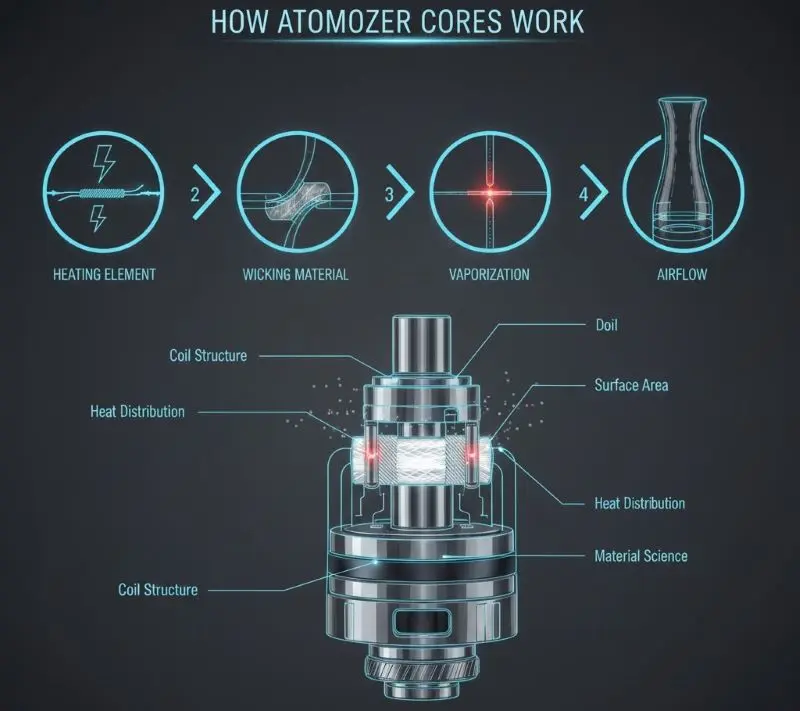
Tutte le bobine da svapo seguono lo stesso processo fondamentale:
- A elemento riscaldante (filo o rete) genera calore quando l'elettricità lo attraversa.
- A materiale traspirante (cotone, ceramica o quarzo) assorbe l'e-liquid.
- L'elemento riscaldante vaporizza il liquido sullo stoppino.
- Il flusso d'aria trasporta il vapore verso l'utente.
Tuttavia, l'efficienza di questo processo - e il suo sapore - dipende in larga misura dalla struttura della bobina, dall'area superficiale, dalla distribuzione del calore e dalla scienza dei materiali.
2. Confronto tra esperti dei tipi di nucleo dell'atomizzatore
Di seguito è riportato un confronto a livello di motore su come è costruito ciascun nucleo, come si riscalda, come si avvolge il liquido e per quale stile di vaping è più adatto.
Tabella comparativa delle bobine professionali
| Tipo di bobina | Principio di funzionamento | Comportamento di riscaldamento | Wicking e flusso di liquidi | Precisione del sapore | Il migliore per |
| Bobina di cotone | Il filo metallico riscalda l'e-liquid saturo di cotone. | Calore localizzato, rischio di punti caldi. | Buona azione capillare, ma il cotone può bruciare se secco. | Sapore caldo e tradizionale; diminuisce con la degradazione del cotone. | Cialde ricaricabili, vaping MTL, uso quotidiano di e-liquid. |
| Bobina a maglia | Buona azione capillare, ma il cotone può bruciare se secco. | Riscaldamento ultra-uniforme, rapido ramp-up. | Contatto eccellente → traspirazione rapida e costante. | Aroma pulito e intenso con elevata produzione di vapore. | Cialde moderne, serbatoi sub-ohm, prodotti usa e getta. |
| Bobina in ceramica | La ceramica porosa assorbe il liquido; il filo incorporato si riscalda dall'interno. | Riscaldamento lento e controllato; temperatura stabile. | Molto stabile; ideale per liquidi densi o ad alta viscosità. | Gusto puro e pulito; durata massima. | Cialde di sale di nicchia, dispositivi a olio, prodotti monouso premium. |
| Bobina di quarzo | Un filo avvolto intorno a una barra di quarzo che si riscalda molto velocemente. | Picchi di temperatura altissimi; calore istantaneo. | Scarso per i liquidi densi; migliore per i concentrati. | Vapore intenso e tagliente, non così morbido. | Penne di cera, atomizzatori speciali. |
| Bobine di filo metallico (Kanthal, SS, Ni80) | Proprietà di riscaldamento specifiche del materiale (resistenza e ramp-up). | Kanthal = stabile; SS = capace di modalità TC; Ni80 = veloce e scorrevole. | Dipende dal tipo di stoppino. | Il materiale influisce sul calore e sulla densità del vapore. | Serbatoi avanzati, costruzioni personalizzate, dispositivi TC. |
| Bobine MTL ad alta resistenza | Flusso d'aria ristretto; area di riscaldamento ridotta. | Vaporizzazione controllata a bassa temperatura. | Funziona meglio con gli e-liquid più sottili. | Disegno stretto, esperienza simile alla sigaretta. | Fumatori in transizione, dispositivi a base di sale di nicchia. |
| Bobine sub-ohm DTL | Ampio flusso d'aria, grande area di riscaldamento. | Calore elevato; produzione di vapore denso. | Richiede un'efficace traspirazione (si consiglia la rete). | Gusto intenso e grandi nuvole. | Un e-liquido ad alto contenuto di glicerina, che fa correre le nuvole. |
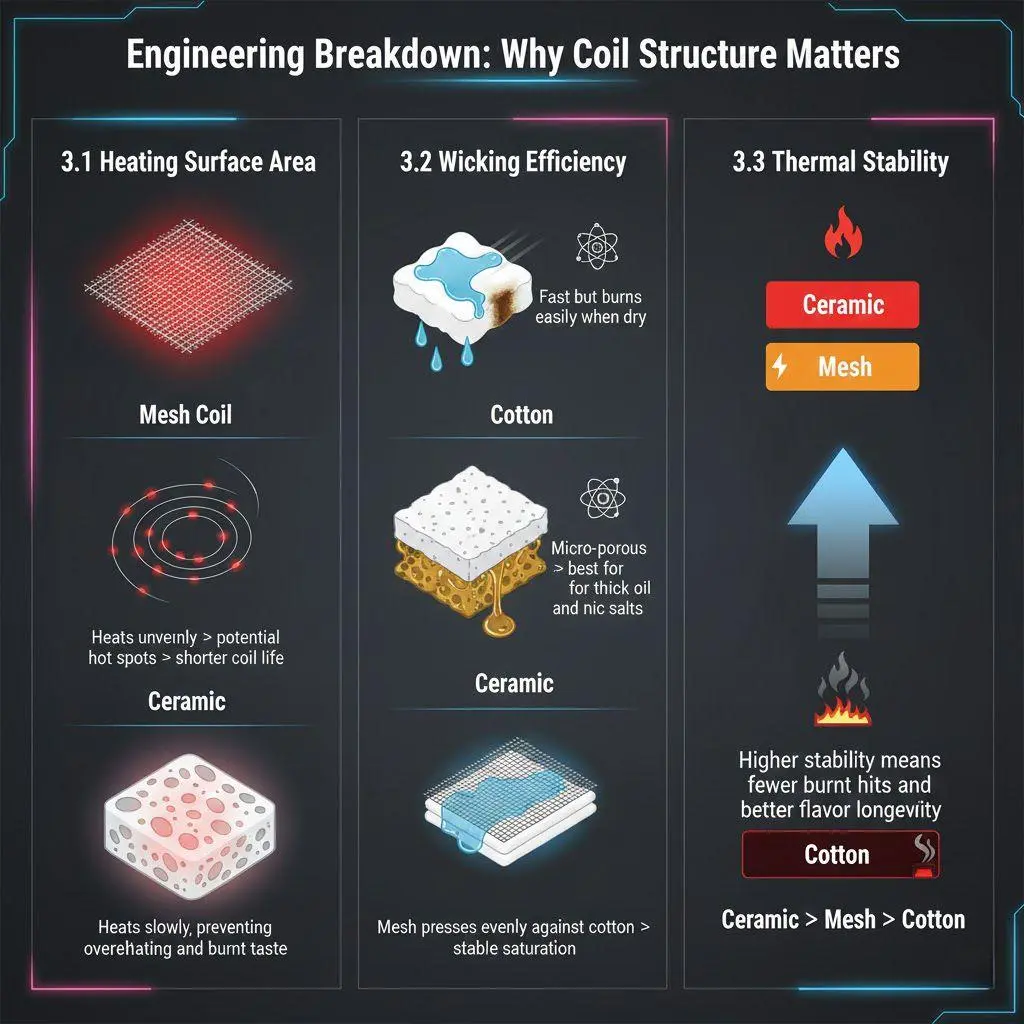
3. Analisi ingegneristica: Perché la struttura della bobina è importante
3.1 Superficie di riscaldamento
- Bobine a rete offrono la massima superficie → sapore più intenso, maggior quantità di vapore.
- Bobine di filo calore non uniforme → potenziali punti caldi → minore durata della bobina.
- Ceramica si riscalda lentamente, evitando il surriscaldamento e il sapore di bruciato.
3.2 Efficienza di traspirazione
- Cotone è veloce, ma brucia facilmente quando è asciutto.
- Ceramica è microporoso → migliore per oli densi e sali nic.
- Maglia preme uniformemente sul cotone → saturazione stabile.
3.3 Stabilità termica
- Ceramica > Rete > Cotone. Una maggiore stabilità si traduce in un minor numero di bruciature e in una maggiore longevità del sapore.
4. Come scegliere il giusto tipo di bobina (Guida alla selezione degli esperti)
Selezione del corretto tipo di bobina dipende da diversi fattori tecnici: comportamento di riscaldamento, efficienza del wicking, design del flusso d'aria, viscosità dell'e-liquid e interazione preferita tra temperatura e composti aromatici. Di seguito è riportata una guida professionale per aiutare gli utenti o i produttori a determinare l'architettura della bobina più adatta ai loro obiettivi di prestazioni.
1. Scegliere in base alla precisione e alla consistenza del sapore
Il migliore per un sapore ad alta fedeltà: Bobina a maglia
Le bobine a rete offrono una distribuzione uniforme del calore senza punti caldi, consentendo una vaporizzazione più completa dei composti aromatici. Consigliato quando:
- L'accuratezza del sapore è la priorità assoluta
- Si desidera un gusto stabile dalla prima all'ultima boccata.
- Lavorare con formulazioni ad alto contenuto di VG o ricche di aromi
2. Scegliere in base alla longevità e alla stabilità termica
Ideale per prestazioni pulite e durature: Bobina in ceramica
La ceramica garantisce un riscaldamento controllato e resiste alla degradazione. Consigliato quando:
- Avete bisogno di una durata prolungata per i sistemi monouso o ad alto volume
- Lavorare con oli ad alta viscosità
- Volere una riduzione del rischio di bruciature a secco
3. Scegliere in base alla sensazione di vapore tradizionale
Il migliore per la "risposta classica della bobina": Bobina di cotone (bobina di filo)
Le strutture in filo + cotone forniscono una firma di vapore più calda e densa. Consigliato quando:
- L'obiettivo del progetto è la prestazione tradizionale
- Preferite la vaporizzazione guidata dal calore
- Lavorare con formulazioni standard di e-liquid
4. Scegliere in base allo stile di vaping (MTL vs DTL)
Per un'estrazione simile alla sigaretta: Bobine MTL ad alta resistenza
Queste bobine limitano il flusso d'aria e l'emissione di vapore per un profilo di inalazione più stretto. Ideale per:
- Dispositivi destinati agli utenti in transizione
- Formulazioni di sali di nicotina
- Sistemi a bassa potenza
Per una grande produzione di vapore: Bobine a maglia sub-ohm DTL
L'ampio flusso d'aria e la bassa resistenza consentono una produzione di vapore denso. Ideale per:
- Dispositivi incentrati sul cloud
- Liquidi ad alto contenuto di grassi
- Piattaforme ad alta potenza
5. Sintesi
I nuclei degli atomizzatori sono il cuore di ogni sigaretta elettronica e il loro design determina direttamente il sapore, il vapore, la scorrevolezza e la qualità complessiva. I dispositivi moderni privilegiano ormai maglia e ceramica per la loro efficienza e stabilità, mentre le bobine di cotone e filo rimangono popolari nei sistemi ricaricabili tradizionali.
Comprendendo il funzionamento di ciascuna bobina, dalla distribuzione del calore al comportamento del wicking, produttori, rivenditori e consumatori possono fare scelte più intelligenti in termini di prestazioni, sicurezza e soddisfazione dell'utente.
6. FAQ - Tipi di nucleo dell'atomizzatore per sigarette elettroniche
1. Quale nucleo di atomizzatore offre il miglior aroma?
Le bobine a rete offrono generalmente il miglior sapore grazie all'ampia superficie di riscaldamento e alla distribuzione uniforme della temperatura. Riscaldano in modo uniforme e prevengono i punti caldi, dando luogo a profili di gusto più ricchi e accurati.
2. Perché le bobine in ceramica durano più a lungo di quelle in cotone?
La ceramica è un materiale stabile alle alte temperature che non si degrada rapidamente. A differenza del cotone, che può bruciare o caramellare, la ceramica mantiene la sua integrità anche in caso di continui cicli di riscaldamento, garantendo una durata superiore e una maggiore consistenza del sapore.
3. Cosa provoca il sapore di bruciato nelle bobine da svapo?
Di solito il sapore di bruciato deriva da:
- L'e-liquid non raggiunge sufficientemente lo stoppino
- Asciugatura del cotone
- Potenza eccessiva
- Punti caldi sulle bobine a filo tradizionali
Le bobine in mesh e ceramica riducono significativamente i colpi bruciati grazie a una migliore gestione del calore.
4. Le bobine MTL sono migliori per gli e-liquid a base di sali di nicotina?
Sì. Le bobine ad alta resistenza MTL controllano la temperatura del vapore e il flusso d'aria, consentendo un'erogazione più fluida delle formulazioni a base di sale.
5. Quale bobina è migliore per gli oli densi o i liquidi ad alta viscosità?
Le bobine in ceramica sono ideali per le applicazioni con olio denso, perché la loro struttura microporosa garantisce un flusso costante senza bruciature.
Per saperne di più
Il vaping fa male alla pelle? Una guida semplice e chiara per i vapers
Sigarette elettroniche monouso vs sigarette elettroniche ricaricabili