
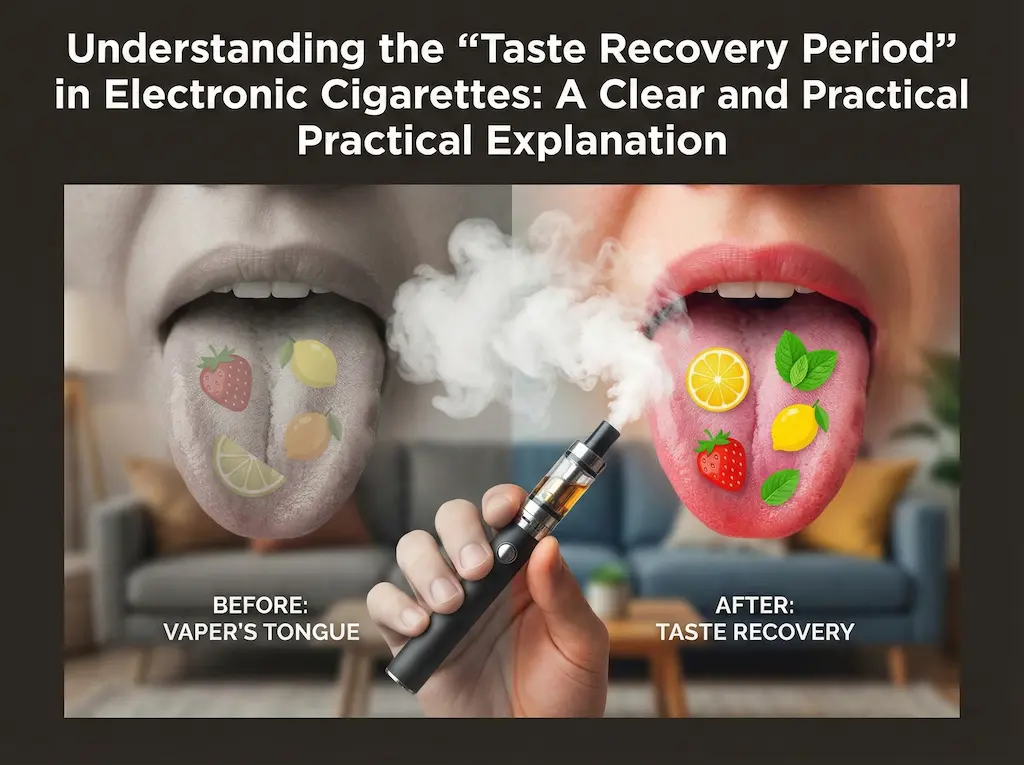
När människor använder en ny elektronisk cigarett eller byter ut atomkärnan (coil) märker de ofta att de första blossen inte smakar så rikt eller smidigt som förväntat. Detta tidiga skede är känt som "Smaka på återhämtningsperioden."
Även om det kan verka som en liten detalj, återspeglar det en viktig intern process inom atomiseringssystemet. Att förstå hur denna period bildas hjälper användare, granskare och tillverkare att bättre utvärdera spolens prestanda.
1. Vad är smakåterhämtningsperioden?
Smakåterhämtningsperioden är den korta fas där en helt ny spole ännu inte har nått sin bästa smakprestanda.
Under denna tid kan ångan smaka:
- Ljus
- Något grov
- Inkonsekvent
Detta är inte ett funktionsfel. Det är helt enkelt spolen som når sitt avsedda drifttillstånd.
Tips: Om den tidiga smaken känns svag betyder det ofta att systemet har ännu inte nått full mättnad eller termisk balans. Detta är ett förväntat beteende.

2. Varför bildas perioden för smakåterhämtning?
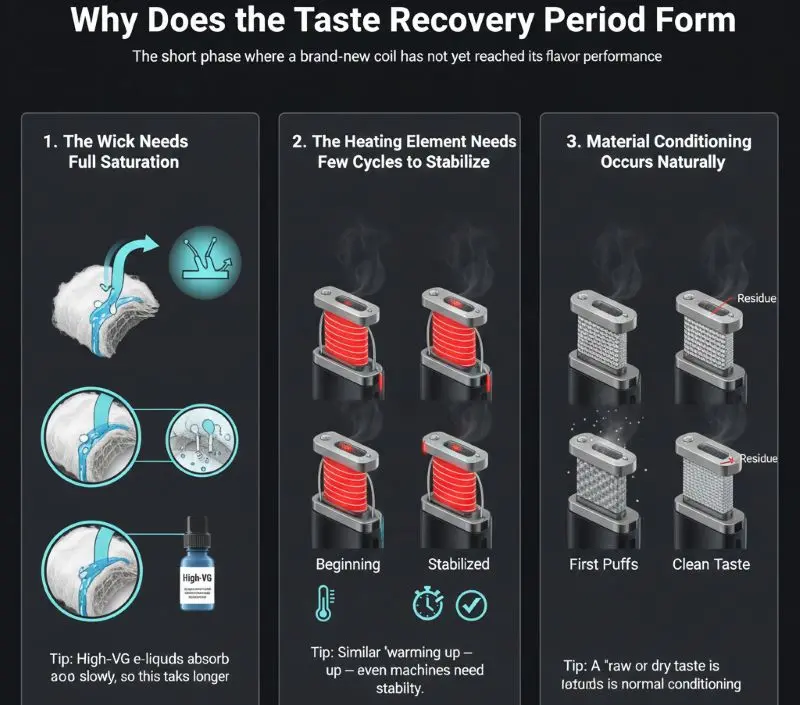
Bildandet av denna period beror huvudsakligen på tre enkla men viktiga mekanismer:
1. Veken behöver full mättnad
Alla coils innehåller en veke (bomull eller keramik). När coilen är ny är denna veke helt torr.
Det tar tid för:
- vätska för att nå centrum
- inre fibrer för att expandera fullt ut
- Hela veken ska börja mata vätska jämnt
Utan full mättnad kan smaken inte uttryckas fullt ut.
Tips: E-vätskor med hög VG absorberas långsammare, så smakåterhämtningsperioden tar naturligtvis längre tid.
2. Värmeelementet behöver några cykler för att stabilisera sig
Värmetrådar eller nät uppnår inte omedelbart en jämn temperatur.
I början kan olika områden värmas upp ojämnt, vilket leder till instabil smakproduktion.
När värmen sprids jämnt blir förångningen jämn och smaken förbättras dramatiskt.
Tips: Det här steget liknar "uppvärmning" - även maskiner behöver en stabil utgångspunkt.
3. Materialets konditionering sker naturligt
Nya spolar kan innehålla mikroskopiska rester från tillverkningen.
Under de första aktiveringarna brinner dessa rester av eller stabiliseras.
Efter detta blir smaken märkbart renare.
Tips: En mycket "rå" eller "torr" smak i de första puffarna kommer ofta från denna normala konditioneringsprocess.
3. Hur lång tid tar återhämtningsperioden för smak?
Olika spolstrukturer kräver olika stabiliseringstider:
- Spolar med nät: 2-10 puffar
- Bomullsspolar: 5-20 puffar
- Keramiska spolar: 10-30 puffar
Den faktiska varaktigheten beror på:
- e-vätskans tjocklek
- veke material
- Effektinställningar
- luftflödesdesign
4. Har alla elektroniska cigaretter en återhämtningsperiod för smak? (Tabellversion)
Nedan följer en tydlig jämförelse av olika typer av enheter och huruvida de visar en märkbar smakåterhämtningsperiod.
Tabell: Smakåtervinningsbeteende i olika Atomizer-typer
| Typ av enhet/spole | Förekommer smakåterhämtning? | Varför det händer / Hur märkbart det är |
| Mesh-spole enheter | Ja, men mycket kort | Nätet värms jämnt och mättar snabbt; smaken stabiliseras efter några puffar. |
| Bomullstrådspolar Apparater | Ja, måttligt | Bomull behöver tid för att helt absorbera vätska; värmen stabiliseras långsamt. |
| Keramiska spoleenheter | Ja, längsta varaktighet | Vätskan diffunderar långsamt genom keramiska mikroporer; mycket stabil efter återvinning. |
| Pod-system (förprimade coils) | Ja, men minimalt | Skidorna är ofta förmättade på fabriken, så smaken stabiliseras snabbt. |
| Engångsvapor av hög kvalitet | Ja, men knappt märkbart | Många engångsartiklar genomgår förkonditionering; användarna upplever ofta att smaken är stabil redan från början. |
| Låg kvalitet eller dåligt utformade spolar | Ja, kan vara inkonsekvent | Ojämn bomullstäthet, dåligt luftflöde eller material av låg kvalitet gör att återvinningen blir mer uttalad. |
Tips: Ju mer avancerad tekniken är (meshprecision, pre-priming, luftflödesgeometri), desto kortare och smidigare blir återhämtningsperioden för smaken.
5. Vad händer efter att återhämtningsperioden är slut?
När veken är mättad och värmefördelningen stabiliseras:
- smaken blir fylligare
- ångan blir jämnare
- temperaturen blir jämn
- Enheten fungerar som avsett
Enkelt uttryckt kan man säga att Spolen arbetar nu i sitt idealiska tillstånd.
Tips: En spole som aldrig stabiliseras tyder vanligtvis på strukturella problem (dålig bomullspackning, obalans i luftflödet eller inkonsekvent nätkvalitet).
6. Slutsatser
Smakåterhämtningsperioden är en förväntad del av hur atomizer coils fungerar.
Det bildas för att:
- Veken måste absorbera vätska
- Värmeelementet behöver flera cykler för att stabilisera sig
- Materialen genomgår naturlig konditionering
Alla typer av atomizer upplever denna period, även om längden varierar beroende på design och tillverkningskvalitet. Mesh-spolar återhämtar sig snabbast, keramiska spolar tar längst tid och förkonditionerade engångsartiklar kan dölja processen helt.
Genom att förstå denna fas kan användare och tillverkare utvärdera spolens prestanda mer exakt och uppskatta tekniken bakom modern förångningsteknik.
VANLIGA FRÅGOR: Återhämtningsperiod för smak i elektroniska cigaretter
1. Varför är en ny spole ofta ger dämpad eller otydlig smak?
Eftersom veken och värmeelementet ännu inte har nått driftsjämvikt behöver bomullsfibrerna tid för att expandera och absorbera vätska, keramiska mikroporer måste mättas och värmetrådarna måste stabilisera sitt motstånd. Detta övergångsbeteende förväntas i alla finfördelningssystem.
2. Tyder smakåterhämtningsperioden på ett fel i spolen?
Nej. Smakåterhämtningsperioden är en standardfas för konditionering av material. Alla spolar - bomull, mesh, keramik och kvarts - kräver en kort stabiliseringstid innan de ger exakt och jämn smak.
3. Vilken spoltyp har den snabbaste smakåterhämtningsperioden?
Mesh coils stabiliseras snabbast på grund av sin jämna värmeyta och höga mättnadseffektivitet. Bomull är måttlig. Keramik kräver längst tid på grund av mikroporös absorptionsdynamik.
4. Kan felaktiga wattinställningar påverka smakåterhämtningsprocessen?
Ja, det stämmer. Överdriven wattstyrka under tidig aktivering av spolen kan bränna bomull eller överbelasta keramiska ytor, vilket förkortar spolens livslängd och förvränger smaken. Kontrollerad termisk cykling med låg wattal hjälper till att optimera långsiktig prestanda.
5. Hur påverkar e-vätskans viskositet smakåtervinningen?
Tjocka eller högviskösa formuleringar mättar bomull långsammare än tunna vätskor. Keramiska spolar kräver också ytterligare tid för full absorption av viskösa vätskor. Detta kan förlänga smakåterhämtningsperioden men förbättrar i slutändan prestanda.
6. Är smakåterhämtningsperioden kortare i förkonditionerade eller förprimade spolar?
Ja, det stämmer. Fabriker som utför termisk förkonditionering, förvätning av veken eller motståndskalibrering under QC minskar avsevärt tiden för smakåterhämtning. Dessa tekniska metoder korrelerar direkt med bättre initialsmak.
7. Påverkar perioden för återhämtning av smak säkerheten?
Indirekt, ja. Genom att låta spolen stabilisera sig förhindras torrbränning, brända vekar och för tidig kolbildning. Genom att slutföra denna fas säkerställer du att batteriet arbetar inom säkra termiska parametrar.
Du kan läsa mer
Vilka är komponenterna i elektronisk cigarett E-vätska? (Fullständig vetenskaplig guide)
Varför har elektroniska cigaretter en lägre lukt än cigaretter?
Elektroniska cigaretter för engångsbruk vs påfyllningsbara elektroniska cigaretter