
Health Risks, Lung Effects, Indoor Use, and U.S. Regulations Explained
Disposable vapes are widely used because they are convenient, compact, and easy to operate. However, as their popularity grows, so do questions about safety. Many people ask: Are disposable vapes safe? Others want to know what risks they carry, whether they harm the lungs, if vaping indoors affects others, and whether disposable vapes are being banned in the United States.
This article provides a clear, science-based overview of disposable vape safety. Rather than making absolute claims, it explains what is known, what is uncertain, and how disposable vapes compare to both cigarettes and non-use.
Key Takeaways (Quick Summary)
- Disposable vapes are not risk-free, even though they are often less harmful than cigarettes.
- They expose users to nicotine, aerosolized chemicals, and fine particles that may affect lung and cardiovascular health.
- Vaping indoors can affect air quality and expose others to secondhand aerosol, especially in poorly ventilated spaces.
- Disposable vapes are not fully banned in the U.S., but many products face regulatory restrictions.
- For non-smokers, youth, pregnant individuals, and people with heart or lung conditions, disposable vapes are not considered safe.
What Are Disposable Vapes and How Do They Work?
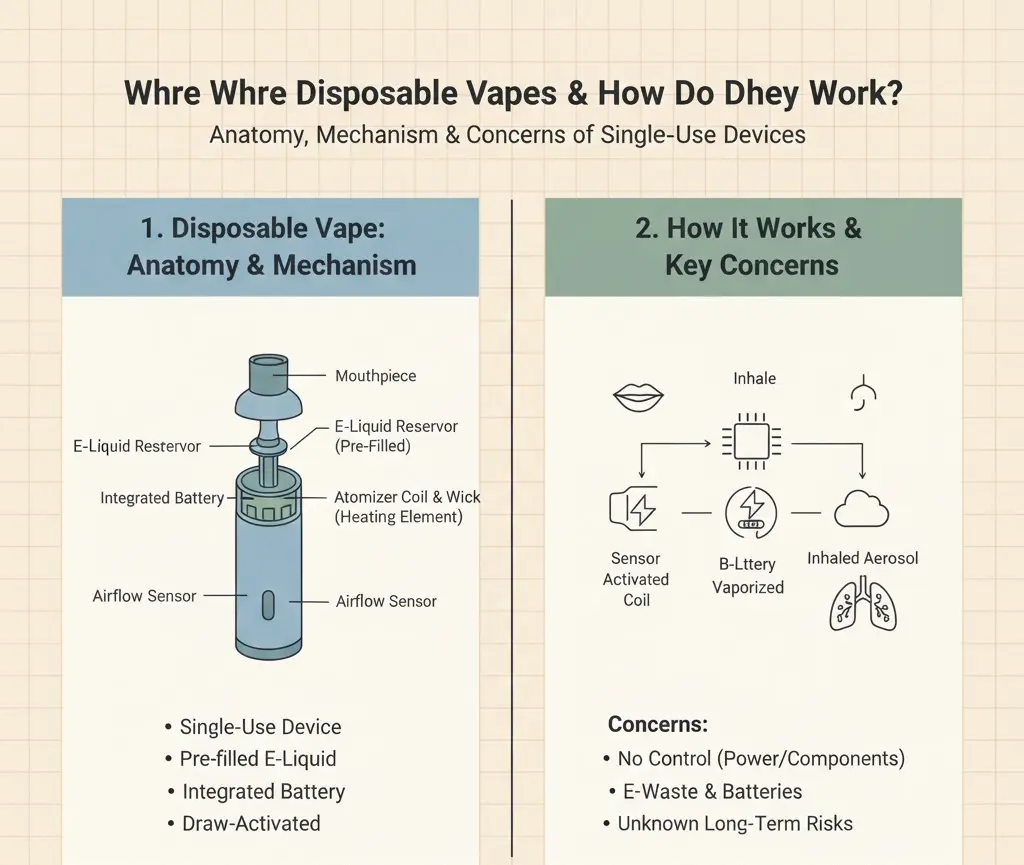
Disposable vapes are single-use electronic nicotine delivery devices. They contain a pre-filled e-liquid reservoir, a battery, a heating element (coil), and a mouthpiece. When the user inhales, the battery powers the coil, heating the liquid into an aerosol that is inhaled into the lungs.
Unlike refillable or pod-based devices, disposable vapes are designed to be discarded once the battery or liquid runs out. This convenience is also part of what raises concerns: users cannot control power output, replace components, or monitor wear.
Are Disposable Vapes Safe Compared to Cigarettes?
Many health authorities describe vaping as less harmful than smoking, but that does not mean vaping is safe.
Cigarettes burn tobacco, producing smoke that contains thousands of chemicals, including tar and carbon monoxide. Disposable vapes do not involve combustion, which significantly reduces exposure to these substances. However, disposable vapes still produce an aerosol that carries nicotine and other compounds into the lungs.
The key distinction is this:
- Less harmful than smoking ≠ is harmless
- Reduced exposure ≠ , no exposure
For people who do not smoke, using disposable vapes introduces risks that would otherwise not exist.
What Are the Risks of Disposable Vapes?
Disposable vapes are often perceived as “simpler” or “lighter” than cigarettes because they don’t burn tobacco. However, “no combustion” does not mean “no health risk.” The main risks come from nicotine exposure, aerosol (what you inhale), and device design factors that make frequent use easy and hard to control.
Below is a detailed breakdown of the most important safety concerns.
1) Nicotine Exposure and Addiction Risk
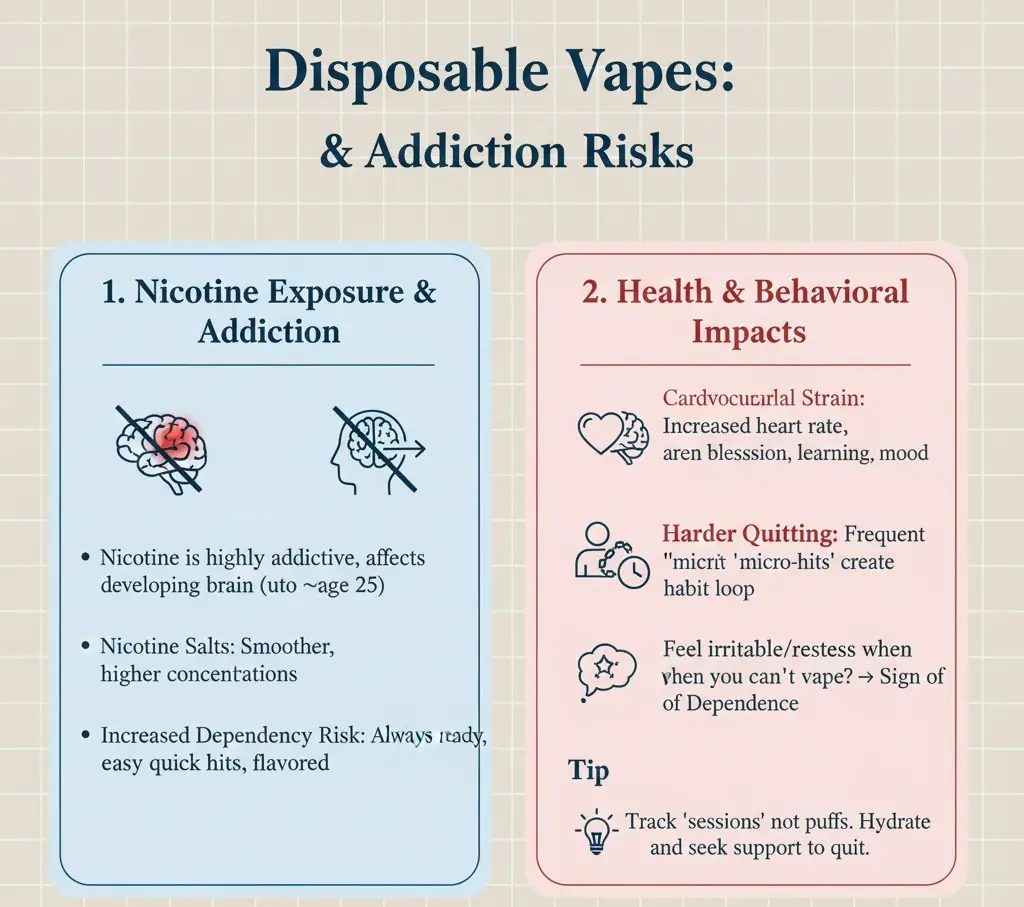
Most disposable vapes contain nicotine, and many use nicotine salts, which can deliver nicotine more smoothly at higher concentrations. This matters because nicotine is highly addictive and can affect the brain, especially in younger users. The U.S. FDA notes nicotine’s addictive nature and its major effects on the developing brain, and the CDC states brain development continues until about age 25.
Why disposable vapes can increase dependency risk
Disposable vapes can make nicotine exposure more frequent because they are:
- Always ready (no refilling or setup)
- Easy to take quick hits throughout the day
- Often flavored, which can reduce harshness and encourage more frequent use (especially among younger users)
Potential health and behavioral impacts of nicotine
Nicotine exposure is associated with:
- Dependence/addiction (cravings, withdrawal, increasing use over time)
- Cardiovascular strain, such as increased heart rate and blood pressure (nicotine is a stimulant; effects can matter more with frequent dosing)
- Brain development concerns for adolescents/young adults (attention, learning, mood, impulse control)
- Harder quitting patterns, because small “micro-hits” all day can create a strong habit loop (cue → hit → relief)
Tip (practical): If you’re trying to reduce dependence, track “sessions” instead of puffs. Many people underestimate use because disposables encourage tiny, frequent hits.
(self-check): If you feel irritable, restless, or “off” when you can’t vape, that’s a common sign of nicotine dependence—consider reducing frequency or seeking cessation support.
2) Chemical Exposure From Vape Aerosols (What You Actually Inhale)
A common misconception is that vaping is “just water vapor.” The CDC clearly states that e-cigarette aerosol is not harmless water vapor and can contain harmful and potentially harmful substances.
Disposable vape aerosol typically originates from e-liquid ingredients such as:
- Propylene glycol (PG)
- Vegetable glycerin (VG)
- Flavoring chemicals
- Nicotine
- Potential trace metals from heating components (depending on device and conditions)
Why does heating change the chemistry
When PG/VG and flavorings are heated, they can generate or increase exposure to carbonyl compounds (a class of irritants), including substances such as formaldehyde, acetaldehyde, and acrolein under certain conditions. The U.S. National Academies discuss carbonyl compounds found in e-cigarette aerosols and note they can be potentially hazardous.
This does not mean every puff equals high exposure—but it does mean vaping aerosols are chemically active and not inert.
What this can mean for lungs and airways
Because aerosols contain fine and ultrafine particles, repeated inhalation may contribute to:
- Throat and airway irritation
- Coughing/dryness
- Inflammation in sensitive users
- Worsened symptoms for people with asthma or respiratory conditions
The risk profile varies by:
- Nicotine strength
- Device power output
- Puff length and frequency
- Flavor type and individual sensitivity
Tip (practical): If your throat/lungs feel irritated, reduce intensity: shorter puffs, longer breaks, and avoid chain vaping. “More heat + more frequency” generally increases irritation risk.
(product awareness): If a device tastes unusually harsh, burnt, or metallic, stop using it. Abnormal taste can signal coil overheating or material breakdown—both. Both can worsen exposure.
3) Why Disposable Design Can Increase Risk
Disposable vapes aren’t just “a different delivery system”—their design changes how people use them.
Convenience can drive higher total intake
Because disposables require no maintenance, users often:
- Vape more frequently without noticing
- Take extra puffs to chase flavor or “satisfaction.”
- Use the device indoors more casually
Quality variation and unknowns
The disposable category is broad, and product consistency varies by brand and market. Public health guidance often emphasizes that aerosol composition can include harmful substances and that products are not risk-free.
Tip (use behavior): If you’re concerned about safety, the biggest “risk lever” you control is frequency. Cutting sessions per day often reduces exposure more than switching flavors.
(home safety): Store devices away from heat and direct sunlight; lithium batteries are sensitive to damage and overheating.
Quick “Risk Reduction” Tips
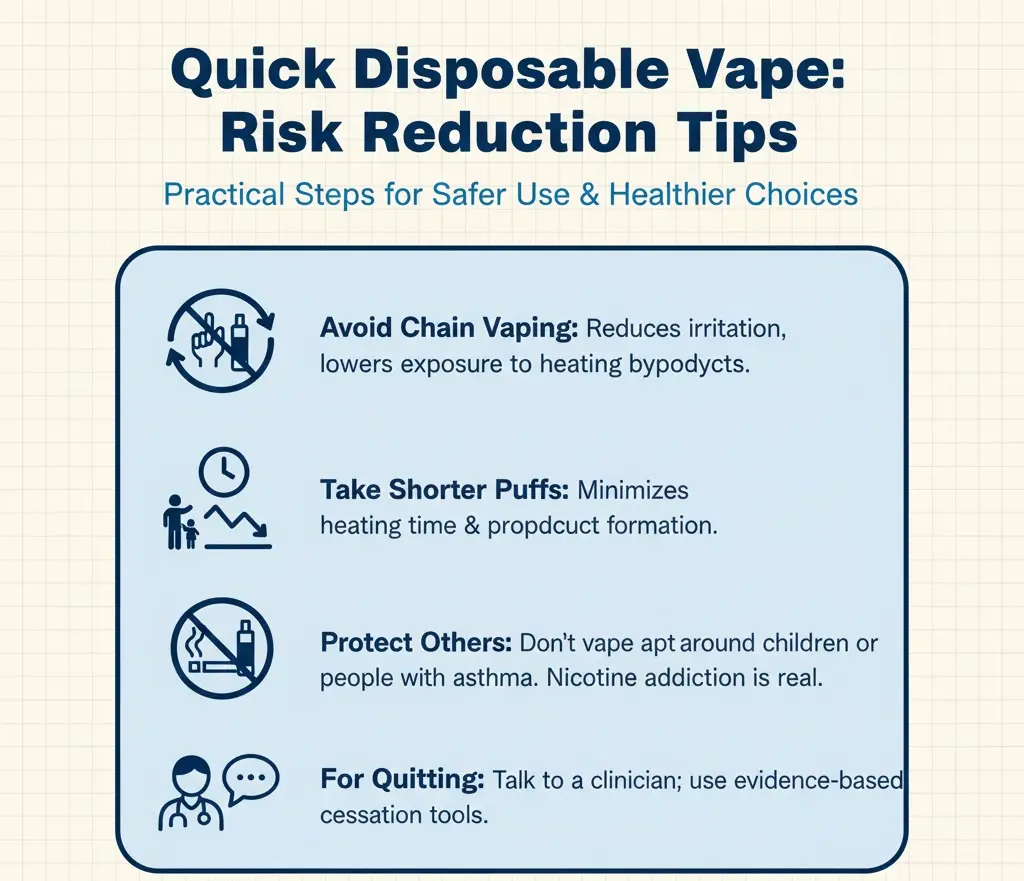
- Avoid chain vaping: repeated hits raise coil temperature and often increase harshness/irritation.
- Take shorter puffs: long drags increase heating time and can increase byproducts.
- Don’t vape around children or people with asthma: aerosol isn’t harmless.
- If you don’t smoke, don’t start vaping: nicotine addiction risk is real, especially for youth.
- If you’re trying to quit cigarettes: consider evidence-based cessation tools and talk to a clinician—many health agencies prioritize proven methods.
Battery and Device Safety Risks
Disposable vapes contain small lithium-ion batteries. While rare, risks include:
- Overheating
- Short circuits
- Fire hazards from damaged or improperly disposed of devices
Because disposables are sealed, users cannot inspect or replace faulty components, which limits safety control.
Are Vape Pens Safe for the Lungs?
Disposable vapes are often marketed as gentler on the lungs than cigarettes, but inhaling any aerosol can affect respiratory health.
Short-Term Effects
- Throat irritation
- Coughing
- Chest discomfort
- Airway inflammation
Some users experience wheezing or tightness in the chest, particularly when using high-nicotine or heavily flavored products.
Long-Term Effects
Long-term data is still limited. Research suggests that repeated exposure to vape aerosols may:
- Promote lung inflammation
- Affects the immune response in the airways
- Increase susceptibility to respiratory infections
While vaping does not produce tar, it still introduces fine particles deep into the lungs.
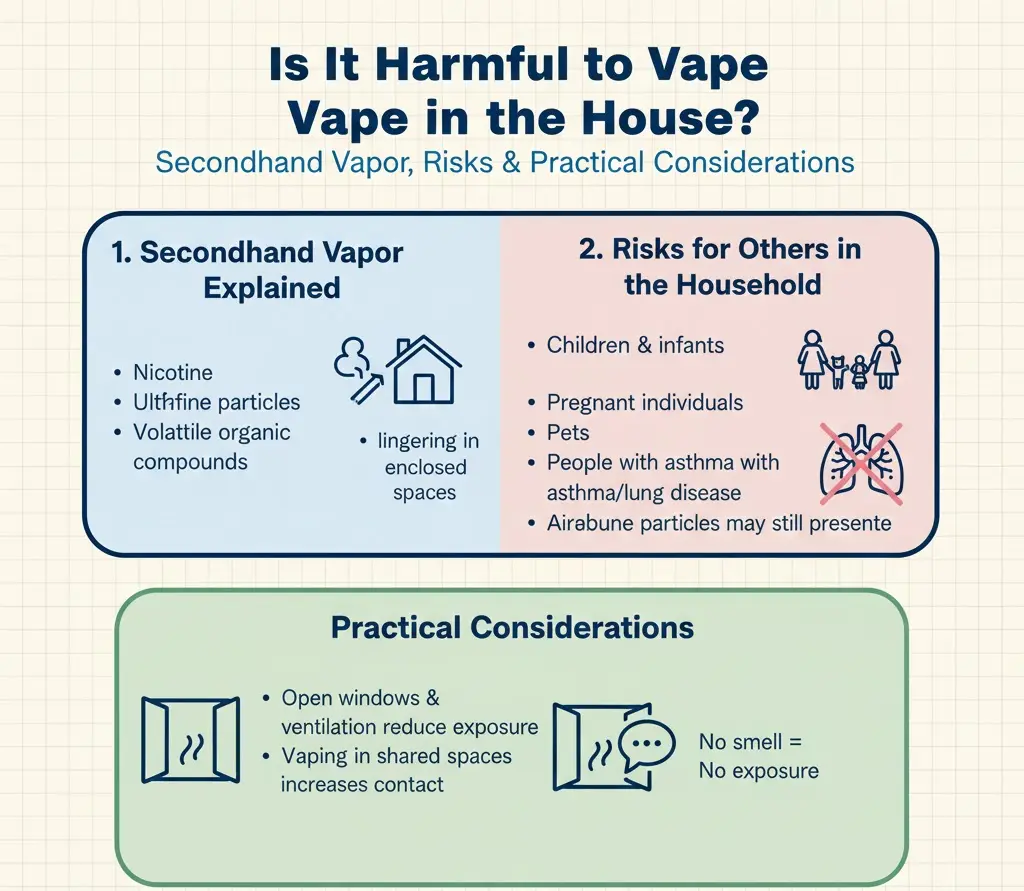
Is It Harmful to Vape in the House?
Vaping indoors may seem harmless because there is no smoke, but aerosol particles still remain in the air.
Secondhand Vapor Explained
Secondhand vapor contains:
- Nicotine
- Ultrafine particles
- Volatile organic compounds
These particles can linger in enclosed spaces, especially where ventilation is poor.
Risks for Others in the Household
Indoor vaping may pose risks for:
- Children and infants
- Pregnant individuals
- Pets
- People with asthma or lung disease
Even when odor is minimal, airborne particles may still be present.
Practical Considerations
- Open windows and ventilation reduce exposure
- Vaping in shared indoor spaces increases secondhand contact
- “No smell” does not mean “no exposure.”
Environmental and Disposal Concerns (Indirect Safety Risks)
Disposable vapes create environmental risks that indirectly affect public health.
Issues include:
- Lithium battery waste
- Plastic pollution
- Residual nicotine entering waste streams
Improper disposal can cause fires in waste facilities and contaminate the environment. While this does not affect immediate user health, it contributes to broader safety and sustainability concerns.
Is the U.S. Banning Disposable Vapes?
This is a common misconception.
Current Regulatory Situation
The United States has not issued a nationwide ban on all disposable vapes. However, many disposable vape products are considered unauthorized if they have not received marketing authorization.
What Is Being Restricted?
- Products without FDA authorization
- Certain flavored products in specific jurisdictions
- Sales targeting minors
Some states and cities impose additional restrictions, which creates confusion for consumers.
What This Means for Users
- Availability may vary by region
- Legal status depends on product authorization
- Enforcement focuses on manufacturers and retailers, not individual users
Safety vs Risk Comparison Table
| Aspect | Potential Safety Advantage | Associated Risk |
| Combustion | No burning or tar | Still produces inhalable aerosol |
| Nicotine delivery | Controlled dosing possible | High addiction potential |
| Lung exposure | Fewer toxins than smoke | Inflammation and irritation |
| Indoor use | Less odor than smoke | Secondhand aerosol exposure |
| Convenience | No maintenance required | No user control over power or components |
Who Should Avoid Disposable Vapes?
Disposable vapes are not recommended for:
- Non-smokers
- Adolescents and young adults
- Pregnant individuals
- People with heart or lung disease
For these groups, the risks outweigh any perceived benefit.
Harm Reduction Perspective
Some adults who already smoke cigarettes use disposable vapes as an alternative. From a harm reduction standpoint, switching from smoking to vaping may reduce exposure to certain toxins.
However:
- This applies only to adult smokers
- Dual use (smoking + vaping) reduces benefits
- Long-term safety remains under study
Conclusion: Are Disposable Vapes Safe?
Disposable vapes are not completely safe, but they are generally considered less harmful than combustible cigarettes. They still carry risks related to nicotine addiction, lung irritation, indoor air quality, and environmental waste.
Understanding these risks allows consumers to make informed decisions rather than assuming disposable vapes are harmless. Safety depends not only on the product, but also on who uses it, how often, and in what environment.
FAQ
Are disposable vapes safe to use?
Disposable vapes are not completely safe. While they are generally considered less harmful than combustible cigarettes, they still expose users to nicotine, aerosolized chemicals, and fine particles that may affect health. “Less harmful” does not mean harmless.
What are the main risks of disposable vapes?
The main risks include:
- Nicotine addiction, especially with high-strength nicotine salts
- Lung and airway irritation from inhaling heated aerosol
- Cardiovascular effects, such as increased heart rate and blood pressure
- Battery and device safety risks, particularly with damaged or improperly disposed of devices
Are vape pens safe for the lungs?
Vape pens, including disposable vapes, are not proven to be safe for the lungs. Short-term effects may include throat irritation, coughing, and airway inflammation. Long-term lung effects are still being studied, and inhaling any aerosol can carry respiratory risks.
Is vaping safer than smoking cigarettes?
For adult smokers who completely switch, vaping is often considered less harmful than smoking because it avoids combustion and tar. However, vaping still carries health risks and is not recommended for non-smokers.
Is it harmful to vape in the house?
Vaping indoors can affect indoor air quality. Secondhand vapor may contain nicotine and fine particles, which can be inhaled by others—especially children, pets, pregnant individuals, or people with respiratory conditions. Good ventilation reduces exposure but does not eliminate it.
See more
How to Fix a Disposable Vape That Won’t Hit
What Disposable Vape Lasts the Longest?
How to Use a Disposable Vape Pen with a Button: A Beginner’s Step-by-Step Guide