
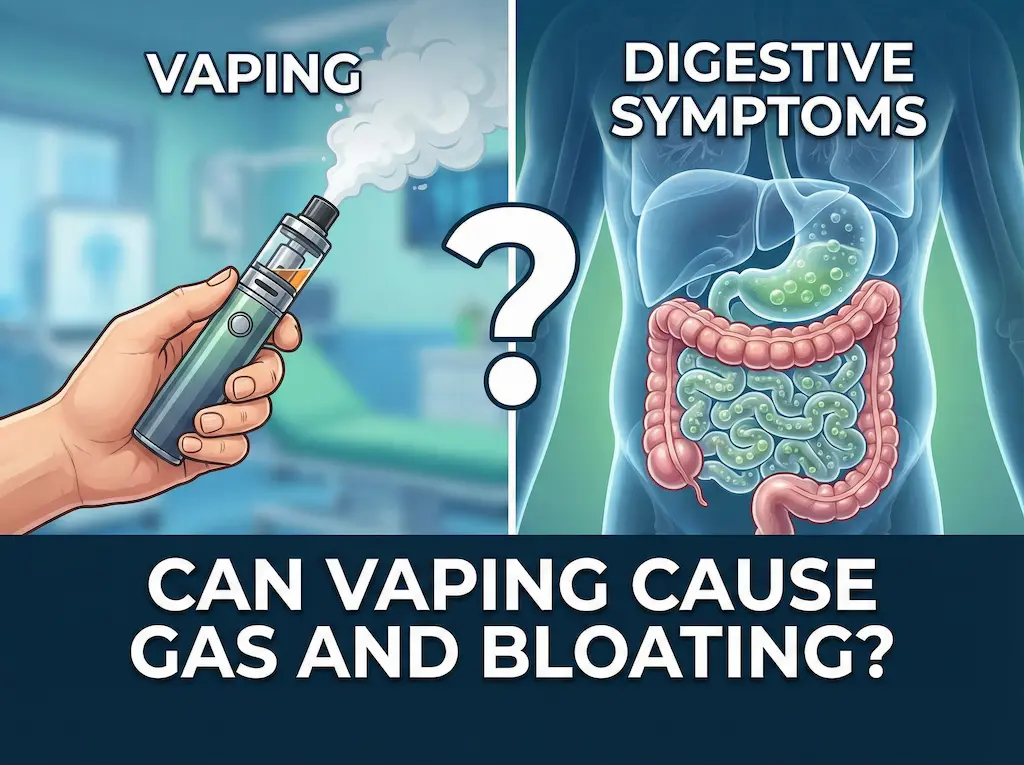
When people talk about the effects of vaping, the conversation usually focuses on the throat and lungs. Coughing, throat irritation, and chest discomfort are widely discussed. Digestive symptoms, however, receive far less attention. Yet many users quietly report bloating, gas, stomach discomfort, or changes in digestion after vaping.
This leads to a natural question: can vaping cause gas and bloating?
The short answer is that some people do experience digestive discomfort associated with vaping, but the experience is not universal and does not follow a single pattern. Digestive symptoms appear to be influenced by nicotine exposure, inhalation habits, stress responses, and individual sensitivity rather than vaping alone.
This article explores how vaping may contribute to gas and bloating, what digestive symptoms users commonly report, how to relieve bloating in the short term, and what to expect after reducing or quitting vaping—all without making medical claims or assumptions.
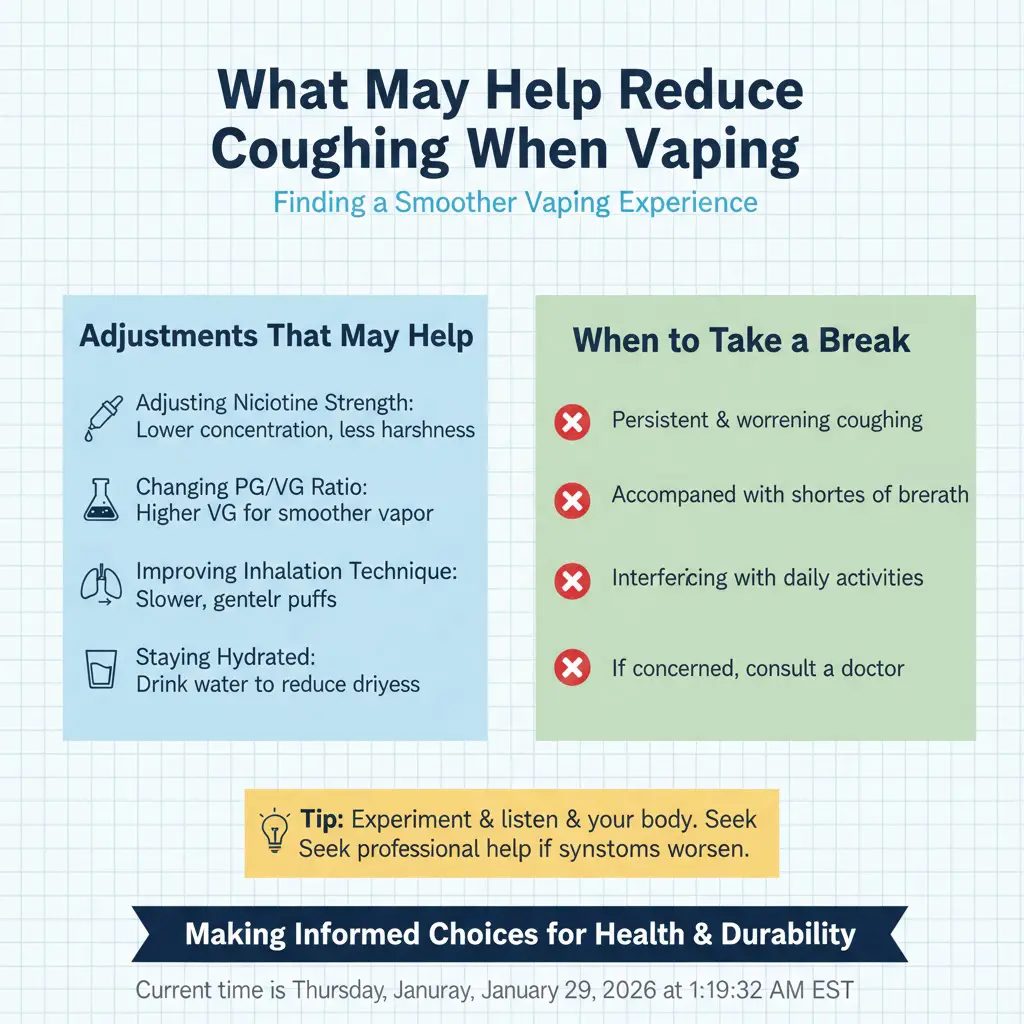
Key Takeaways
- Some users report gas and bloating associated with vaping, but experiences vary widely
- Nicotine, air swallowing, and stress responses may contribute to digestive discomfort
- Bloating does not affect everyone and is often temporary
- Reducing or quitting vaping may improve symptoms over time
- Persistent or severe digestive symptoms should not be ignored
Can Vaping Cause Gas and Bloating?
Many people are surprised to associate vaping with digestive symptoms because vaping does not directly involve eating or drinking. However, the digestive system is closely connected to the nervous system, breathing patterns, and stress responses—all of which can be affected by vaping.
What Users Commonly Report
Among users who experience digestive discomfort, commonly reported symptoms include:
- A feeling of fullness or pressure in the abdomen
- Increased gas or frequent burping
- Mild stomach discomfort after vaping
- Bloating that worsens after frequent use
These symptoms are not reported by everyone, and their intensity varies significantly from person to person.
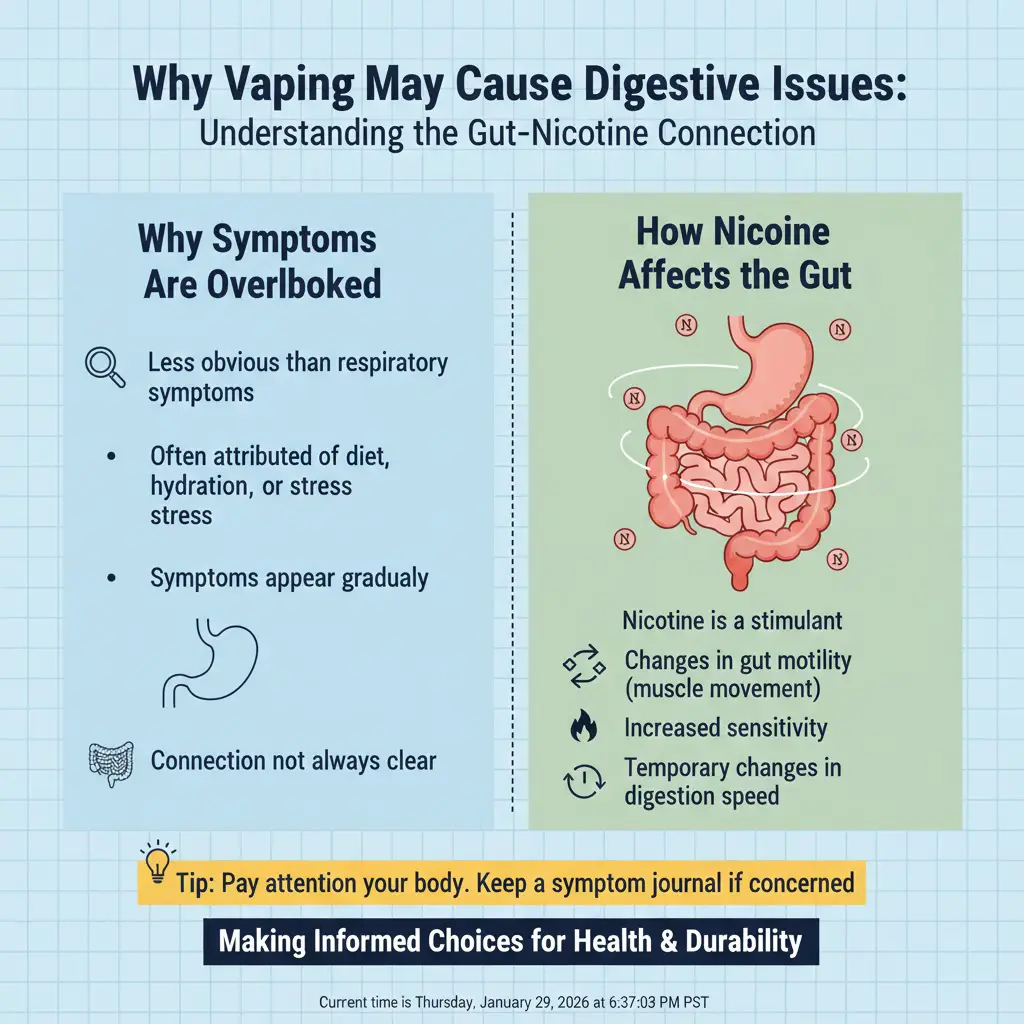
Why Digestive Symptoms Are Often Overlooked
Digestive symptoms tend to be less immediately associated with vaping than respiratory symptoms. Many people attribute bloating or gas to diet, hydration, or stress without considering vaping as a possible contributing factor. Because symptoms may appear gradually or fluctuate, the connection is not always obvious.
Does Vaping Cause Gut Issues?
Digestive discomfort linked to vaping is not well understood, but several mechanisms may help explain why some users experience gut-related symptoms.
Nicotine and the Digestive System
Nicotine is a stimulant that affects more than just the brain. It interacts with the digestive system by influencing muscle movement in the gastrointestinal tract.
Potential effects may include:
- Changes in gut motility
- Increased sensitivity in the stomach and intestines
- Temporary alterations in digestion speed
For some individuals, these changes may contribute to bloating, gas, or irregular digestion. Sensitivity to nicotine varies widely, which helps explain why symptoms appear in some users but not others.
Air Swallowing While Vaping
One often-overlooked factor is air swallowing, also known as aerophagia. Certain vaping habits can increase the amount of air inhaled.
This may occur when:
- Taking deep or rapid puffs
- Chain vaping without breaks
- Using devices with tight airflow
Swallowed air can accumulate in the digestive tract, leading to bloating, pressure, and increased gas.
Stress and the Gut–Brain Connection
The digestive system is closely linked to the nervous system through the gut–brain axis. Nicotine can stimulate the body’s stress response, even when users feel relaxed or accustomed to vaping.
Stress-related digestive responses may include:
- Increased gas production
- Slower digestion
- Heightened awareness of abdominal sensations
For people already prone to stress-related digestive symptoms, vaping may amplify existing sensitivity.
Common Digestive Symptoms Linked to Vaping
Digestive symptoms reported in relation to vaping may include:
- Gas and bloating
- Nausea
- Acid reflux or heartburn
- Appetite changes
- Mild abdominal discomfort
Not all users experience these effects, and symptoms may come and go depending on usage patterns.
What Are the Worst Symptoms of Vaping?
The “worst” symptoms of vaping depend on individual experience. Some people primarily notice throat or respiratory irritation, while others report digestive discomfort as more disruptive.
Digestive vs Respiratory Symptoms
- Respiratory symptoms tend to be more noticeable immediately
- Digestive symptoms may develop gradually and fluctuate
- Digestive discomfort is often underestimated because it overlaps with dietary issues
Symptoms may feel more pronounced when vaping frequency increases or when nicotine strength is high.
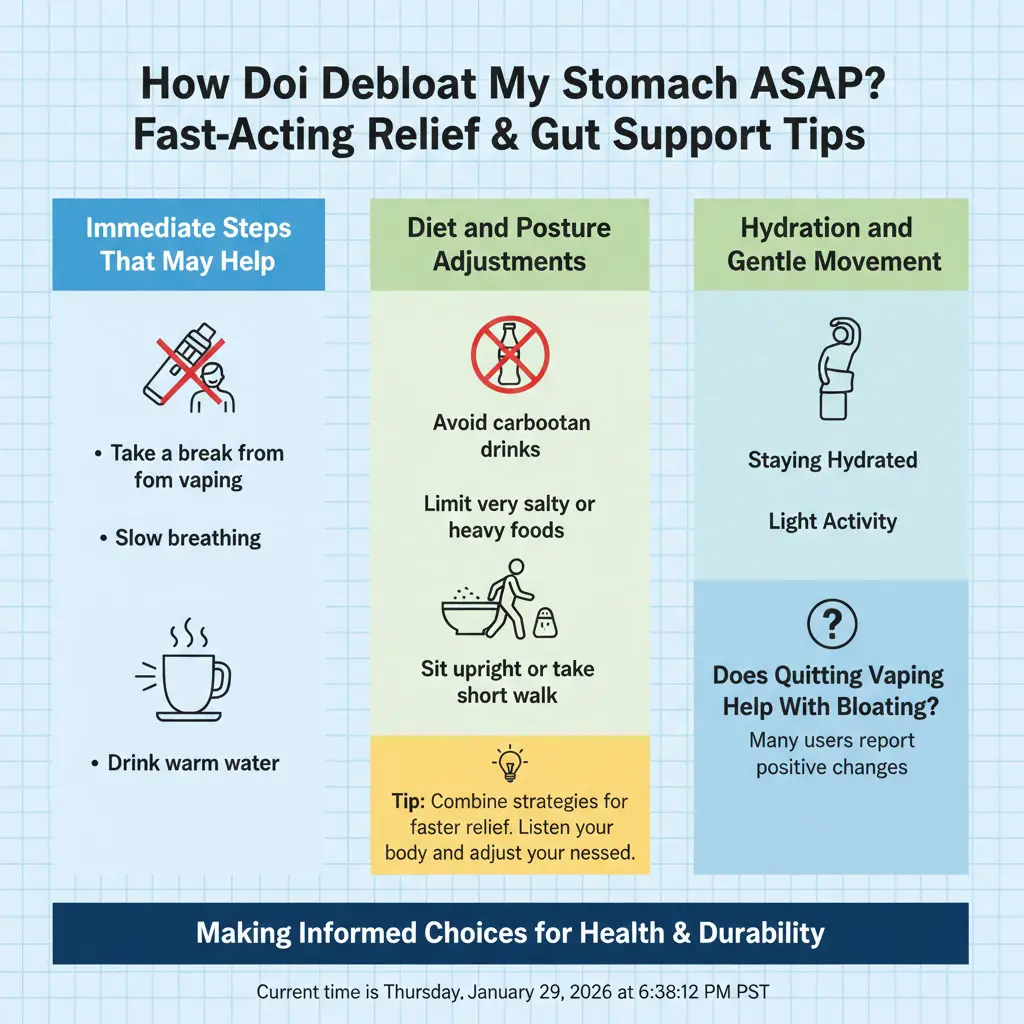
How Do I Debloat My Stomach ASAP?
When bloating becomes uncomfortable, people often look for quick relief. While results vary, several strategies may help reduce bloating in the short term.
Immediate Steps That May Help
- Take a break from vaping to reduce stimulation
- Slow breathing to reduce air swallowing
- Drink warm water to support digestion
These steps focus on reducing pressure and calming digestive activity.
Diet and Posture Adjustments
- Avoid carbonated drinks while bloated
- Limit very salty or heavy foods temporarily
- Sit upright or take a short walk after meals
Gentle movement often helps gas move through the digestive tract more comfortably.
Hydration and Gentle Movement
Staying hydrated supports normal digestion and may reduce bloating. Light activity, such as walking, can encourage gas movement without adding stress to the body.
Does Quitting Vaping Help With Bloating?
Many users report changes in digestion after reducing or stopping vaping, though experiences vary.
What Happens After Reducing or Stopping Vaping
When vaping is reduced or stopped:
- Nicotine stimulation decreases
- The digestive system may gradually return to baseline function
- Stress responses may shift temporarily
Some people notice improvement in bloating within days, while others take longer to adjust.
When Does Bloating Go Away After Quitting Vaping?
There is no fixed timeline. For some, bloating improves within a few days. For others, digestive discomfort may persist for several weeks as the body adjusts to changes in nicotine exposure and routine.
Why Bloating Can Temporarily Feel Worse After Quitting
Paradoxically, some people feel more bloated shortly after quitting vaping. This may be related to:
- Nicotine withdrawal effects
- Temporary increases in anxiety
- Changes in eating habits
These effects are often temporary and tend to stabilize over time.
When to Pay Closer Attention to Digestive Symptoms
While occasional bloating is common, certain signs should not be ignored.
Consider seeking professional advice if digestive symptoms are:
- Persistent or worsening over time
- Accompanied by severe abdominal pain
- Associated with unexplained weight changes
- Disrupting daily life
This article provides general information, not a medical diagnosis.
Final Thoughts on Vaping, Gas, and Bloating
Digestive symptoms such as gas and bloating are not the first effects people associate with vaping, yet some users do report them. These experiences appear to be influenced by nicotine, inhalation habits, air swallowing, and stress responses rather than vaping alone.
For many individuals, symptoms are mild and temporary. Adjusting vaping habits, staying hydrated, managing stress, or reducing nicotine exposure may help. Reducing or quitting vaping may also improve digestive comfort over time.
As with any persistent physical symptoms, listening to your body and seeking professional guidance when needed is important.
Frequently Asked Questions
Can vaping really cause gas and bloating?
Some users report gas and bloating associated with vaping, but experiences vary and are not universal.
Does nicotine affect digestion?
Nicotine can influence gut motility and sensitivity, which may affect digestion in some individuals.
Why do I feel gassy after vaping?
Possible factors include air swallowing, nicotine stimulation, and stress-related digestive responses.
How long does bloating last after quitting vaping?
Bloating may improve within days or weeks after quitting, depending on individual factors.
Should I stop vaping if I have gut issues?
If digestive symptoms persist or worsen, reducing or stopping vaping and seeking professional advice may be appropriate.
You Can Read More
How to Do Vape Tricks (Step-by-Step Guide for Beginners)
Disposable Vape vs Refillable Vape Maintenance: Health, Longevity, and What to Know
Disposable Vape Recovery Period: How the Body Adjusts After Reducing or Quitting Vaping