
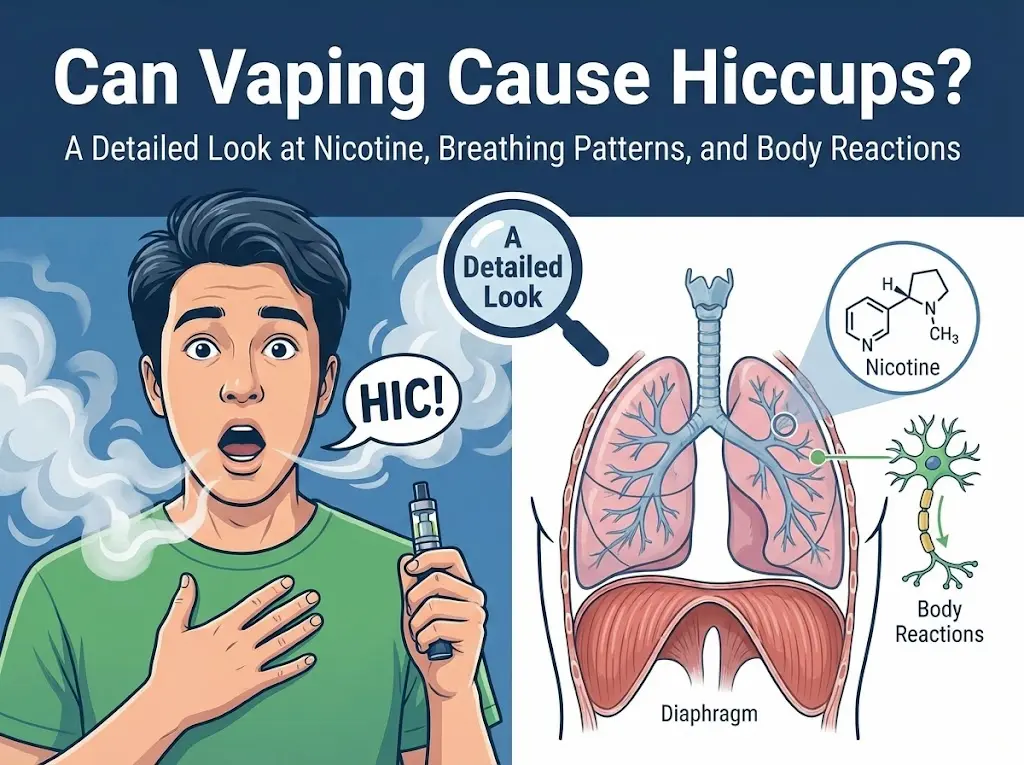
Hiccups are usually treated as a minor annoyance, but when they happen repeatedly or unexpectedly, they can be uncomfortable and disruptive. Some people notice that hiccups seem to start shortly after vaping, especially after taking several puffs in a short period or using higher-nicotine products. This leads to a reasonable question: can vaping cause hiccups?
There is no universal answer that applies to every user. Many people vape without ever experiencing hiccups, while others report them consistently. What matters is not only vaping itself, but how vaping interacts with breathing patterns, nicotine intake, and the body’s reflex systems.
This article takes a deep, evidence-informed look at why hiccups may occur after vaping, how nicotine and usage habits may play a role, what other symptoms often appear alongside hiccups, and what practical steps may help reduce or prevent them. The goal is not to alarm, but to explain clearly and responsibly.
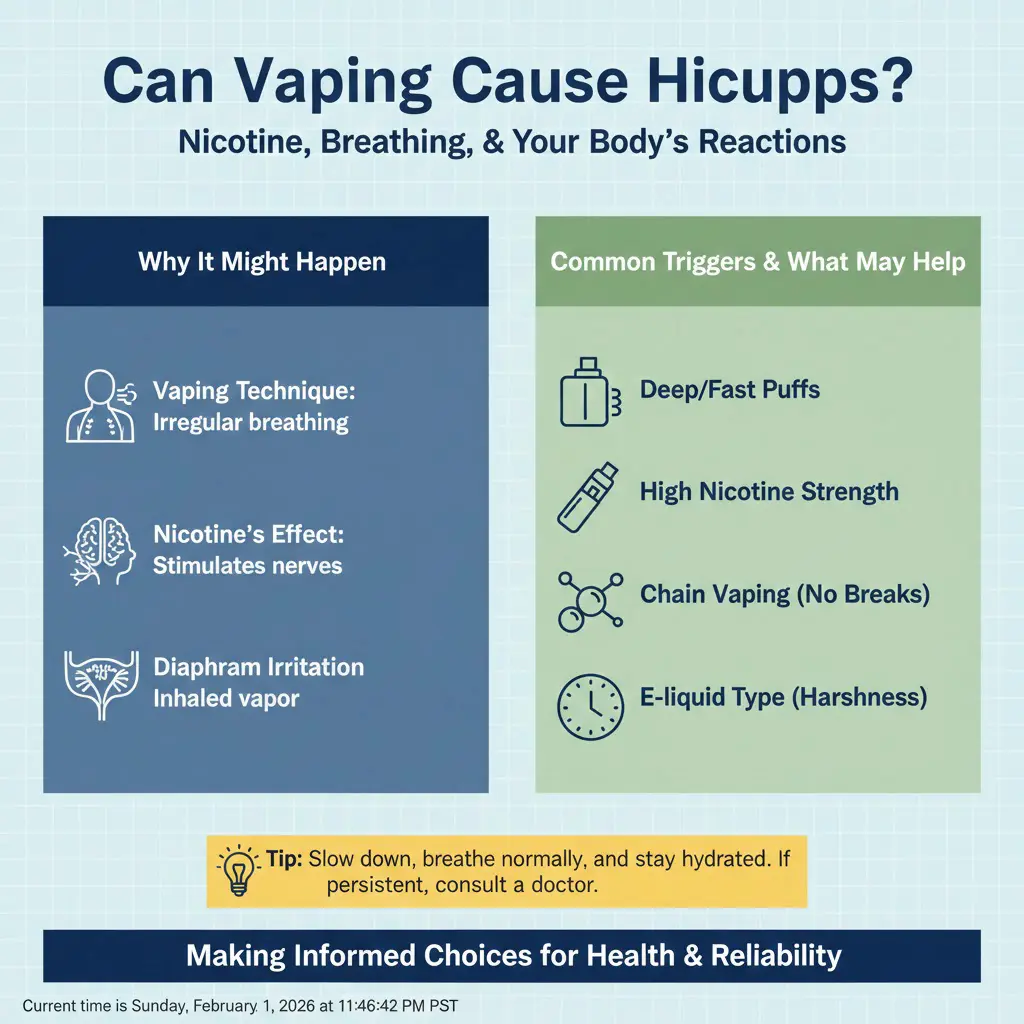
Key Takeaways
- Some people experience hiccups after vaping, though it is not universal
- Nicotine stimulation may increase the likelihood of hiccups in sensitive users
- Rapid inhalation and air swallowing can trigger diaphragm reflexes
- Hiccups often appear alongside other short-term vaping symptoms
- Adjusting habits and nicotine strength may reduce recurrence
Understanding Hiccups: What’s Actually Happening in the Body
Before linking hiccups to vaping, it helps to understand what hiccups are and why they occur in everyday life.
How Hiccups Work
Hiccups result from involuntary contractions of the diaphragm, the muscle that separates the chest cavity from the abdomen and plays a key role in breathing. When the diaphragm contracts suddenly, the vocal cords close briefly, creating the characteristic “hic” sound.
This reflex involves:
- The diaphragm
- The phrenic and vagus nerves
- Centers in the brain that regulate breathing
Hiccups are usually triggered by irritation, stimulation, or sudden changes in breathing or digestion.
Common Non-Vaping Triggers of Hiccups
To put vaping-related hiccups in context, it helps to know that hiccups are commonly triggered by:
- Eating too quickly
- Drinking carbonated beverages
- Sudden temperature changes
- Emotional stress or excitement
- Alcohol consumption
Vaping introduces some similar stimuli—changes in breathing, temperature, and nerve stimulation—which may explain why hiccups can occur in certain situations.
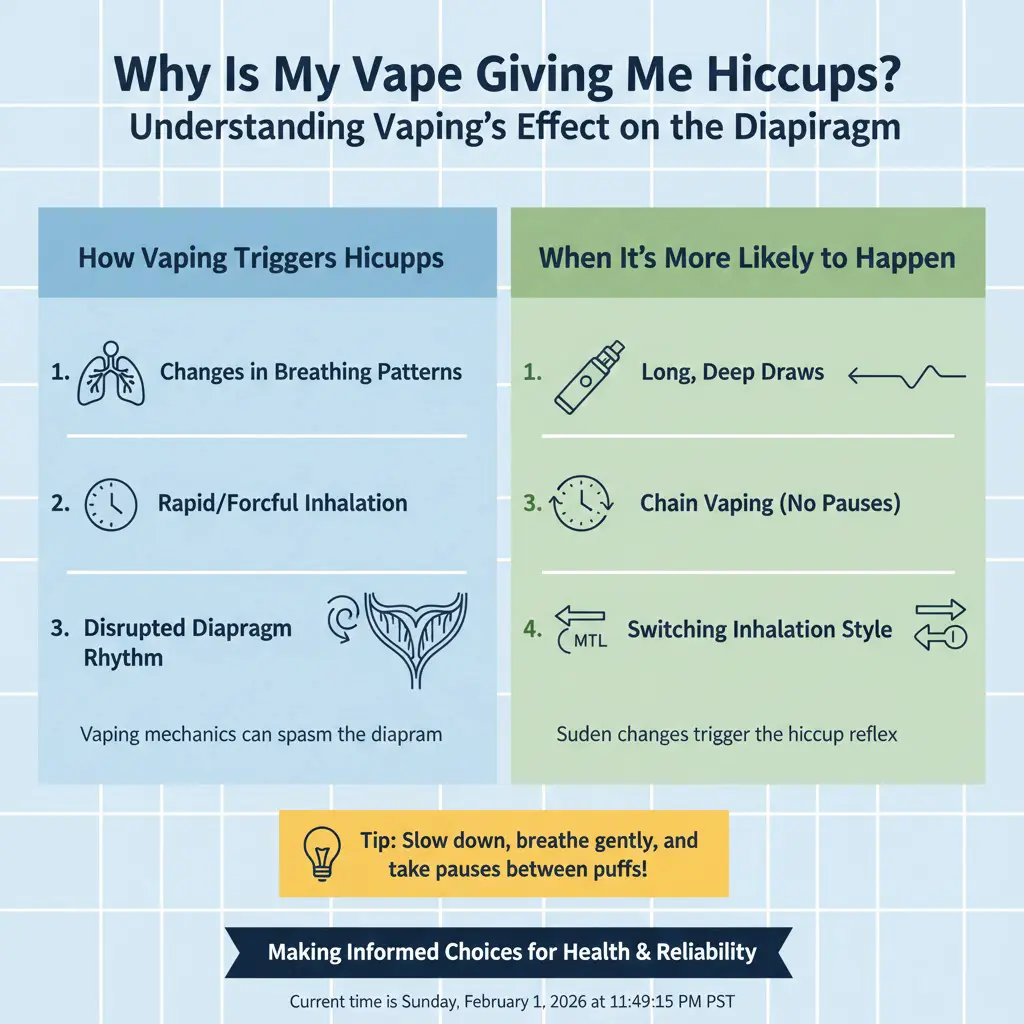
Why Is My Vape Giving Me Hiccups?
Some users notice hiccups begin shortly after vaping, even when they were not prone to hiccups before. Several mechanisms may explain this experience.
Changes in Breathing Patterns
Vaping often involves deeper or more deliberate inhalation than normal breathing. Rapid or forceful inhalation can temporarily disrupt the diaphragm’s normal rhythm.
This is more likely to happen when:
- Taking long, deep draws
- Vaping repeatedly without pauses
- Switching from mouth-to-lung to direct-to-lung inhalation
Sudden changes in breathing mechanics can trigger diaphragm spasms, leading to hiccups.
Air Swallowing During Vaping
Another overlooked factor is air swallowing, also known as aerophagia. Some vaping styles increase the likelihood of swallowing air, especially when inhaling quickly or frequently.
Swallowed air can:
- Distend the stomach
- Put pressure on the diaphragm
- Trigger hiccup reflexes
This is similar to why hiccups sometimes occur after eating too fast or drinking fizzy drinks.
Throat and Nerve Stimulation
Vapor, flavorings, and temperature changes can stimulate nerves in the throat and upper airway. These nerves are connected to the same reflex pathways involved in hiccups.
For sensitive individuals, this stimulation may be enough to trigger the reflex, even if it feels mild.
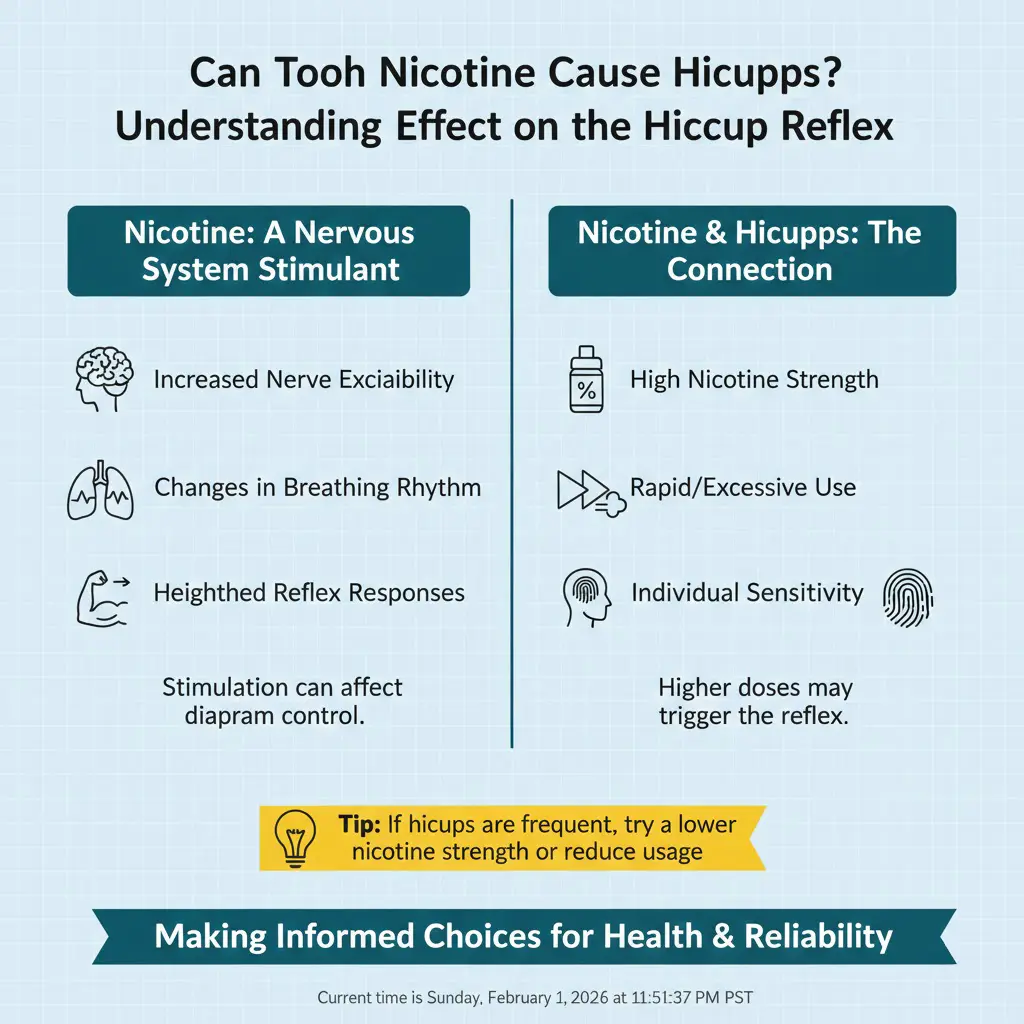
Can Too Much Nicotine Cause Hiccups?
Nicotine is one of the most important variables when discussing vaping-related hiccups.
Nicotine as a Stimulant
Nicotine stimulates the nervous system. While this stimulation is often associated with alertness or satisfaction, it can also increase sensitivity in reflex pathways.
Possible effects of higher nicotine exposure include:
- Increased nerve excitability
- Faster heart rate
- Changes in breathing rhythm
- Heightened reflex responses
In some people, these effects may extend to the diaphragm and hiccup reflex.
Rapid Nicotine Delivery and Hiccups
Modern vaping devices—especially disposables and nicotine salt products—can deliver nicotine quickly. Rapid intake may overwhelm the body’s ability to adjust smoothly.
This is more likely when:
- Using high-nicotine e-liquids
- Taking multiple puffs in a short time
- Vaping without realizing intake levels
In these cases, hiccups may be one of several signs of overstimulation.
Is Hiccupping a Sign of Nicotine Overuse?
Hiccups alone do not necessarily indicate excessive nicotine intake. However, they may appear alongside other short-term symptoms associated with higher nicotine exposure.
What Are the Symptoms of Too Much Vaping?
Hiccups often do not appear in isolation. They may be part of a cluster of short-term symptoms related to vaping habits.
Commonly Reported Short-Term Symptoms
Some users report experiencing:
- Hiccups
- Nausea or stomach discomfort
- Throat irritation or dryness
- Lightheadedness
- Mild headache
These symptoms usually reflect temporary overstimulation rather than long-term harm.
Why These Symptoms Tend to Overlap
Many of these sensations share common triggers:
- Nicotine stimulation
- Dehydration
- Rapid inhalation
- Repetitive use
When multiple triggers occur together, the likelihood of reflex responses like hiccups increases.
How Vaping Habits Influence Hiccups
In many cases, hiccups are more about how the device is used than about the device itself.
Habits That May Increase the Likelihood of Hiccups
- Chain vaping without breaks
- Using higher nicotine strengths than needed
- Inhaling too quickly or forcefully
- Vaping on an empty stomach
Each of these habits can increase irritation or stimulate the nervous system.
Disposable Vapes and Hiccups
Disposable vapes are frequently mentioned in discussions about hiccups. This may be due to:
- Higher nicotine concentrations
- Easy draw activation
- Lack of user-controlled settings
These factors can make it easier to unintentionally overconsume nicotine.
How to Get Rid of Hiccups From Smoking or Vaping
When hiccups occur after vaping, they are usually temporary. Several practical steps may help stop them.
Immediate Steps That May Help
- Stop vaping temporarily
- Take slow, controlled breaths
- Drink warm or room-temperature water
- Sit upright to reduce diaphragm pressure
These steps aim to calm breathing patterns and reduce nerve stimulation.
Longer-Term Adjustments to Reduce Recurrence
For users who experience hiccups repeatedly, habit changes may help:
- Lower nicotine strength gradually
- Increase time between puffs
- Use gentler inhalation techniques
- Stay well hydrated
These adjustments often reduce both hiccups and other irritation-related symptoms.
Vaping vs Smoking: Are Hiccups Different?
Hiccups can occur with both smoking and vaping, but the mechanisms may differ.
| Factor | Smoking | Vaping |
| Primary trigger | Smoke irritation | Nicotine & inhalation |
| Temperature | Hot smoke | Warm/cool vapor |
| Intake control | Less precise | Highly variable |
| Common pattern | After heavy smoking | After rapid vaping |
Some people experience fewer hiccups after switching from smoking to vaping, while others notice new triggers due to different inhalation patterns.
When Hiccups Are Probably Not Caused by Vaping
Not all hiccups that happen after vaping are necessarily caused by vaping.
Other common contributors include:
- Large meals
- Carbonated drinks
- Stress or anxiety
- Acid reflux
If hiccups occur frequently regardless of vaping habits, other factors may be involved.
When to Pay Closer Attention
Occasional hiccups are usually harmless. However, it may be worth paying closer attention to hiccups:
- Occur very frequently
- Last for an extended period
- Are accompanied by significant discomfort
In such cases, reducing vaping and seeking professional advice may be appropriate.
Putting It All Together: Why Vaping May Trigger Hiccups for Some People
Hiccups appear to be a reflex response influenced by:
- Nicotine stimulation
- Changes in breathing patterns
- Air swallowing
- Nerve sensitivity
Not everyone is equally sensitive to these factors. This explains why vaping-related hiccups are common for some users and nonexistent for others.
Final Thoughts on Vaping and Hiccups
So, can vaping cause hiccups? For some individuals, yes—particularly when nicotine intake is high, or inhalation habits are aggressive. Hiccups are generally a short-term reflex rather than a serious issue.
Most cases resolve on their own or improve with small adjustments, such as slowing down, lowering nicotine strength, or taking breaks. Paying attention to how your body responds is often more helpful than focusing on the symptom itself.
Frequently Asked Questions
Can vaping really cause hiccups?
Some users report hiccups after vaping, likely due to nicotine stimulation or breathing changes.
Is hiccupping a sign of nicotine overdose?
Not necessarily. Hiccups may occur alongside other symptoms of overstimulation, but are not a definitive sign on their own.
Will lowering nicotine help reduce hiccups?
Many users find that lowering nicotine strength reduces hiccups and related irritation.
How long do vaping-related hiccups usually last?
They are typically short-lived and resolve once vaping stops or habits are adjusted.
Should I stop vaping if hiccups keep happening?
If hiccups persist or worsen, reducing or stopping vaping and seeking professional guidance may help.
You Can Read More
How to Do Vape Tricks (Step-by-Step Guide for Beginners)
Where Did Hookah Originate? Full Origin, History, and Global Spread Explained
Disposable Vape Recovery Period: How the Body Adjusts After Reducing or Quitting Vaping