
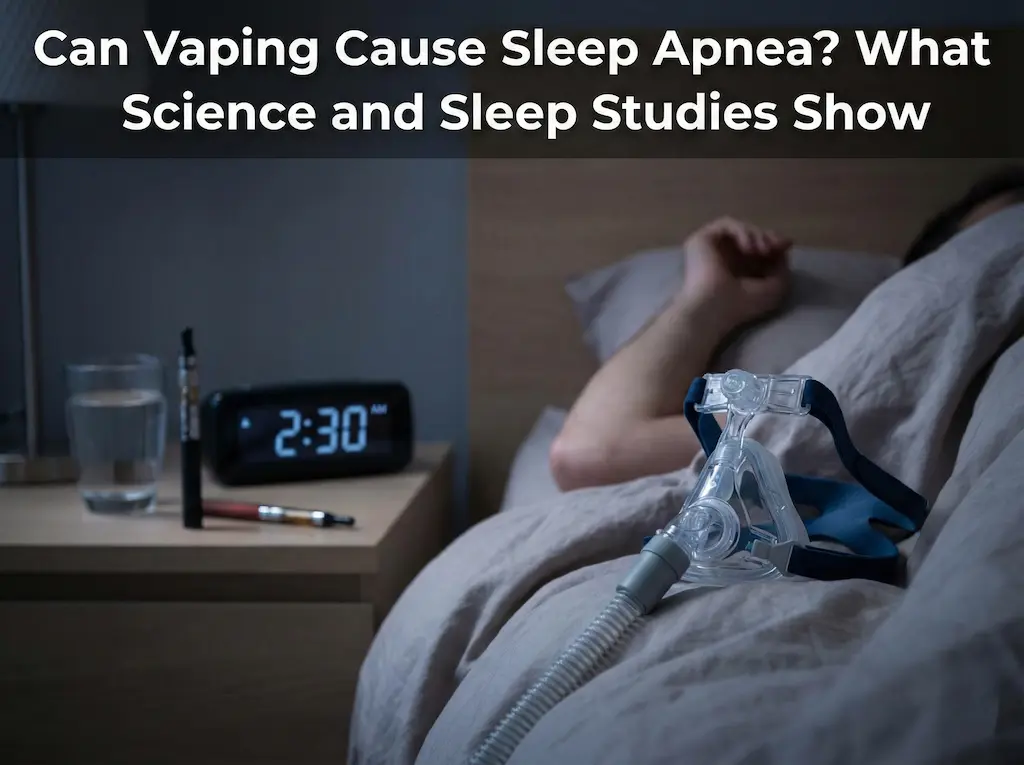
Many people wonder whether vaping could be linked to sleep-related breathing problems. If you vape and notice louder snoring, daytime tiredness, or waking up without feeling rested, it’s reasonable to question: Can vaping cause sleep apnea?
Sleep apnea is a serious sleep disorder that affects breathing during sleep. In this article, we look at whether vaping plays a role in sleep apnea, how vaping may influence breathing at night, and what current research suggests about vaping, nicotine, and sleep quality.
What Is Sleep Apnea?
Sleep apnea is a condition in which breathing repeatedly slows or stops during sleep.
There are three main types:
- Obstructive sleep apnea (OSA) – the airway becomes blocked or collapses
- Central sleep apnea – the brain fails to send proper breathing signals
- Complex sleep apnea – a combination of both
Common symptoms include:
- Loud or chronic snoring
- Daytime sleepiness
- Morning headaches
- Difficulty concentrating
- Feeling tired even after a full night’s sleep
Many people with sleep apnea are unaware they have it until symptoms become severe.
Can Vaping Cause Sleep Apnea Directly?
Short answer:
There is currently no direct evidence showing that vaping alone causes sleep apnea.
However, research suggests that vaping can influence several factors closely associated with obstructive sleep apnea, including airway irritation, sleep disruption, and breathing stability during sleep.
In this way, vaping may not directly cause sleep apnea, but it can worsen conditions that make sleep apnea more likely or more noticeable.
How Vaping Can Affect Breathing During Sleep
To understand this connection, it helps to understand how electronic cigarettes work. According to Wikipedia’s overview of electronic cigarettes, these devices heat a liquid into an inhalable aerosol rather than burning tobacco. This aerosol is often mistaken for harmless water vapor, but it contains substances that interact with the respiratory system.
1. Nicotine and Sleep Disruption
Nicotine is a stimulant that directly affects the nervous system.
Research shows nicotine can:
- Delay the onset of sleep
- Reduce deep and restorative sleep
- Increase nighttime awakenings
When sleep becomes lighter and more fragmented, the body has a harder time maintaining stable breathing patterns. This disruption can make breathing irregularities during sleep more pronounced, especially in people already prone to snoring or airway collapse.
Scientific reviews from the National Institutes of Health describe how nicotine affects the central nervous system and sleep regulation, highlighting its ability to interfere with normal sleep architecture.
2. Airway Irritation From Vaping
Vaping aerosol can irritate the upper airway, including the throat and nasal passages.
Repeated irritation may lead to mild swelling, dryness, or inflammation. Even small changes in airway size can increase airflow resistance during sleep, making breathing less stable.
This is important because increased airway resistance is closely linked to snoring and obstructive sleep apnea.
3. Vaping, Snoring, and Sleep Apnea
Snoring occurs when airflow is partially restricted during sleep.
Many people notice that snoring becomes louder or more frequent when the airway is irritated. Persistent snoring is one of the most common early warning signs associated with obstructive sleep apnea.
When vaping contributes to airway dryness or irritation, it may increase the likelihood of snoring and related breathing disturbances during sleep.
Does Vaping Before Bed Make Sleep Apnea Worse?
Vaping close to bedtime can make sleep-related breathing issues more noticeable.
Using nicotine shortly before sleep may:
- Stimulate the nervous system
- Dry or irritate the airway
- Delay deeper stages of sleep
Together, these effects can make breathing during sleep less stable and may worsen symptoms in people who already snore or experience breathing interruptions at night.
Vaping vs Smoking: Which Is Worse for Sleep Apnea?
Smoking has a well-established link to sleep apnea.
Smoking contributes to:
- Chronic airway inflammation
- Increased mucus production
- Reduced oxygen efficiency
These effects explain why smoking is strongly associated with snoring and obstructive sleep apnea.
Vaping is generally considered less harmful than smoking, but it is not neutral when it comes to sleep and breathing health. The Centers for Disease Control and Prevention notes that e-cigarette aerosol contains chemicals that can irritate the respiratory system, which may indirectly affect sleep-related breathing.
Can Vaping Make You Tired or Sleepy?
Some people notice feeling unusually tired or sleepy during the day after nights of poor sleep.
Nicotine can temporarily increase alertness, but when it disrupts sleep quality, the result is often daytime fatigue. This pattern is commonly seen in people whose sleep is fragmented, including those with undiagnosed sleep apnea.
Does Nicotine Itself Cause Sleep Apnea?
Nicotine by itself does not directly cause sleep apnea.
However, nicotine can:
- Fragment sleep
- Reduce REM sleep
- Increase nighttime awakenings
These effects can worsen existing sleep apnea symptoms by preventing the body from maintaining consistent, restorative sleep.
Signs Vaping May Be Affecting Your Sleep
Possible warning signs include:
- Louder or more frequent snoring
- Waking up gasping or choking
- Persistent daytime tiredness
- Morning headaches
- Dry throat or nasal congestion
If these symptoms develop or worsen after starting vaping, sleep quality may be affected.
Can Quitting Vaping Improve Sleep Apnea Symptoms?
For some people, reducing or stopping vaping may help.
Possible improvements include:
- Less airway irritation
- Deeper, more stable sleep
- Reduced snoring frequency
While quitting vaping does not cure sleep apnea, it may reduce symptom severity and improve overall sleep quality.
Practical Tips If You Vape and Worry About Sleep Apnea
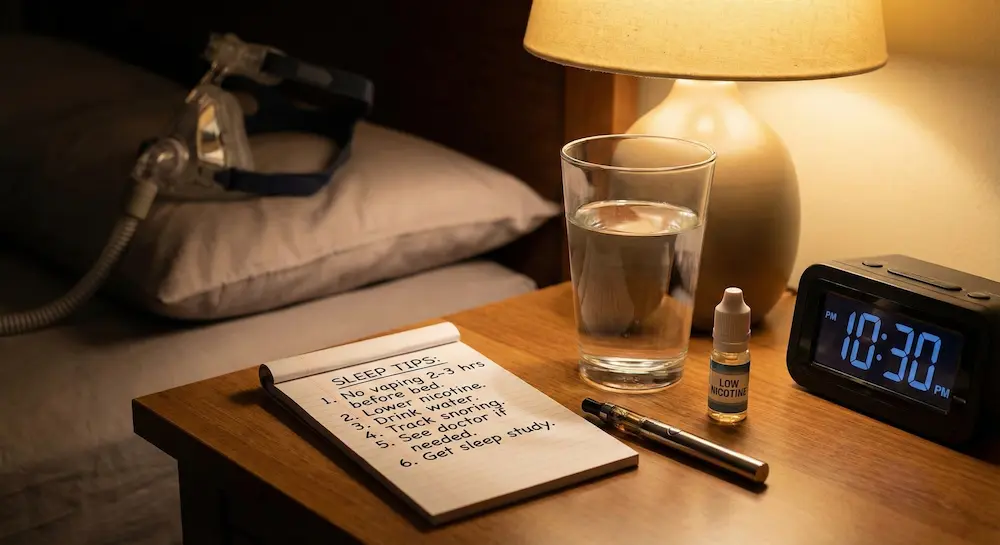
- Avoid vaping 2–3 hours before bedtime
- Lower nicotine strength if possible
- Stay well hydrated
- Pay attention to changes in snoring
- Seek medical evaluation if symptoms persist
A sleep study is the only reliable way to diagnose sleep apnea.
SnagVape — A Smoother Option With Less Irritation
For individuals transitioning from smoking, smoother vaping setups with controlled vapor output may help reduce unnecessary airway irritation before sleep.
SnagVape focuses on balanced, tobacco-style flavors designed for a calmer vaping experience, which may be more suitable for users concerned about nighttime comfort.
FAQ
Can vaping cause sleep apnea?
No evidence vaping directly causes sleep apnea, but vaping may worsen factors associated with obstructive sleep apnea.
Does vaping cause snoring?
Vaping can irritate the airway, which may increase snoring in some individuals.
Does nicotine affect sleep?
Yes. Nicotine can delay sleep onset, reduce deep sleep, and fragment sleep patterns.
Is vaping worse than smoking for sleep apnea?
Smoking poses a greater risk, but vaping is not risk-free for sleep or breathing health.
Can quitting vaping improve sleep?
Reducing or stopping vaping may improve sleep quality and reduce snoring for some people.
You Can Read More
Can Vaping Cause Blurry Vision? Causes, Risks, and What to Do
Does Vaping Increase Anxiety? A Clear, Science-Based Guide
What Is the Difference Between Nicotine Salt and Freebase Nicotine?