
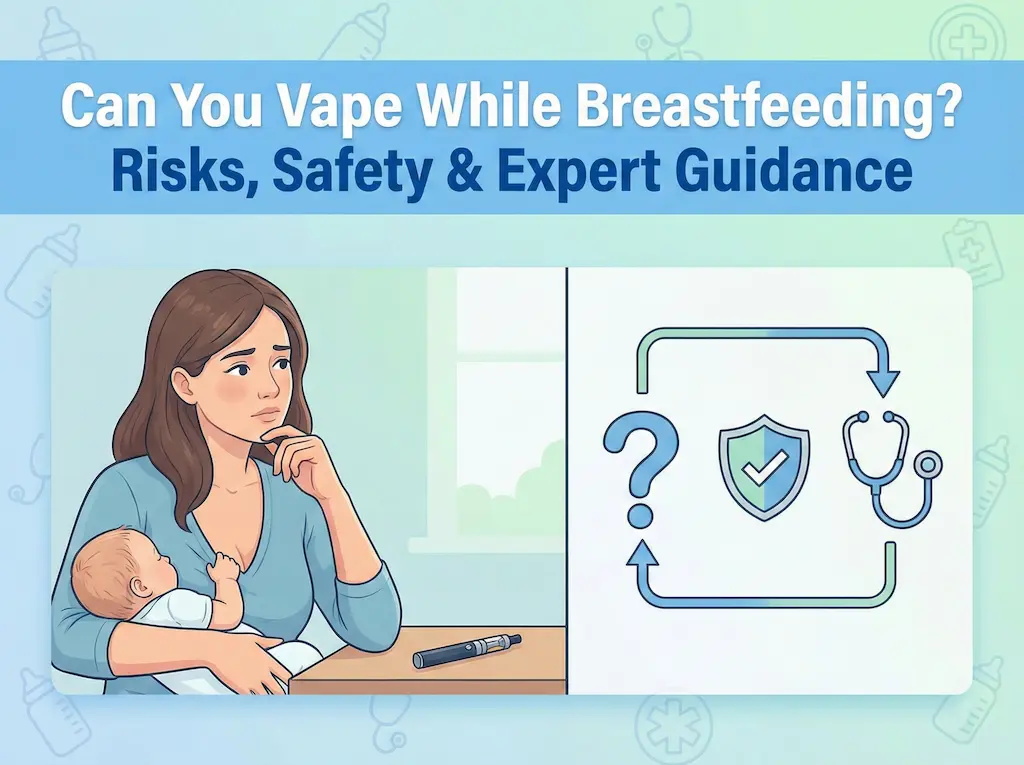
Vaping is often marketed as a cleaner alternative to smoking, but when it comes to breastfeeding mothers, the situation becomes much more complex. Many new moms wonder: Can you vape while breastfeeding?
The short answer: Vaping while breastfeeding is not recommended, but there are harm-reduction strategies if quitting is not immediately possible. Major health organizations—including the CDC, WHO, and American Academy of Pediatrics (AAP)—warn that nicotine and aerosol chemicals can reach the baby through breast milk, secondhand vapor, and thirdhand residue.
This article explains the risks, how nicotine transfers to breast milk, and how to reduce exposure if you choose to continue vaping.
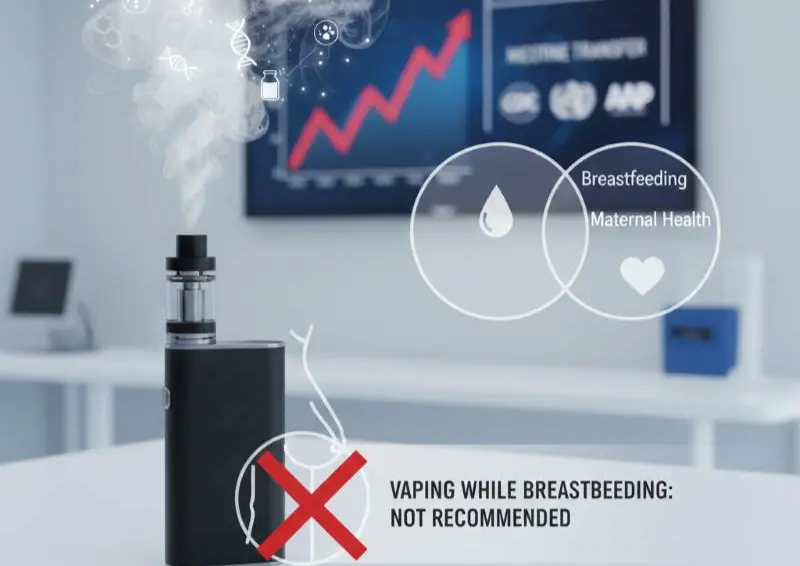
Is It Safe to Vape While Breastfeeding?
According to the CDC’s breastfeeding guidelines, nicotine exposure is linked to infant sleep issues, irritability, and disrupted brain development.
Similarly, the WHO advises avoiding all nicotine products while breastfeeding due to risks to infant growth, lung development, and neurological health.
Conclusion: Vaping is less harmful than smoking, but NOT safe for breastfeeding mothers because:
- Nicotine is passed into breast milk
- Babies inhale chemicals from secondhand vapor
- Residue can stay on clothes, furniture, and skin
- Newborns have extremely sensitive lungs and developing brains
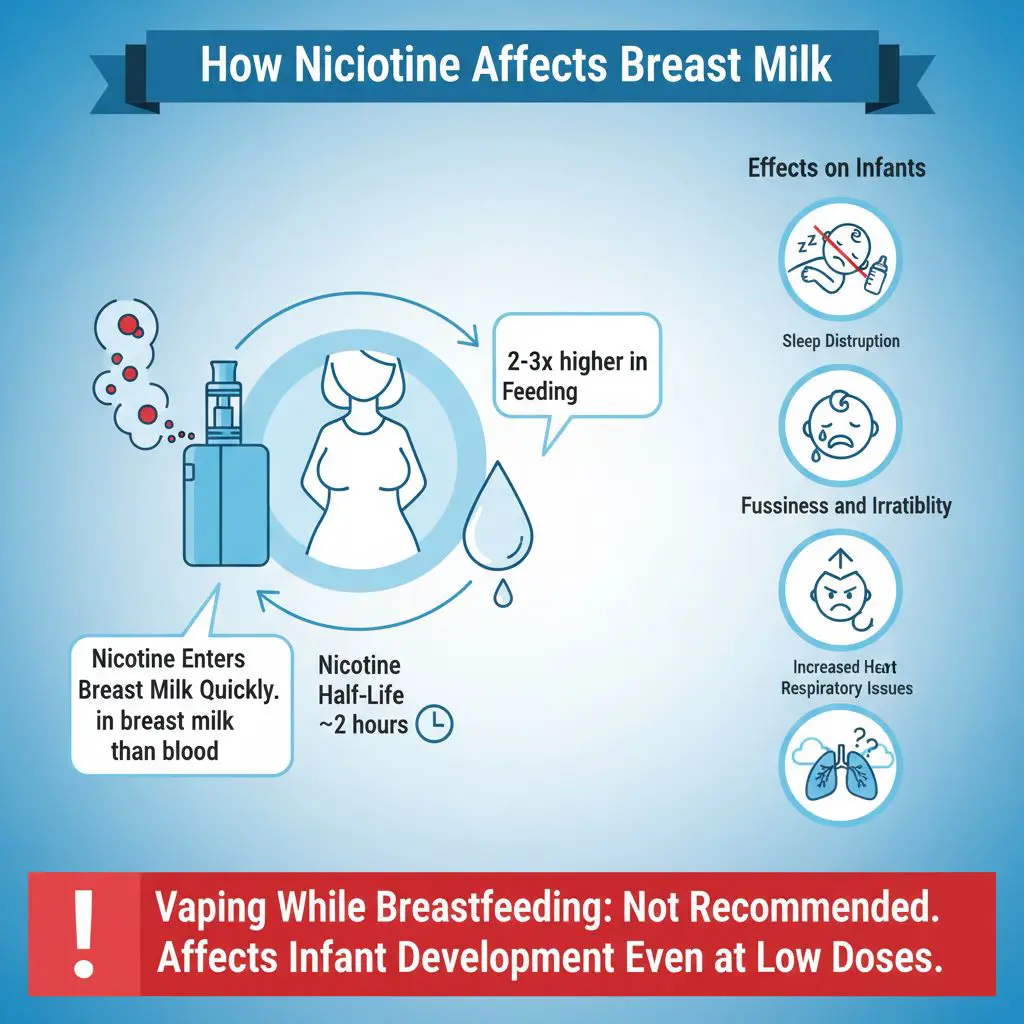
How Nicotine Affects Breast Milk
1. Nicotine Enters Breast Milk Quickly
After vaping, nicotine enters your bloodstream and then moves into breast milk. Research shows nicotine levels can be 2–3 times higher in breast milk than in your blood.
2. Nicotine Half-Life in Breast Milk
Nicotine stays in breast milk for around 2 hours. This can vary based on:
- Nicotine strength in your vape
- How often do you vape
- Your personal metabolism
3. Effects of Nicotine on Infants
Nicotine in breast milk is linked to:
- Sleep disruption
- Shorter feeding duration
- Fussiness and irritability
- Increased heart rate
- Higher risk of respiratory issues
The American Academy of Pediatrics notes that nicotine exposure can affect infant development even at low doses
Is Vaping Safer Than Smoking While Breastfeeding?
Vaping reduces exposure to combustion toxins but does not eliminate risks. E-cigarette aerosols still contain:
- Nicotine
- Ultrafine particles
- Heavy metals (nickel/chromium from coils)
- Flavoring chemicals
So while vaping is less harmful than smoking, breastfeeding mothers are still advised to minimize exposure.
Risks of Vaping Around a Breastfed Baby
Even if you avoid vaping right before feeding, there are three major exposure pathways:
1. Secondhand Vapor (Aerosol Exposure)
Babies inhale aerosolized chemicals from the air. The CDC states that secondhand vape aerosol contains harmful substances, not “harmless water vapor.”
2. Thirdhand Residue
Nicotine sticks to:
- Clothing
- Skin
- Hair
- Furniture
Babies take in this residue through skin contact, their hands, or breastfeeding.
3. Increased SIDS Risk
Nicotine affects an infant’s breathing stability and may increase the risk of Sudden Infant Death Syndrome (SIDS), according to the AAP.
Timing: Can You Vape and Then Breastfeed?
While no timing makes vaping “safe,” harm-reduction guidance suggests:
- Vape immediately after breastfeeding, not before.
- Wait 1.5–2 hours before your next feeding to allow nicotine levels to drop.
- Pumping and dumping does not remove nicotine from breast milk.
- Zero-nicotine vapes reduce nicotine transfer but still expose babies to aerosol chemicals.
What Health Organizations Say
| Organization | Position |
| CDC | Avoid nicotine while breastfeeding; reduces infant health risks. |
| WHO | Recommends eliminating nicotine exposure to protect infant development. |
| AAP | Nicotine negatively affects infant brain and lung development . |
Across all organizations, the message is consistent: Avoid vaping if possible.
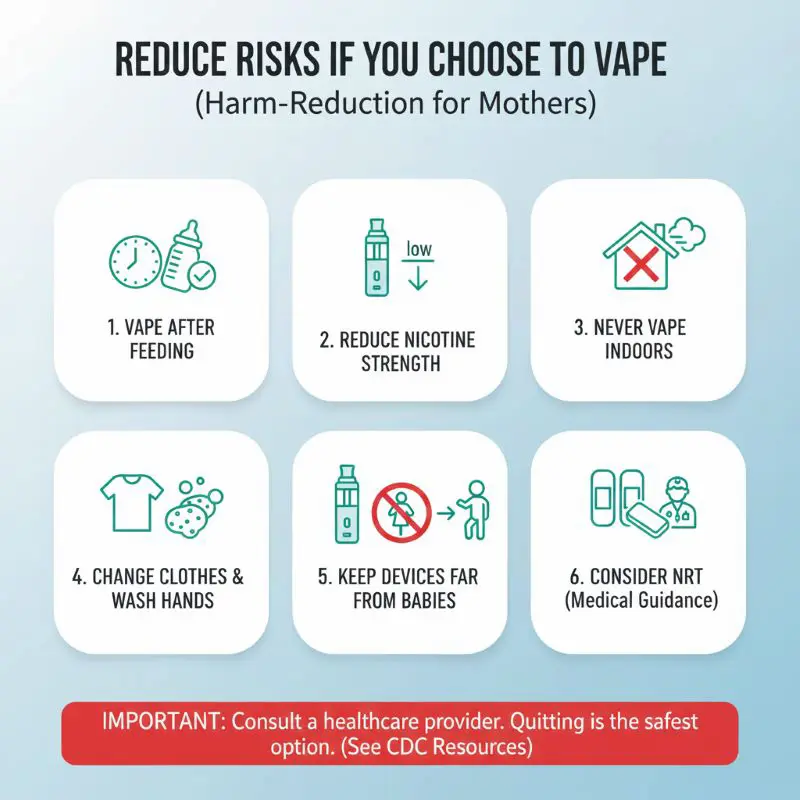
If You Choose to Vape, How to Reduce Risks
For mothers unable to quit immediately, these harm-reduction steps can help:
1. Vape after feeding, not before
Gives the body time to metabolize nicotine.
2. Reduce nicotine strength
Lower nicotine → less infant exposure.
3. Never vape indoors
Avoid inhalation by the baby.
4. Change clothes & wash hands after vaping
Reduces thirdhand residue.
5. Keep devices far from babies
Prevents poisoning or burns.
6. Consider nicotine replacement therapy (NRT)
Nicotine gum/patch may be a safer alternative—but only with medical guidance. (See CDC tobacco cessation resources)
Should Mothers Quit Vaping While Breastfeeding?
Benefits of quitting:
- No nicotine in milk
- No secondhand aerosol exposure
- No thirdhand residue
- Better infant sleep
- Reduced SIDS risk
Quitting may be difficult due to postpartum stress, hormones, and nicotine dependence.
But support programs from organizations like the CDC and local health departments are available.
Safer Alternatives to Vaping While Breastfeeding
Although quitting is ideal, these options may reduce harm:
- Nicotine gum (low dose)
- Nicotine patch (consult doctor first)
- Behavioral therapy
- Mindfulness approaches
- Zero-nicotine vapes (still not 100% safe)
Important: Always consult a healthcare provider before using nicotine replacement therapies while breastfeeding.
FAQ — Breastfeeding & Vaping
1. Can vaping harm my baby while breastfeeding?
Yes. Nicotine and aerosol chemicals can affect infant development and sleep.
2. Does nicotine pass into breast milk?
Yes. It moves into breast milk within minutes of vaping.
3. How long should I wait after vaping before breastfeeding?
About 2 hours to let nicotine levels drop.
4. What if I vape zero-nicotine?
It’s safer than nicotine vapes, but babies are still exposed to secondhand and thirdhand chemicals.
5. Is vaping safer than smoking while breastfeeding?
Yes, but it’s still not safe. It is less harmful, not harmless.
6. Can vaping increase SIDS risk?
Nicotine exposure is linked to a higher risk of SIDS, according to the AAP.
You Can Read More
Does Vaping Make You Tired? A Simple Guide to Why It Happens
Can You Get Herpes From Sharing a Vape? (What the Science Says)
How Long Do the Balls in a Ball Vape Last? A Real-World Lifespan Breakdown