
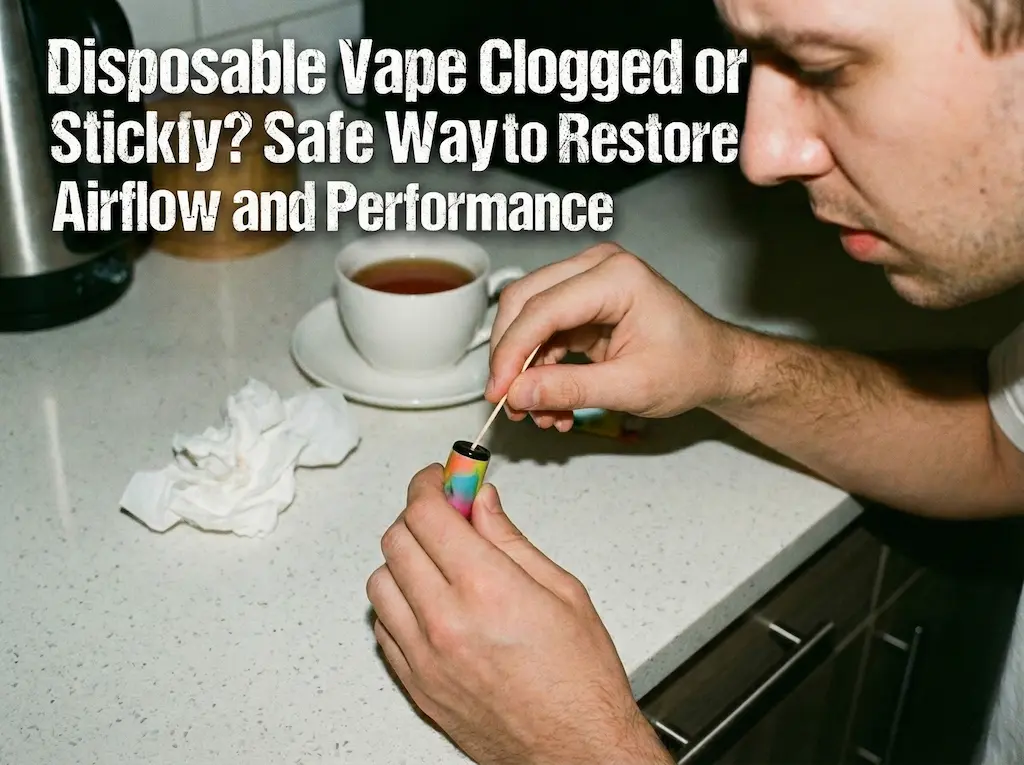
Unclogging, Resin Removal, Wax Issues, and What Cleaning Can (and Can’t) Do
Disposable vapes are designed to be simple and maintenance-free, but in real-world use, many people experience issues such as clogged airflow, weak hits, residue buildup, or strange tastes. This often leads to a common question: how to clean a disposable vape.
This guide explains what cleaning a disposable vape realistically means, what you can safely do, what you should never attempt, and when cleaning will not help at all. It also addresses related questions such as unclogging a disposable vape pen, removing resin, dealing with wax contamination, and whether it’s possible to “clean your lungs” after vaping.
Key Takeaways – Cleaning Disposable Vapes Safely
- Disposable vapes can only be cleaned externally and at the airflow level
- Mouthpiece condensation is the most common cause
- Internal components should never be washed or disassembled
- Wax contamination usually means the device is no longer usable
- You cannot “clean” lungs—reduction and time matter most
Can You Actually Clean a Disposable Vape?
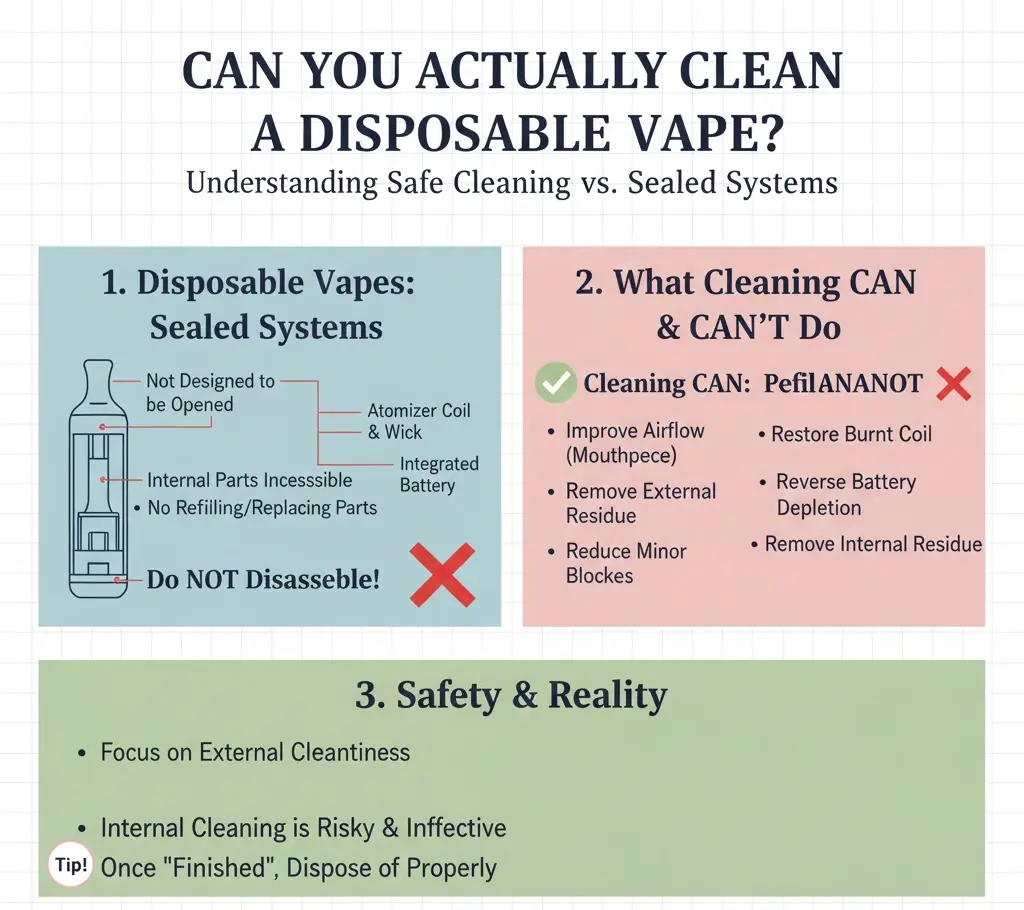
The short answer is: you can clean certain external and airflow-related areas, but you cannot fully clean or refurbish a disposable vape.
Disposable vapes are sealed systems. The coil, wick, battery, and internal chamber are not designed to be accessed or washed. Any attempt to fully disassemble or rinse the internal components can create safety risks, including battery damage or chemical exposure.
What cleaning can do
- Improve airflow if the mouthpiece is clogged
- Remove condensation or residue from the exterior
- Reduce minor blockages caused by thickened e-liquid
What cleaning cannot do
- Restore a burnt coil
- Refill or safely open the device
- Reverse battery depletion
- Remove residue trapped inside the coil and wick
Understanding this boundary prevents damage and unrealistic expectations.
What Causes Disposable Vapes to Get Clogged or Dirty?
Clogging and residue buildup are usually caused by condensation and e-liquid behavior, not dirt.
Common causes include:
- Condensation buildup from repeated short puffs
- Thickened e-liquid, especially in cold temperatures
- Frequent chain vaping, which increases moisture inside the airflow path
- Improper storage, such as leaving the device on its side or upside down
- Short, sharp inhales, which pull vapor back into the mouthpiece
Over time, this moisture collects and partially blocks airflow, making the vape feel clogged or weak.
If you want a deeper breakdown of why disposable vapes clog and how usage habits and storage affect airflow, you can also read our detailed guide on the top reasons disposable vapes get clogged.
What Is the Best Way to Unclog a Disposable Vape Pen?
If your disposable vape has restricted airflow, these are the safest and most effective methods.
Method 1: Clean the Mouthpiece
The mouthpiece is the most common clog point.
How to do it:
- Remove any silicone or rubber plug.
- Use a dry paper towel, tissue, or cotton swab.
- Gently wipe the inside of the mouthpiece opening.
- Remove visible condensation or residue.
- Let the device sit upright for a few minutes.
Why does this work: Condensation tends to pool near the top of the device. Clearing it restores airflow without touching internal components.
Method 2: Clear the Airflow Gently
Airflow can sometimes be blocked by internal condensation.
Safe technique:
- Hold the vape upright.
- Gently blow into the mouthpiece once or twice.
- Wipe away any moisture that comes out.
What not to do:
- Do not blow forcefully.
- Do not inhale sharply to “pull” a clog free.
Too much pressure can push liquid deeper into the coil.
Method 3: Normalize Temperature
Cold temperatures thicken e-liquid, increasing clogging.
What helps:
- Hold the device in your hands for a few minutes.
- Keep it in a room-temperature environment.
- Avoid leaving it in a cold car or near air conditioning vents.
Once the liquid returns to normal viscosity, airflow often improves naturally.
If you’re looking for a full step-by-step unclogging process—from quick checks to airflow clearing techniques—you can follow our complete guide on how to unclog a disposable vape.
How to Remove Resin From a Vape Pen (What’s Realistic and What Isn’t)
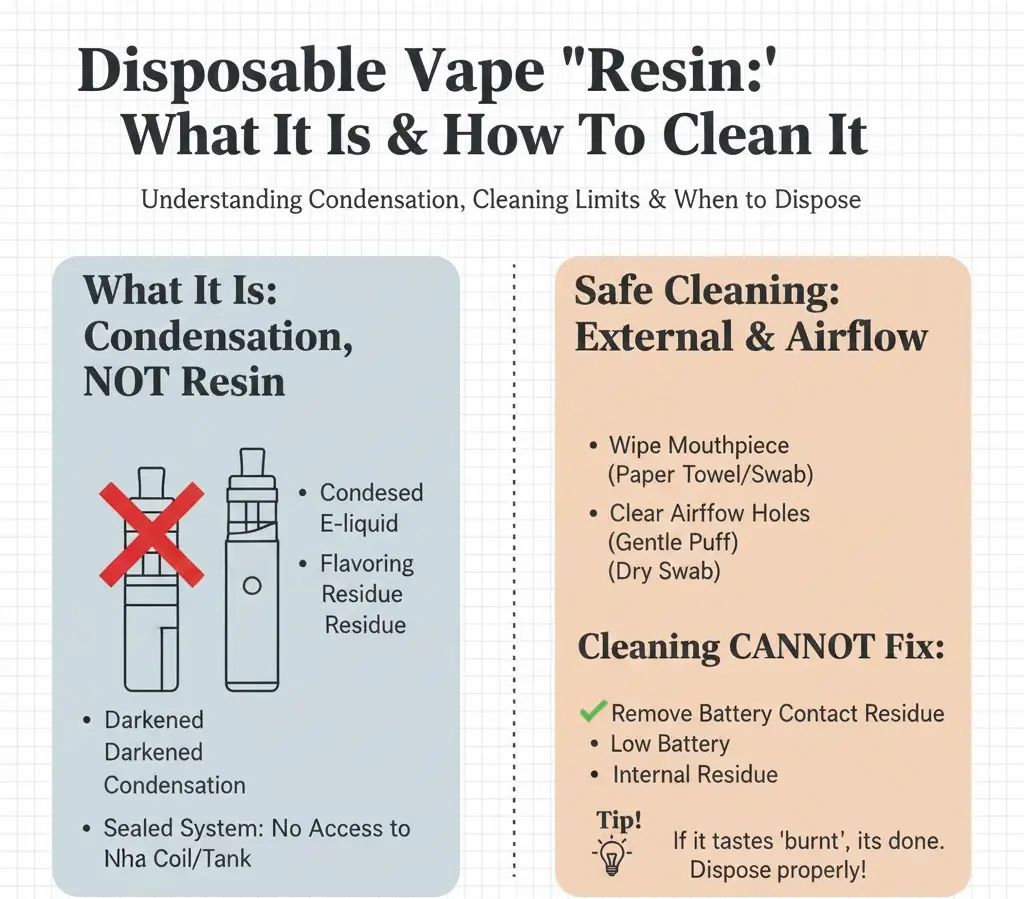
Many users search for “how to remove resin from a vape pen” because they notice a sticky, dark, or oily substance near the mouthpiece or airflow holes. In disposable vapes, however, this substance is almost never true resin in the traditional sense.
What People Call “Resin” in Disposable Vapes
In dry herb or concentrate devices, resin refers to combustion or vaporization byproducts that solidify inside the chamber. Disposable vapes work very differently.
In disposable vapes, what users usually see is:
- Condensed e-liquid vapor
- Flavoring residue mixed with moisture
- Slightly darkened condensation caused by heat cycles
This residue looks sticky and brownish, which is why many people label it as “resin,” but chemically and structurally, it is condensation buildup, not hardened plant resin.
Understanding this distinction is important because it determines what can be safely cleaned—and what cannot.
Where This Residue Actually Builds Up
In disposable vapes, residue typically accumulates in three areas:
- Inside the mouthpiece
- Vapor cools as it rises
- Moisture condenses near the top
- Residue collects where airflow narrows
- Around airflow openings
- Small droplets escape during inhalation
- Repeated use thickens the residue
- On the exterior surface
- From handling
- From minor leaks or condensation escaping
Residue inside the coil and wick area is not accessible and should never be targeted for cleaning.
What You Can Clean Safely
Cleaning is limited to external and semi-external areas only.
You can safely clean:
- The mouthpiece opening
- The visible interior lip of the mouthpiece
- The airflow entry holes
- The outer shell of the device
How to do it correctly:
- Use a dry cotton swab or a folded paper towel
- Gently absorb moisture and residue
- Rotate the swab instead of pushing it inward
- Clean slowly and lightly
If residue feels sticky on the exterior:
- Lightly dampen a cloth with warm water
- Wipe only the outside surface
- Dry completely before use
This removes buildup without risking internal damage.
What You Should Never Attempt (And Why)
Some cleaning methods seem logical but are dangerous for disposable vapes.
You should never:
- Pour alcohol, water, or cleaning liquid into the device
- Rinse or soak any part of the vape
- Insert tools, toothpicks, or metal objects deep into the mouthpiece
- Try to “scrape” residue from inside the airflow channel
Why are these actions dangerous:
- Liquids can reach the battery and cause failure or short circuits
- Alcohol can dissolve seals and adhesives
- Tools can puncture the wick or coil
- Internal damage often leads to leaks, burnt taste, or overheating
Once residue is inside the coil or wick, it cannot be safely removed. At that stage, cleaning will not restore performance.
How to Get Wax Out of a Disposable Vape? (Why It Usually Can’t Be Fixed)
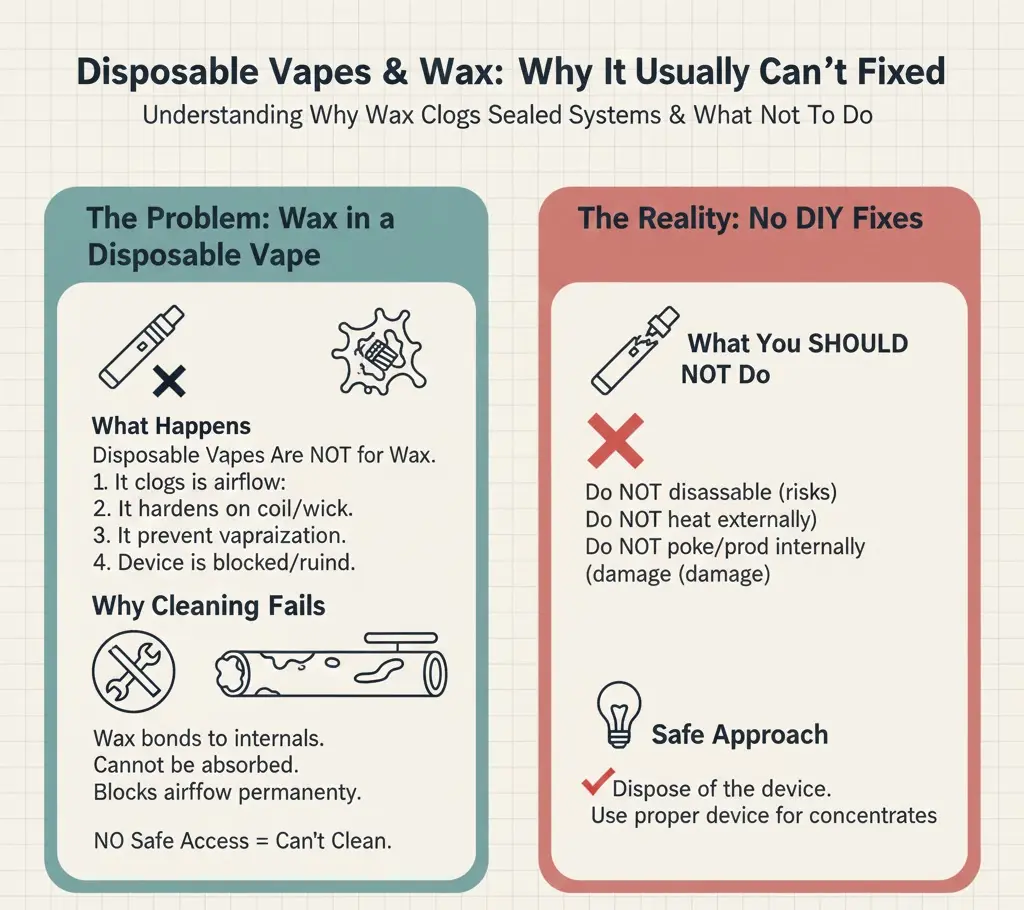
This is one of the most important safety clarifications: Disposable vapes are not designed for wax, concentrates, or thick oils.
When wax enters a disposable vape—intentionally or accidentally—it creates problems that cleaning cannot solve.
What Happens When Wax Enters a Disposable Vape
Wax behaves very differently from standard e-liquid.
Once inside a disposable vape:
- Wax cools and hardens quickly
- It clogs airflow channels
- It coats the coil and wick unevenly
- It prevents proper vaporization
Unlike e-liquid, wax does not reabsorb or redistribute evenly. Even slight wax contamination can permanently block the device.
Why Cleaning Doesn’t Work for Wax
Wax-related issues are structural, not surface-level.
- Wax bonds to internal surfaces
- It cannot be absorbed by the wick properly
- It disrupts the coil heating balance
- It blocks airflow from inside the device
Because disposable vapes are sealed, there is no safe access point to remove wax without opening the device—something that should never be done.
What You Can Try (Very Limited)
If wax exposure was minimal and recent, you may attempt:
- Letting the device sit upright at room temperature
- Allowing thick material to soften naturally
- Trying one gentle airflow clearing attempt
This may help only if the blockage is very minor.
When You Must Stop and Replace the Device
You should stop using the disposable vape immediately if:
- Airflow remains blocked
- No vapor is produced
- The device tastes burnt
- The device becomes unusually warm
- You need to inhale forcefully to get vapor
At this point, continuing to use the device increases the risk of:
- Overheating
- Coil damage
- Battery stress
Do not apply external heat, such as hair dryers or flames, and do not attempt to melt wax internally. These actions create serious safety risks.
The Bottom Line on Wax and Disposable Vapes
Disposable vapes are single-use systems designed for specific e-liquid viscosity ranges. Wax contamination is not a maintenance issue—it is a compatibility issue.
Once wax enters a disposable vape, replacement is the only safe and realistic solution.
Common Cleaning Mistakes That Make Things Worse
Many well-intentioned cleaning attempts actually damage disposable vapes.
Avoid these mistakes:
- Washing the vape with water
- Using alcohol or cleaning solutions internally
- Taking the device apart
- Heating the device with a hairdryer or flame
- Shaking aggressively to “clear” liquid
These actions can damage the battery, flood the coil, or create safety hazards.
Can I Clean My Lungs After Vaping?
This is a common question, but the idea of “cleaning your lungs” is misleading.
What’s important to understand:
- The lungs already have natural self-cleaning mechanisms.
- There is no proven method to manually “clean” lungs after vaping.
- Reducing or stopping exposure is the most effective step.
What actually helps lung recovery:
- Reducing or stopping vaping
- Staying hydrated
- Breathing clean air
- Time and natural healing processes
If someone experiences persistent breathing issues, medical guidance—not home remedies—is appropriate.
When Cleaning Won’t Help, and It’s Time to Replace
Cleaning has limits. A disposable vape should be replaced if:
- The taste is consistently burnt
- There is no vapor despite airflow
- The battery no longer activates
- The device overheats
- Liquid appears depleted
Disposable vapes are consumable products, not serviceable devices.
Tips to Prevent Clogging and Buildup in Disposable Vapes
Prevention is more effective than cleaning.
Best practices:
- Store the device upright
- Avoid extreme cold or heat
- Take smooth, steady puffs
- Avoid chain vaping
- Wipe the mouthpiece regularly
Recognizing early signs of clogging helps prevent full blockage.
FAQ – Cleaning Disposable Vapes
What is the best way to unclog a disposable vape pen?
Cleaning the mouthpiece, gently clearing airflow, and normalizing temperature are the safest methods.
How do you remove resin from a vape pen?
You can remove visible residue from the mouthpiece and exterior, but internal buildup cannot be safely removed.
How do you get wax out of a disposable vape?
Disposable vapes are not designed for wax. If wax blocks the device, replacement is the safest option.
Can I clean my lungs after vaping?
is no direct way to clean the lungs. Reducing exposure and allowing natural recovery is the most effective approach.
Can disposable vapes be washed?
No. Washing or soaking a disposable vape can damage the battery and internal components.
See more
How to Fix a Disposable Vape That Won’t Hit
What Disposable Vape Lasts the Longest?
How to Use a Disposable Vape Pen with a Button: A Beginner’s Step-by-Step Guide