
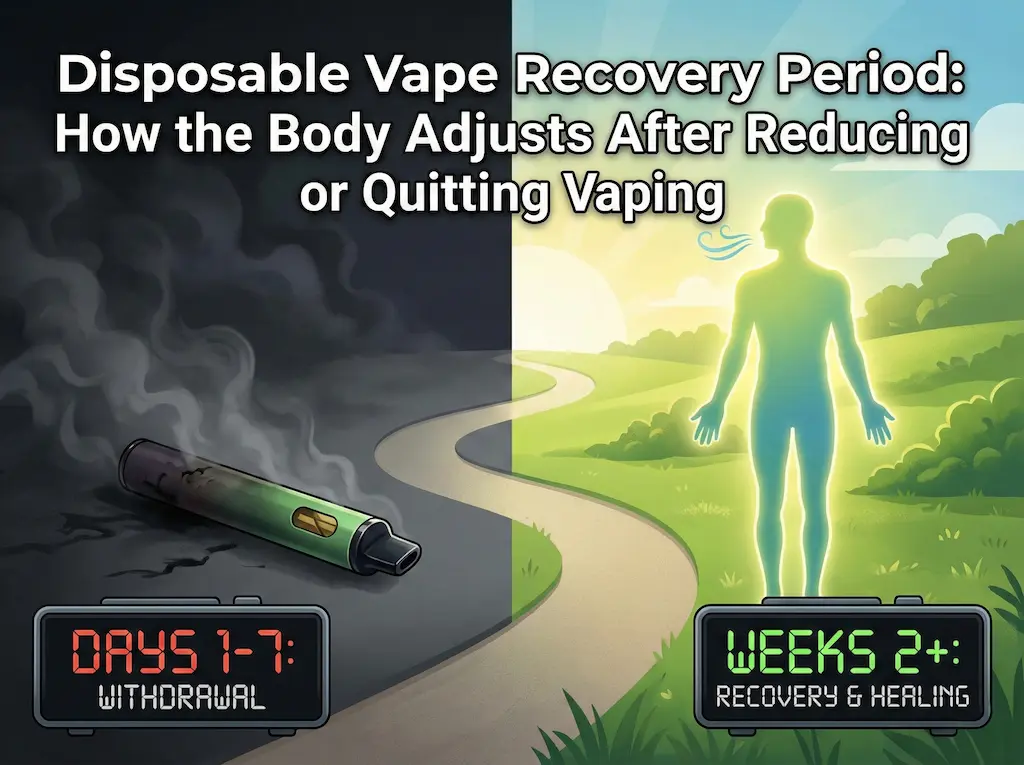
People rarely think about recovery when they first start using disposable vapes. Most users focus on flavor, convenience, or how vaping feels compared to smoking. Recovery only becomes a concern later—often when vaping starts to feel less enjoyable, when dependence becomes noticeable, or when someone decides to cut back or quit.
At that point, questions tend to surface quickly: How long does it take to recover after vaping? Why do I feel worse before I feel better? Is my usage level too high? Why does day three feel unbearable for so many people?
The recovery period for disposable vapes is not a single phase with a clear start and end. It is a process shaped by nicotine exposure, behavioral habits, and how the body adapts once that exposure stops. Understanding this process can make recovery feel less confusing and far less discouraging.
How Long Does It Take to Recover After Vaping?
One of the most common misconceptions about vaping recovery is that it follows a predictable timeline. Many people expect to feel noticeably better after a fixed number of days, only to feel frustrated when that doesn’t happen.
Why Recovery After Vaping Has No Fixed Timeline
The body does not recover from vaping on a countdown clock. Recovery speed varies because vaping habits themselves vary widely. Disposable vapes, in particular, encourage patterns that are easy to underestimate. Unlike traditional cigarettes or refillable devices, disposables are often used casually, frequently, and without clear boundaries.
Someone who took occasional puffs in specific situations exposed their body to nicotine very differently from someone who kept a disposable vape within arm’s reach all day. Frequency matters more than people realize. Even small, repeated doses of nicotine keep the nervous system in a constant state of stimulation.
Beyond usage habits, recovery is influenced by factors that are rarely discussed in vaping conversations: sleep quality, hydration, baseline anxiety levels, and individual sensitivity to nicotine. Two people with similar vaping histories can experience completely different recovery timelines simply because their bodies respond differently to stress and chemical withdrawal.
What the First Few Days After Stopping Vaping Often Feel Like
The early recovery phase is often the most confusing. Instead of immediate relief, many users notice new or intensified sensations shortly after reducing or stopping disposable vape use.
Dryness and throat irritation are commonly reported during this stage. While this can feel alarming, it often reflects the absence of constant vapor rather than new damage. Nicotine affects saliva production and throat moisture, and when nicotine intake suddenly drops, dryness can become more noticeable.
Coughing is another change that surprises people. Rather than signaling worsening lung health, coughing is often reported when the airways begin responding differently without frequent vapor exposure. For some, coughing appears briefly and fades; for others, it comes and goes.
Fatigue, headaches, and changes in appetite are also frequently reported. These symptoms are closely tied to nicotine withdrawal and nervous system recalibration rather than the lungs alone. While uncomfortable, they are often temporary.
What May Improve as Recovery Progresses
As recovery continues, improvements usually appear gradually rather than dramatically. Many users notice that throat irritation becomes less persistent first, especially once hydration improves. Breathing may feel less strained during everyday activities, even if lung capacity hasn’t changed noticeably.
Changes in taste and smell are also commonly reported. Nicotine and vapor exposure can dull sensory perception, so some people become more aware of flavors and smells within days or weeks of reducing use.
Importantly, recovery rarely moves in a straight line. Feeling better one day does not mean recovery is complete, just as feeling worse the next day does not mean something is wrong. Fluctuations are part of how the body adapts.
How Long Should a Disposable Vape Last?
Questions about recovery are often connected to questions about usage. Many people start reassessing their habits only after realizing how quickly they go through disposable vapes.
Why Puff Counts Rarely Reflect Real Usage
Disposable vapes are commonly labeled with puff counts, but these numbers are estimates based on idealized usage patterns. In real life, a “puff” is not standardized. It can be a short inhale or a long draw, taken occasionally or repeatedly within minutes.
Usage patterns matter far more than puff counts. A person who takes frequent, unconscious puffs throughout the day exposes their body to nicotine far more consistently than someone who uses the same device sparingly—even if both technically consume a similar number of puffs.
This distinction becomes important during recovery. Devices that encourage constant use tend to create stronger behavioral habits, which often translate into more intense cravings once vaping stops.
Light, Moderate, and Heavy Disposable Vape Use
Although there is no official classification, usage often falls into broad patterns. Light users tend to vape occasionally and can go long periods without thinking about it. Moderate users vape daily but with noticeable breaks. Heavy users often vape automatically, reaching for the device without conscious intent.
The heavier the usage pattern, the more noticeable the recovery phase tends to be. This does not mean recovery is impossible—it simply means the adjustment period may feel more intense.
Is 1000 Puffs a Day Bad?
Questions about puff counts usually reflect concern about dependence rather than curiosity about numbers.
Why Puff Numbers Can Be Misleading
Puff count alone does not determine how vaping affects the body. Nicotine strength, puff duration, and how continuously those puffs are taken all matter more than raw numbers.
Continuous vaping keeps nicotine levels elevated and prevents the nervous system from returning to baseline. Over time, this can strengthen both chemical dependence and habitual behavior.
Rather than focusing on whether a specific number is “bad,” it is often more useful to watch for signals such as needing the device to feel normal, feeling uncomfortable between puffs, or vaping without conscious awareness. These patterns often correlate more strongly with a difficult recovery period.
Why Is Day 3 the Hardest When Quitting Vaping?
Among people who attempt to quit vaping, day three is frequently described as a breaking point.
The Role of Nicotine Withdrawal Timing
Nicotine leaves the bloodstream relatively quickly, but the brain’s adaptation to nicotine does not disappear overnight. By day two or three, nicotine levels have dropped significantly, while nicotine receptors in the brain are still highly sensitive.
This mismatch creates a peak withdrawal window. Cravings intensify, concentration drops, and emotional regulation becomes more difficult.
The Mental Challenge of Day Three
What makes day three particularly difficult is not just physical discomfort, but psychological pressure. By this point, initial motivation often fades. The novelty of quitting wears off as discomfort peaks.
Many people misinterpret this phase as a sign that quitting is harmful or impossible. In reality, it often indicates that the body is actively adjusting. Understanding this pattern can make the experience feel less personal and more predictable.
Why Day Three Usually Passes
After this peak, many people report that cravings become less intense and more spaced out. The body begins to recalibrate, and the nervous system slowly adapts to functioning without constant nicotine stimulation.
This does not mean recovery is complete—but it often marks a turning point.
Disposable Vape Recovery Compared to Long-Term Vaping
Recovery experiences differ depending on how long someone has vaped.
Short-term users often report milder withdrawal symptoms and faster stabilization. Long-term or heavy users may experience stronger cravings and a longer adjustment period. Neither experience is abnormal.
What matters most is recognizing that recovery is not a judgment on past behavior—it is simply the body responding to change.
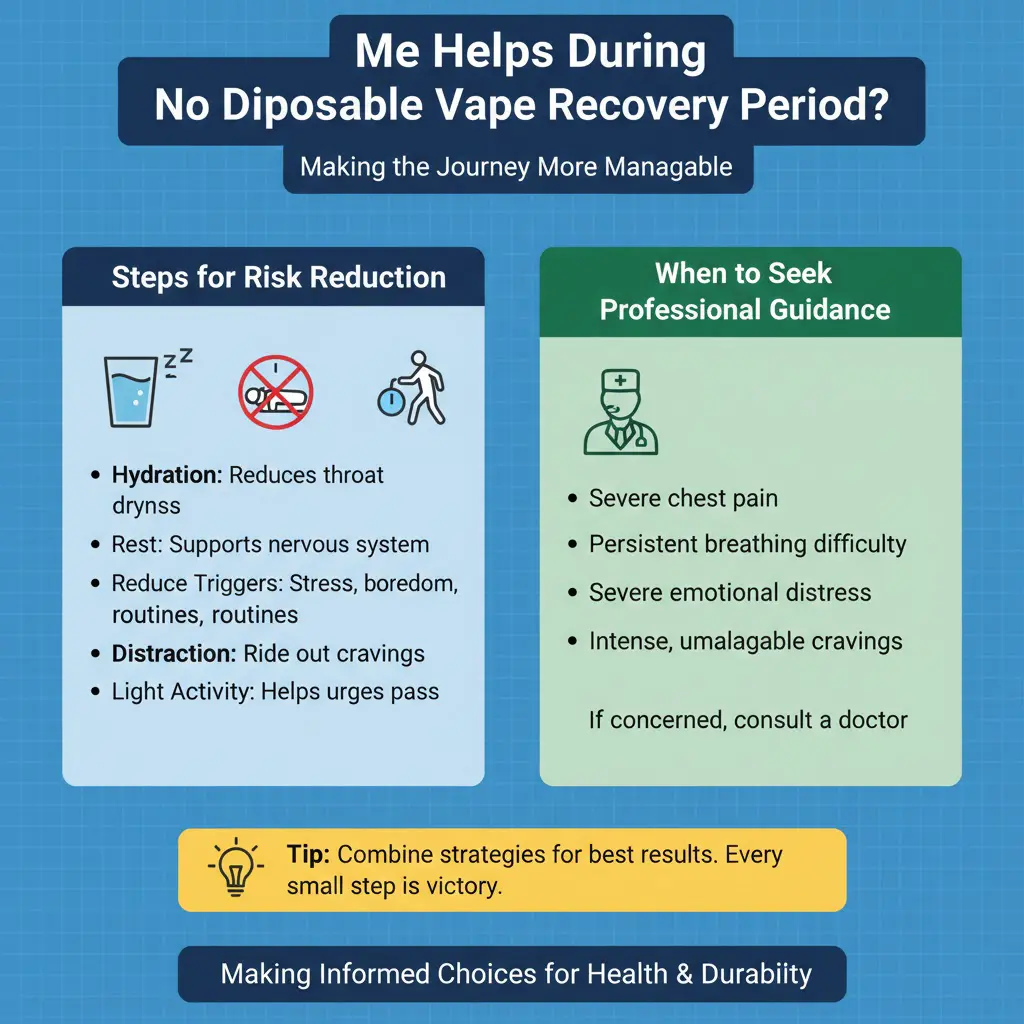
What Helps During the Disposable Vape Recovery Period?
There is no shortcut through recovery, but certain habits can make the process more manageable.
Hydration plays a significant role in reducing throat discomfort and dryness. Adequate rest supports nervous system regulation, which is under strain during withdrawal. Reducing triggers—such as stress, boredom, or routines closely tied to vaping—can also reduce the intensity of cravings.
Distraction and light activity help many people ride out short-lived urges. Cravings often peak and fade within minutes if not acted upon.
If symptoms such as chest pain, persistent breathing difficulty, or severe emotional distress occur, professional guidance is essential.
Is Recovery Different for Disposable Vapes Compared to Other Devices?
Disposable vapes tend to encourage frequent, low-effort use. This pattern can strengthen habitual behavior, which may make the early recovery phase feel more intense.
Over time, however, recovery patterns tend to converge. As nicotine exposure decreases and habits change, differences between device types become less significant.
Common Misunderstandings About Vaping Recovery
Many people assume that feeling worse after quitting means quitting is harmful. Others believe switching devices automatically leads to recovery. These assumptions can undermine motivation.
Recovery often involves temporary discomfort. That discomfort does not mean damage is increasing—it usually means the body is adapting.
Final Thoughts: Understanding the Disposable Vape Recovery Period
The recovery period for disposable vapes is shaped by chemistry, habit, and individual physiology. The first few days—especially day three—are often the hardest, but they are also temporary.
Recovery does not follow a straight line, and it does not look the same for everyone. Understanding what is happening inside the body can reduce fear, frustration, and self-blame.
Paying attention to usage patterns, allowing time for adjustment, and responding to persistent symptoms responsibly are key steps in navigating recovery safely and realistically.
FAQ
How long does recovery after vaping take?
Recovery varies widely and can range from days to weeks, depending on usage and individual factors.
Why do I feel worse before I feel better after quitting vaping?
Nicotine withdrawal often peaks before improving, especially around day two or three.
Is heavy disposable vape use linked to harder recovery?
More frequent use often leads to stronger withdrawal symptoms, but recovery is still possible.
Why is day three so difficult when quitting vaping?
Nicotine withdrawal often reaches peak intensity during this window.
Does recovery mean the lungs fully heal?
Some improvement may occur, but recovery experiences vary and are not guaranteed.
You Can Read More
How to Do Vape Tricks (Step-by-Step Guide for Beginners)
Disposable Vape vs Refillable Vape Maintenance: Health, Longevity, and What to Know
Disposable Vape Throat Hit Explained: Why It Happens and How to Reduce It