
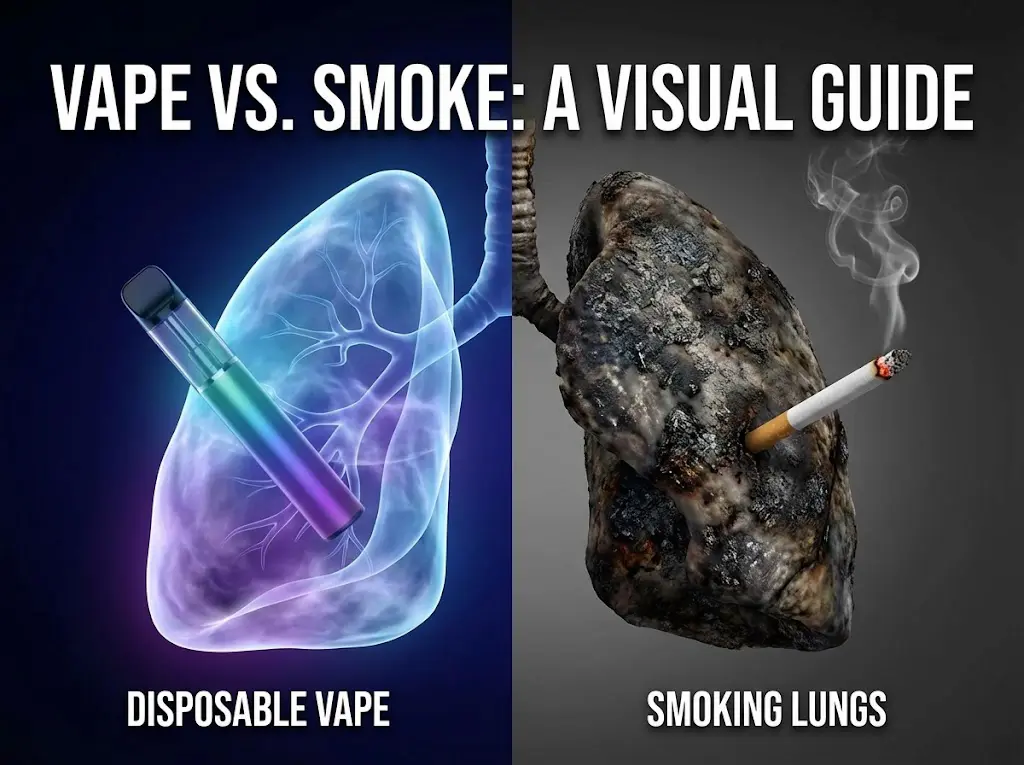
Why Lung Health Matters in the Vaping vs Smoking Debate
When people compare disposable vapes and cigarettes, the question almost always comes back to the lungs. Unlike many other organs, the lungs are directly exposed to whatever a person inhales. Every puff—whether from a cigarette or a vape—passes through the airways, reaches the alveoli, and interacts with delicate tissue designed for oxygen exchange, not chemical exposure.
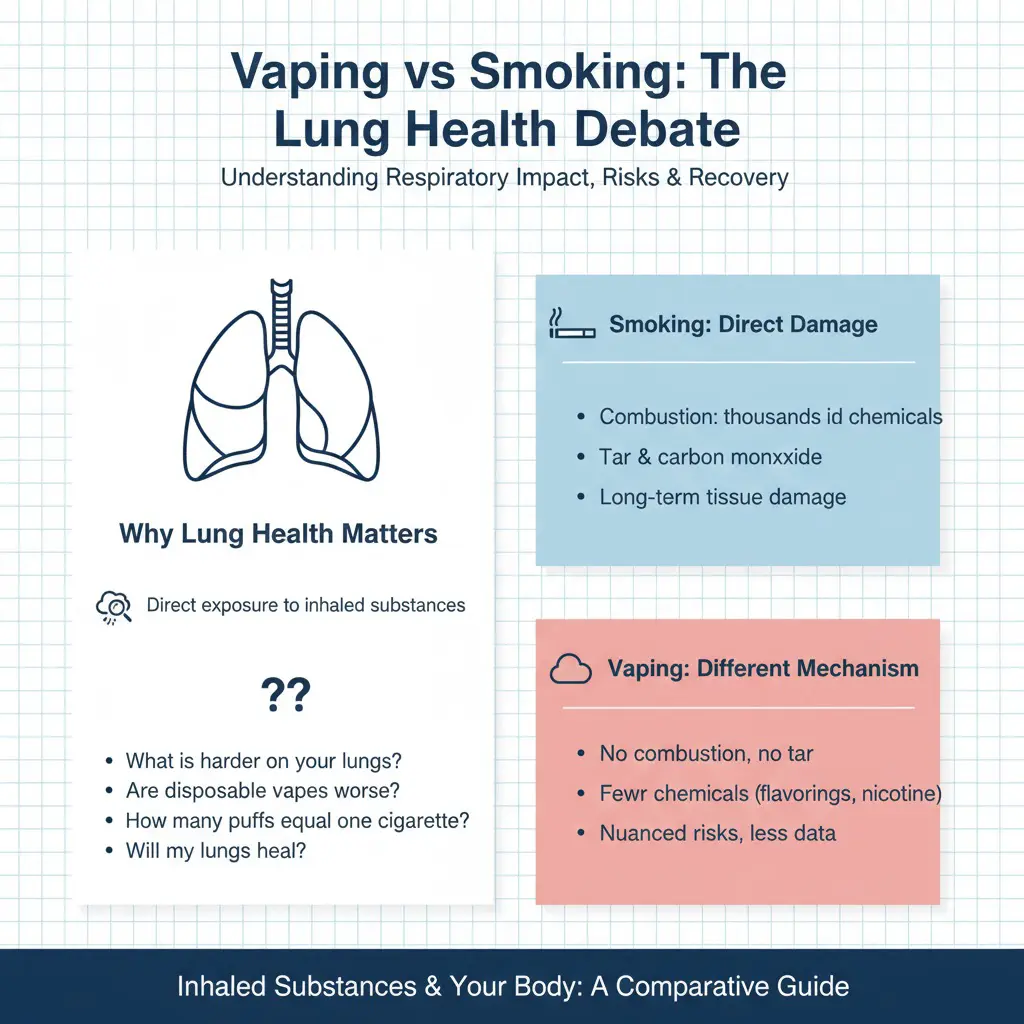
This is why common questions continue to appear in searches and discussions:
- What is harder on your lungs, vaping or smoking?
- Are disposable vapes worse than smoking?
- How many puffs of a vape equal one cigarette?
- Will my lungs heal if I vape instead of smoking?
To answer these honestly, it’s essential to move beyond slogans like “vaping is safe” or “vaping is just as bad.” The reality is more nuanced. Smoking and vaping affect the lungs in different ways, with other mechanisms, timelines, and levels of scientific certainty.
Key Takeaways
- Smoking is significantly harder on the lungs than vaping due to combustion. Cigarettes burn tobacco, producing tar, carbon monoxide, and thousands of toxic byproducts that directly damage lung tissue.
- Disposable vapes do not contain tar or combustion smoke, but they are not harmless. Vaping introduces aerosolized chemicals that can irritate airways and trigger inflammation.
- Disposable vapes are generally not considered worse than smoking for lung health, but they still pose risks—especially with heavy or long-term use.
- “Puffs vs cigarettes” comparisons are imprecise. Nicotine delivery may be comparable, but lung damage depends on particle type, chemistry, and frequency, not just puff count.
- Lungs can begin to recover after quitting smoking, even if vaping is used as a transition, provided smoking is fully stopped and dual use is avoided.
- Risk reduction does not equal safety. Switching from smoking to vaping may lower exposure to certain toxins, but the healthiest option for the lungs is avoiding inhaled nicotine products altogether.
How the Lungs Respond to Inhaled Substances
The lungs are built to move oxygen in and carbon dioxide out. They are not designed to process smoke, aerosols, or chemical flavorings.
Inside the lungs:
- Airways transport inhaled air
- Cilia help clear debris and particles
- Alveoli allow oxygen to pass into the bloodstream
When foreign particles enter the lungs, the body responds by:
- triggering inflammation
- increasing mucus production
- activating immune cells
The inhaled material matters greatly. Solid particles behave differently from liquid aerosols, and combustion byproducts behave differently from heated vapor. This distinction is central to understanding the difference between smoking and vaping.
How Smoking Damages the Lungs
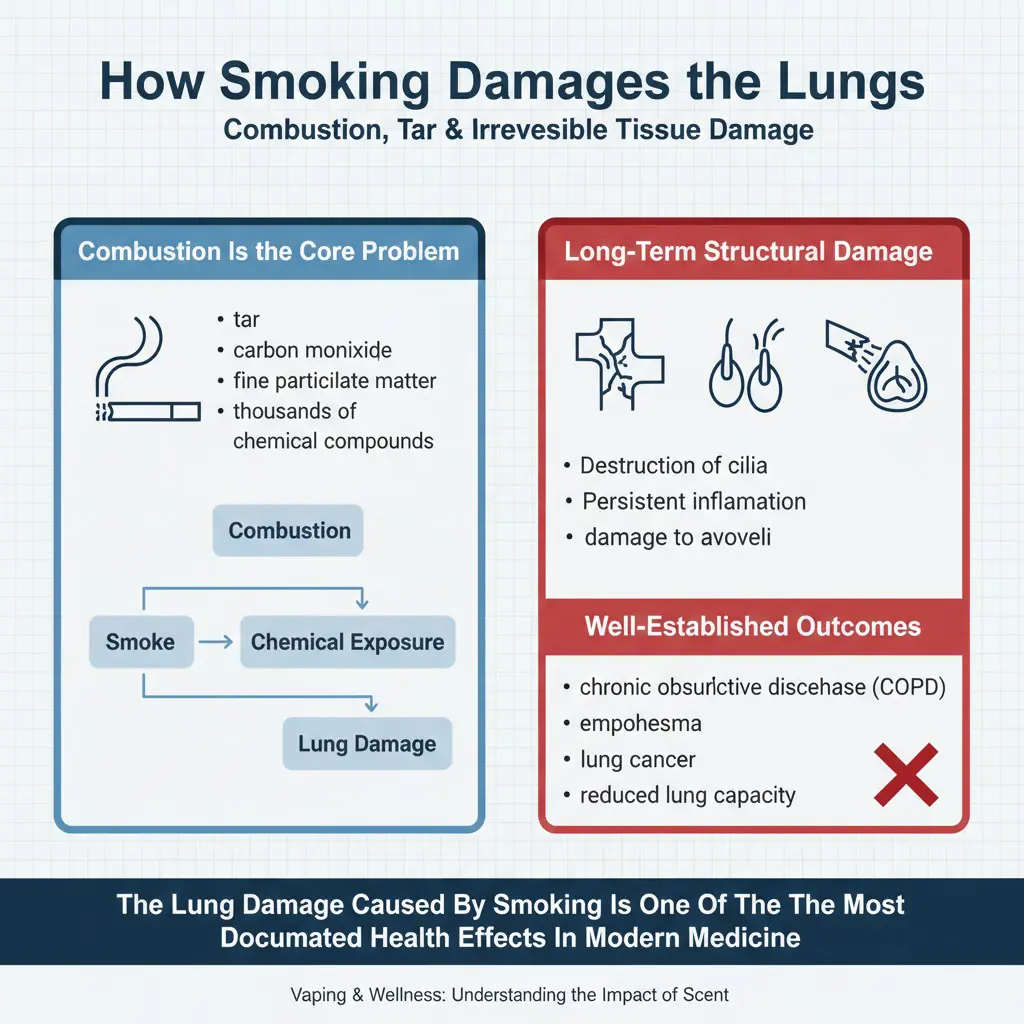
Combustion Is the Core Problem
Smoking involves burning tobacco and paper at very high temperatures. Combustion produces smoke containing:
- tar
- carbon monoxide
- fine particulate matter
- thousands of chemical compounds, many of them toxic
Tar is especially damaging. It coats the airways, sticks to lung tissue, and carries carcinogenic substances deep into the lungs. Over time, this buildup interferes with normal lung function.
Long-Term Structural Damage
Chronic smoking leads to:
- destruction of cilia, reducing the lungs’ ability to clean themselves
- persistent inflammation of the airways
- thickening and narrowing of bronchial walls
- damage to alveoli, reducing oxygen exchange
These changes are cumulative and often irreversible.
Well-Established Outcomes
Decades of research link smoking to:
- chronic obstructive pulmonary disease (COPD)
- emphysema
- lung cancer
- chronic bronchitis
- reduced lung capacity
The lung damage caused by smoking is one of the most thoroughly documented health effects in modern medicine.
How Disposable Vapes Affect the Lungs
Disposable vapes operate very differently. Instead of burning tobacco, they heat a liquid—typically containing propylene glycol (PG), vegetable glycerin (VG), nicotine, and flavorings—into an aerosol.
Aerosol, Not Smoke
This distinction matters. Vaping does not create tar or combustion ash. The aerosol particles are liquid droplets rather than solid soot particles.
As a result:
- There is no tar coating on the lung tissue
- Carbon monoxide exposure is minimal
- Particle behavior in the lungs differs from that of cigarette smoke
Common Lung Responses to Vaping
Although vaping avoids combustion, it still introduces foreign substances into the lungs. Commonly reported effects include:
- throat and airway irritation
- coughing, especially in new users
- chest tightness
- dryness in the lungs
These effects are often linked to:
- dehydration caused by PG
- irritation from flavoring compounds
- Nicotine’s effect on airway sensitivity
Known Risks vs Unknowns
What is known:
- Vaping exposes the lungs to fewer toxic compounds than smoking
- No tar is produced
- Many combustion-related carcinogens are absent
What remains uncertain:
- long-term effects of daily inhalation over decades
- cumulative impact of flavoring chemicals
- outcomes of very high-frequency use
This uncertainty is why health authorities emphasize caution rather than declaring vaping “safe.”
What Is Harder on Your Lungs: Vaping or Smoking?
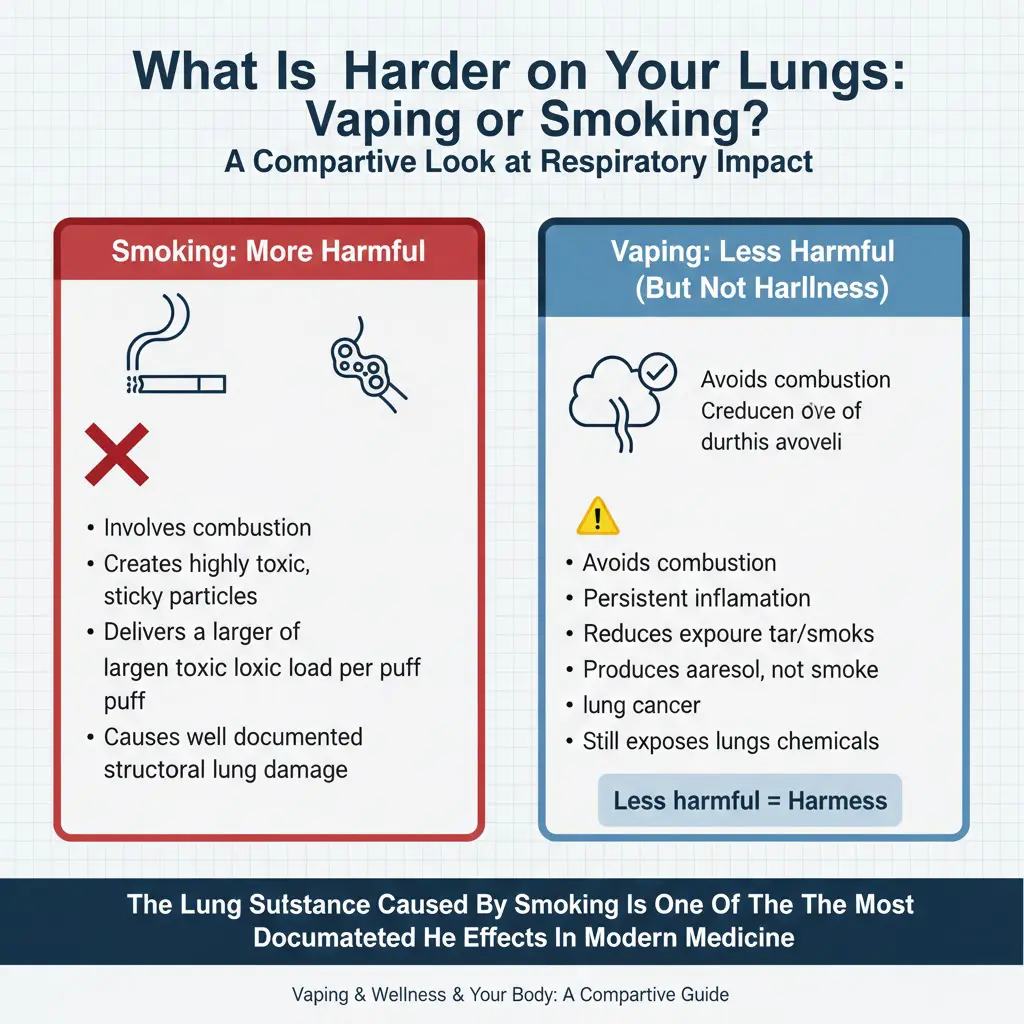
From a lung-damage perspective, smoking is generally considered more harmful. The reasons are clear:
- Smoking involves combustion, which produces highly toxic, sticky particles.
- Cigarette smoke delivers a larger toxic load per puff.
- Structural lung damage from smoking is well documented.
Vaping, including disposable vapes:
- avoids combustion
- reduces exposure to inevitable harmful byproducts
- produces aerosol rather than smoke
However, “less harmful” does not mean harmless. Vaping still exposes lung tissue to substances it was never meant to handle.
Are Disposable Vapes Worse Than Smoking?
Based on current evidence, disposable vapes are not generally considered worse than smoking for lung health. Most research suggests lower exposure to known lung toxins compared to cigarettes.
That said, disposable vapes raise specific concerns:
- High nicotine concentrations can encourage frequent use
- Easy availability may lead to overuse
- Flavoring inhalation is not fully understood in the long term
For people who have never smoked, starting vaping introduces unnecessary lung exposure. For people who already smoke, switching completely away from cigarettes may reduce certain risks—but only if smoking truly stops.
How Many Puffs of a Vape Equal One Cigarette?
This question is ubiquitous, but also deeply misleading.
Why Puff Comparisons Are Inaccurate
Puff equivalence fails because:
- Puff duration varies widely
- Inhalation depth differs
- Nicotine absorption is not linear
- Lung exposure depends on chemistry, not just nicotine
Some estimates suggest:
- 10–15 vape puffs may deliver nicotine similar to one cigarette
But this does not mean:
- equal lung damage
- equal toxic exposure
- equal long-term risk
Nicotine is not the primary cause of lung disease in smoking; combustion byproducts are.
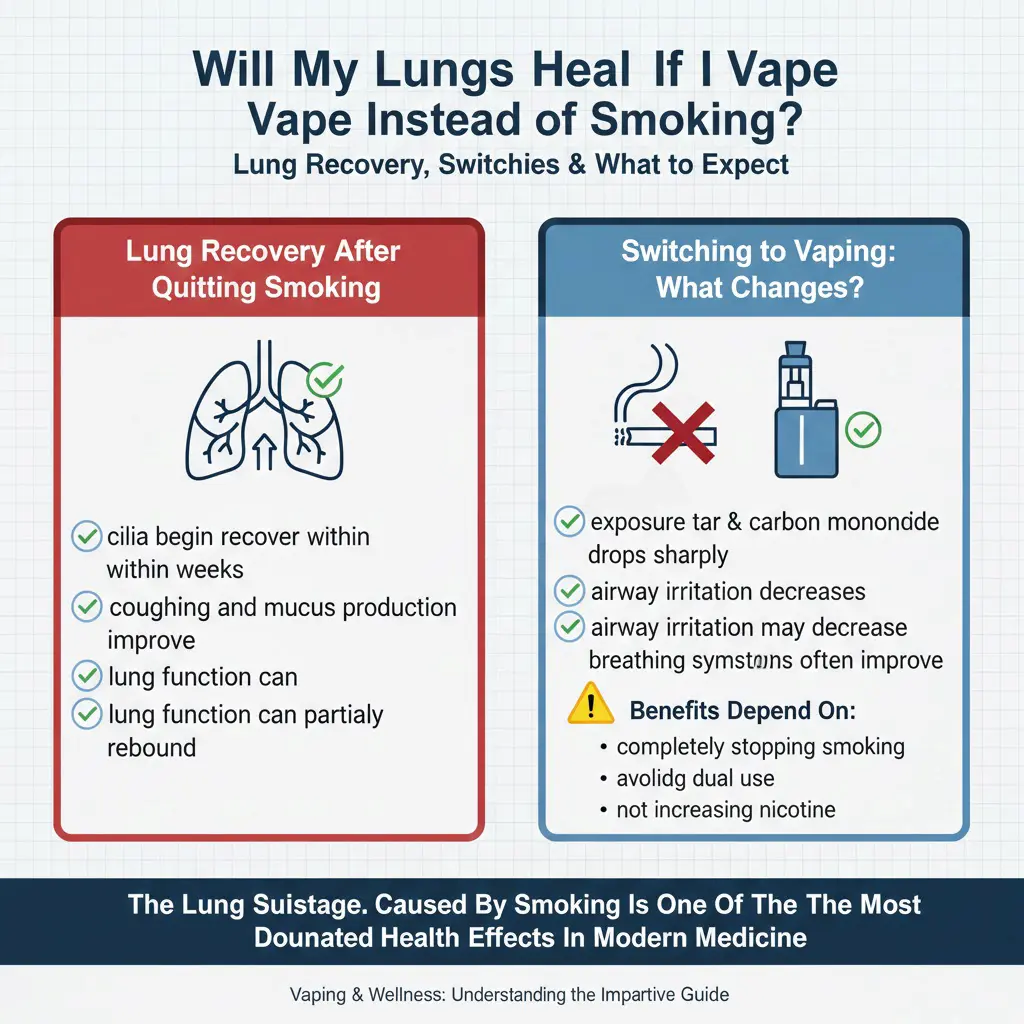
Will My Lungs Heal If I Vape Instead of Smoking?
Lung Recovery After Quitting Smoking
The lungs have a remarkable healing capacity. After smoking cessation:
- Cilia begin to recover within weeks
- The inflammation decreases
- The coughing and mucus production often improve
- The lung function can partially rebound over time
Switching to Vaping: What Changes?
For smokers who entirely switch to vaping:
- Exposure to tar and carbon monoxide drops sharply
- Airway irritation may decrease
- Breathing symptoms often improve
However, benefits depend on:
- completely stopping smoking
- avoiding dual use
- not increasing overall nicotine consumption
Vaping is not a cure, but for some smokers, it may reduce specific sources of lung injury compared to continued smoking.
Key Differences That Matter for Lung Health
The most important distinctions are:
- Combustion vs heating
- Solid smoke particles vs liquid aerosol
- Established long-term damage vs emerging evidence
Smoking delivers a heavier toxic burden with well-known outcomes. Vaping provides a different exposure profile with fewer known toxins but more unknowns.
Essential Caveats and Responsible Interpretation
- Disposable vapes are not medical devices.
- Vaping should not be promoted to non-smokers.
- Youth and developing lungs are particularly vulnerable.
- Risk reduction applies only when smoking stops entirely.
Reducing harm is not the same as eliminating it.
Conclusion: A Lung-Focused Perspective
When comparing disposable vapes and smoking purely from a lung health standpoint, smoking remains the more damaging option due to combustion and toxic smoke particles. Disposable vapes may reduce exposure to certain harmful substances, but they still introduce risks and uncertainties.
The healthiest lungs are those not exposed to smoke or aerosol at all. For smokers who cannot quit immediately, understanding relative risks can help inform decisions—but no inhaled nicotine product should be considered harmless.
FAQ
What is harder on your lungs, vaping or smoking?
Smoking is generally harder on the lungs because combustion produces tar and toxic particles that cause structural lung damage.
Are disposable vapes worse than smoking?
Most evidence suggests they are less harmful than smoking, but they are not risk-free.
How many puffs of a vape equal one cigarette?
There is no precise conversion. Nicotine delivery may be similar, but lung damage is not directly comparable.
Will my lungs heal if I vape instead of smoking?
Lungs can begin to recover after quitting smoking. Switching entirely to vaping may reduce specific harms, but complete nicotine cessation is best for lung health.
You Can Read More
How to Do Vape Tricks (Step-by-Step Guide for Beginners)