
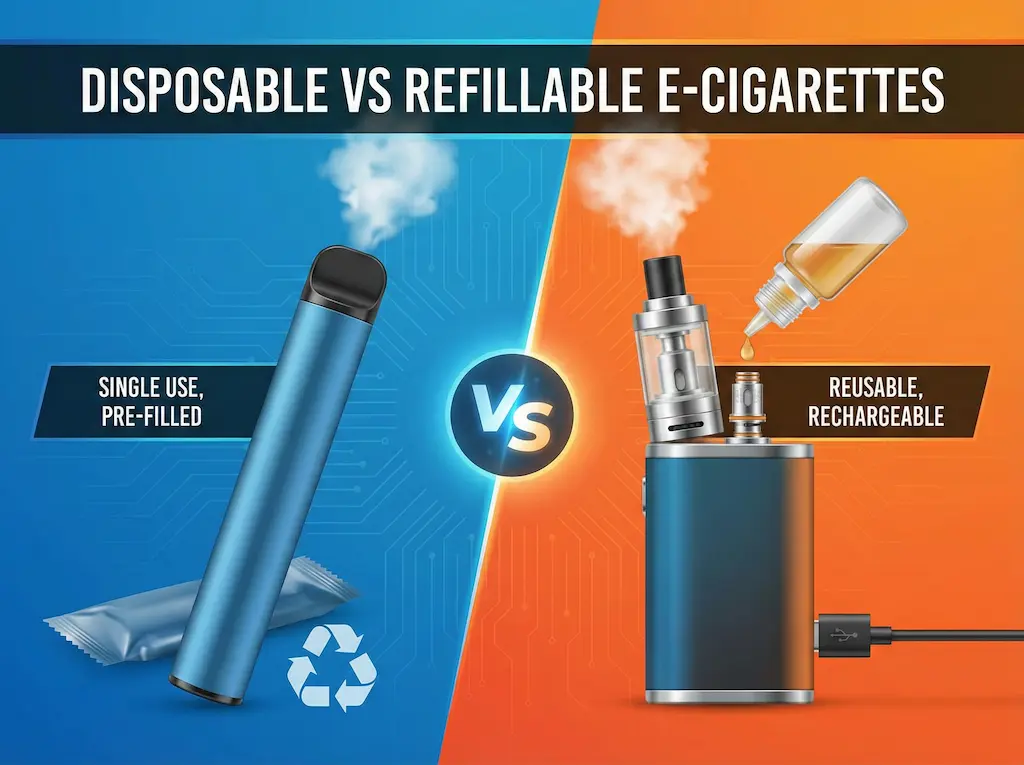
Choosing between disposable and refillable vapes is not just about price or convenience. Many users are also concerned about maintenance, long-term use, and potential health effects. Questions like Are disposable or refillable vapes better for your health? Do refillable vapes last longer? Can lungs heal after years of vaping? are increasingly common.
This guide explains the differences between disposable and refillable vape maintenance, how maintenance affects device lifespan and hygiene, and what “healthier” vaping realistically means. The goal is not to promote vaping, but to provide clear, balanced information so users can make informed decisions.
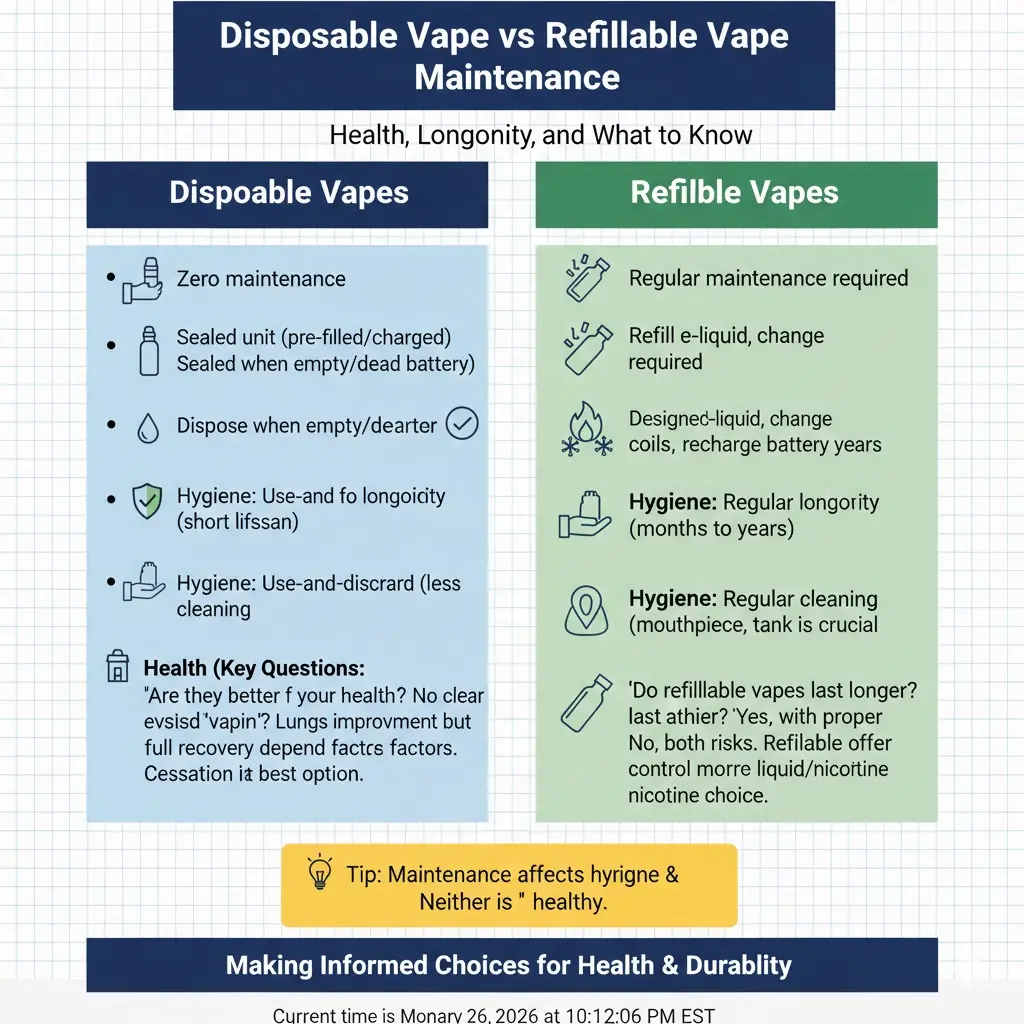
Disposable Vape vs Refillable Vape: What’s the Difference in Maintenance?
Maintenance is one of the clearest differences between disposable and refillable vapes. How a device is maintained—or not maintained—can influence performance, comfort, and user behavior.
Disposable Vape Maintenance Explained
Disposable vapes are designed to require almost no maintenance. They come pre-filled and pre-charged (or partially rechargeable) and are intended to be discarded once the e-liquid or battery runs out.
Key characteristics:
- No cleaning required
- No coil replacement
- No refilling
- Fixed performance
From a maintenance perspective, disposable vapes are simple. Users do not need to handle e-liquid, coils, or internal components.
However, the lack of maintenance also means:
- No ability to address residue buildup
- No way to correct declining performance
- Users may continue vaping until the device becomes harsh
Refillable Vape Maintenance Explained
Refillable vapes require regular upkeep. This includes cleaning, coil replacement, and refilling e-liquid.
Typical maintenance tasks include:
- Cleaning the tank or pod
- Replacing coils periodically
- Monitoring e-liquid quality
- Preventing leaks and residue buildup
While refillable vapes demand more effort, they also allow users to control device hygiene and performance more directly.
Why Maintenance Matters for the Vaping Experience
Maintenance affects:
- Flavor quality
- Throat irritation
- Consistency of vapor production
- Overall comfort
Residue buildup, old coils, or degraded e-liquid can make vapor harsher and more irritating, regardless of device type. In refillable vapes, maintenance can reduce these issues. In disposable vapes, users must stop using the device when performance declines.
Do Refillable Vapes Last Longer Than Disposables?
One of the most common practical questions is whether refillable vapes last longer than disposable ones.
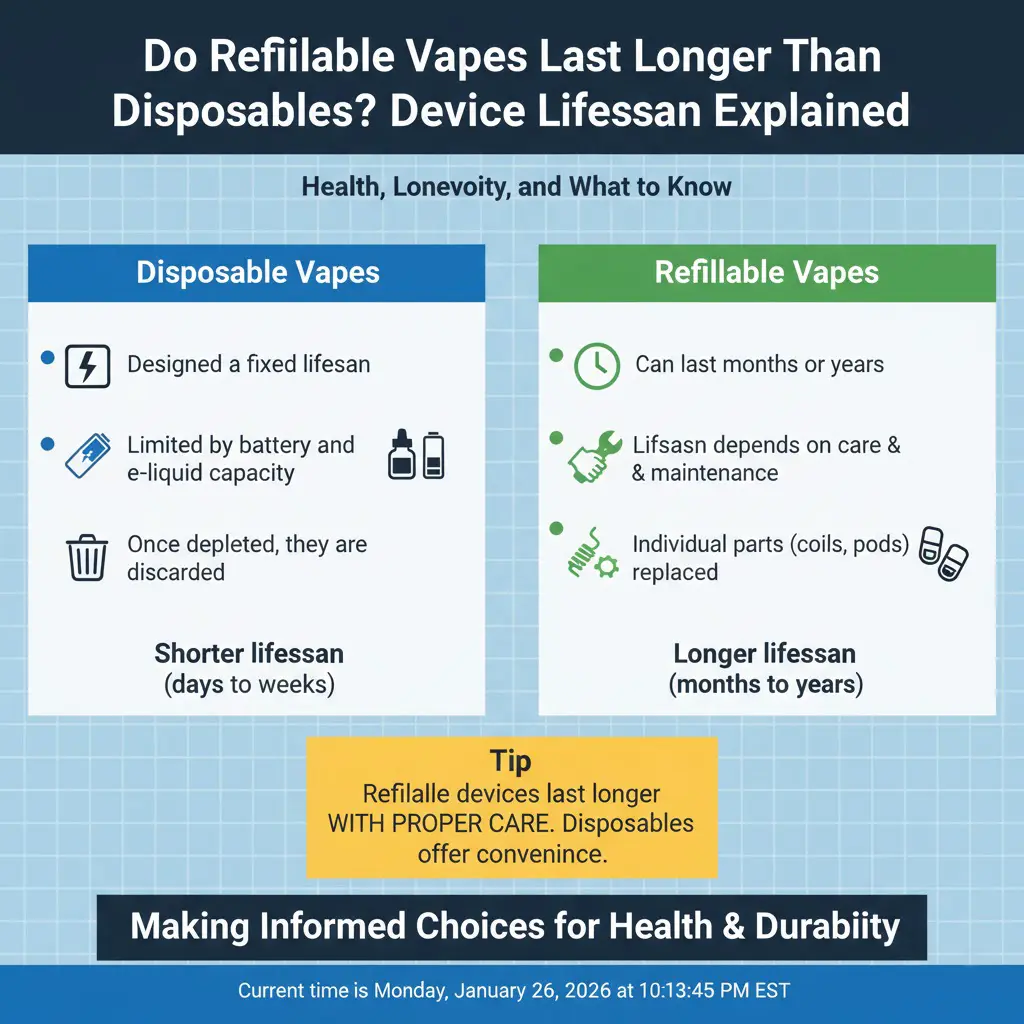
Device Lifespan Comparison
Disposable vapes
- Designed for a fixed lifespan
- Limited by battery and e-liquid capacity
- Once depleted, they are discarded
Refillable vapes
- Can last months or years
- Lifespan depends on care and maintenance
- Individual parts (coils, pods) are replaced
In general, refillable devices last significantly longer as hardware, provided they are maintained properly.
Cost and Durability Over Time
While this article is not focused on cost, lifespan, and durability are closely related.
- Disposables may appear convenient in the short term
- Refillable vapes require more effort but are designed for repeated use
From a durability perspective, refillable vapes are built to withstand long-term use, whereas disposables are designed to be used once and then discarded.
Environmental Considerations (Brief Overview)
Maintenance also affects waste generation:
- Disposables are discarded frequently
- Refillable devices generate less frequent hardware waste
While environmental impact is not the main focus here, maintenance habits indirectly affect how often devices are discarded.
Are Disposable or Refillable Vapes Better for Your Health?
This is one of the most sensitive questions, and it requires careful framing.
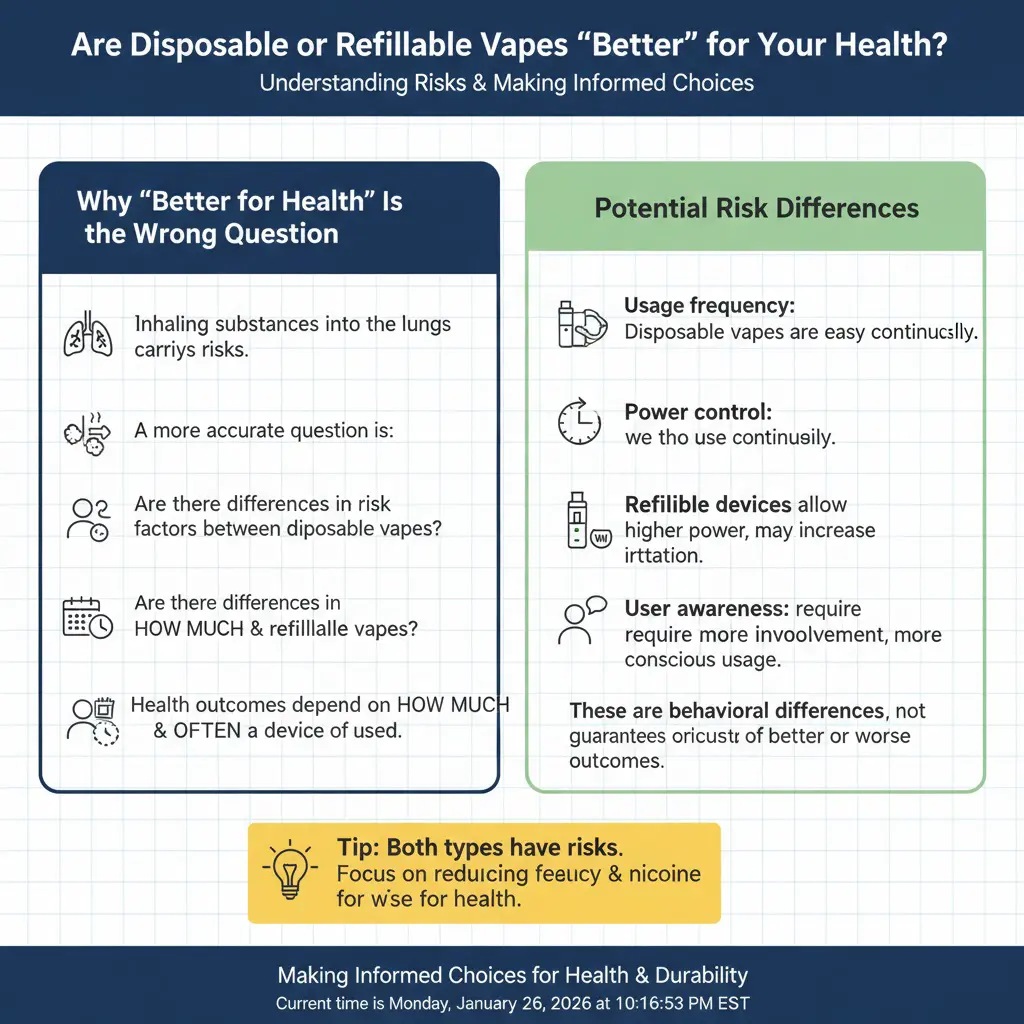
Why “Better for Health” Is the Wrong Question
Vaping is not considered healthy. Both disposable and refillable vapes involve inhaling substances into the lungs, which carries risks.
A more accurate question is:
Are there differences in risk factors between disposable and refillable vapes?
Health outcomes are influenced more by how often and how intensively a device is used than by the device category alone.
Potential Risk Differences Between Devices
Some factors that may differ include:
- Usage frequency: Disposable vapes are easy to use continuously, which may encourage more frequent puffing
- Power control: Refillable devices sometimes allow higher power settings, which can increase irritation if misused
- User awareness: Refillable vapes require more involvement, which may make users more conscious of usage
These are behavioral differences, not guarantees of better or worse outcomes.
Hygiene and Maintenance as a Risk Factor
Maintenance plays a role in comfort and irritation:
- Dirty tanks or old coils in refillable vapes can cause harsh vapor
- Overused disposable vapes may become dry or irritating
Poor hygiene or overuse can increase throat and airway irritation regardless of device type.
Can Lungs Heal After 7 Years of Vaping?
This question reflects long-term concern and uncertainty among users.
Why People Ask This Question
Many users experience:
- Reduced coughing after stopping
- Changes in breathing comfort
- Anxiety about long-term effects
Because vaping often feels smoother than smoking, some assume it allows the lungs to recover fully.
What Research Generally Suggests (Neutral Overview)
Research suggests that reducing or stopping inhalation of irritating substances may lead to symptom improvement over time. However:
- Recovery varies greatly by individual
- Duration and intensity of vaping matter
- Other health factors play a role
There is no guarantee that lungs will fully heal after long-term vaping.
What Vaping Does Not Guarantee
Switching devices or vaping instead of smoking does not guarantee:
- Complete lung recovery
- Absence of long-term effects
- Elimination of respiratory risk
If breathing issues persist, stop use and seek medical advice.
What’s the Healthiest Way to Vape?
This question often comes from users looking to reduce harm rather than eliminate vaping entirely.
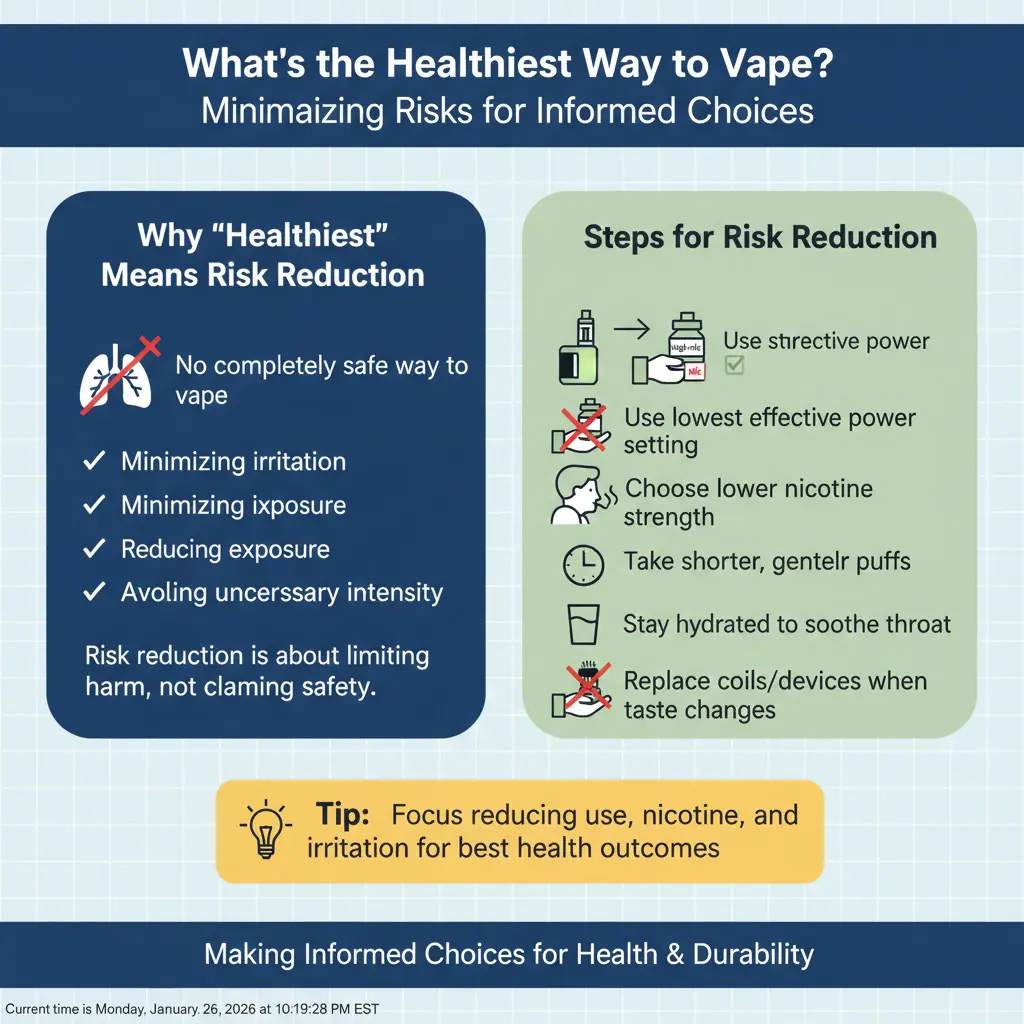
Why “Healthiest” Means Risk Reduction
There is no completely safe way to vape. “Healthiest” in this context means:
- Minimizing irritation
- Reducing exposure
- Avoiding unnecessary intensity
Risk reduction is about limiting harm, not claiming safety.
General Harm-Reduction Principles
Regardless of device type, these principles may reduce discomfort and irritation:
- Use lower nicotine strengths when possible
- Avoid chain vaping
- Stay hydrated
- Avoid overly high power settings
- Stop using devices that feel harsh
For refillable vapes, proper cleaning and timely coil replacement are especially important.
When the Healthiest Choice Is to Stop
Persistent symptoms such as:
- Throat pain
- Chest discomfort
- Shortness of breath
are signals to stop using the device. Continuing to vape despite discomfort increases risk rather than reducing it.
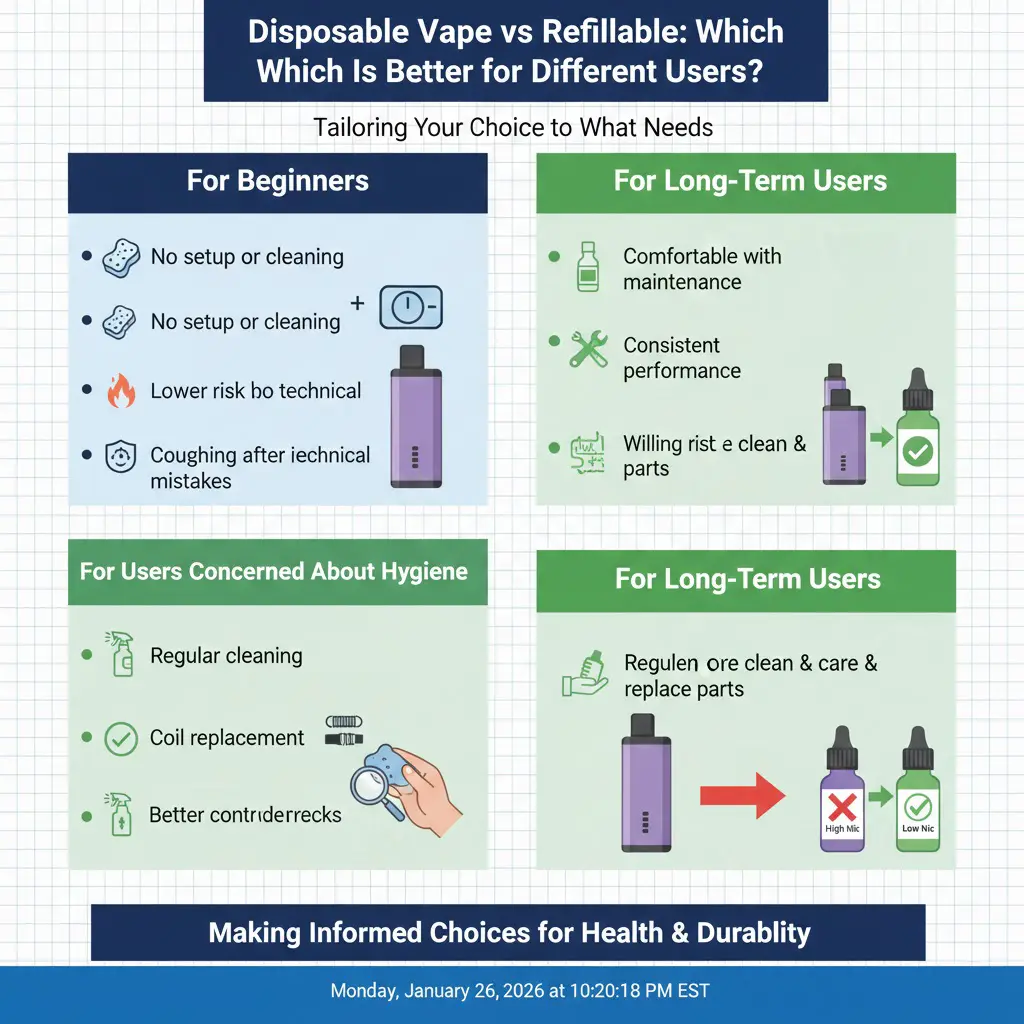
Disposable vs Refillable: Which Is Better for Different Users?
Different users prioritize different factors, and maintenance tolerance plays a major role.
For Beginners
Disposable vapes may appeal to beginners because:
- No setup or cleaning
- Lower risk of technical mistakes
However, beginners may also overuse disposables due to their simplicity.
For Long-Term Users
Refillable vapes may suit long-term users who:
- Are comfortable with maintenance
- Want consistent performance
- Are willing to clean and replace parts
Maintenance becomes a routine rather than a burden.
For Users Concerned About Hygiene
Refillable vapes allow:
- Regular cleaning
- Coil replacement
- Better control over residue buildup
Disposable vapes require users to stop using the device when hygiene or performance declines.
Maintenance Mistakes That Increase Discomfort
Some common mistakes apply to both device types:
- Using a device past its effective lifespan
- Ignoring harsh or burnt sensations
- Not cleaning refillable devices regularly
- Vaping too frequently without breaks
Avoiding these mistakes can improve comfort regardless of device choice.
How Maintenance Influences Throat and Lung Irritation
Maintenance affects:
- Vapor temperature
- Flavor consistency
- Moisture levels
Old coils, residue, or degraded e-liquid can increase throat hit and coughing. Proper maintenance reduces these triggers but does not eliminate all risk.
Final Thoughts: Choosing Between Disposable and Refillable Vapes
The main difference between disposable and refillable vapes lies in maintenance and control.
- Disposable vapes are simple but limited
- Refillable vapes last longer but require care
- Health risks are influenced more by usage behavior than device type
There is no “healthy” vape, but understanding maintenance, hygiene, and moderation helps reduce unnecessary discomfort and risk.
Making an informed choice means recognizing trade-offs rather than searching for a perfect option.
FAQ
Do refillable vapes require more maintenance than disposables?
Yes. Refillable vapes require regular cleaning, coil replacement, and refilling.
Do refillable vapes last longer than disposable vapes?
Yes. Refillable devices are designed for long-term use, while disposables have a fixed lifespan.
Are disposable or refillable vapes better for your health?
Neither is considered healthy. Risk depends more on frequency, intensity, and hygiene than device type.
Can lungs heal after long-term vaping?
Some improvement may occur after stopping, but recovery varies and is not guaranteed.
Does vape maintenance affect throat irritation?
Yes. Poor maintenance can increase harshness and irritation in both disposable and refillable devices.
You Can Read More
How to Do Vape Tricks (Step-by-Step Guide for Beginners)
Does Hookah Have Nicotine? How Much & Why It Feels Different
Disposable Vape Throat Hit Explained: Why It Happens and How to Reduce It