
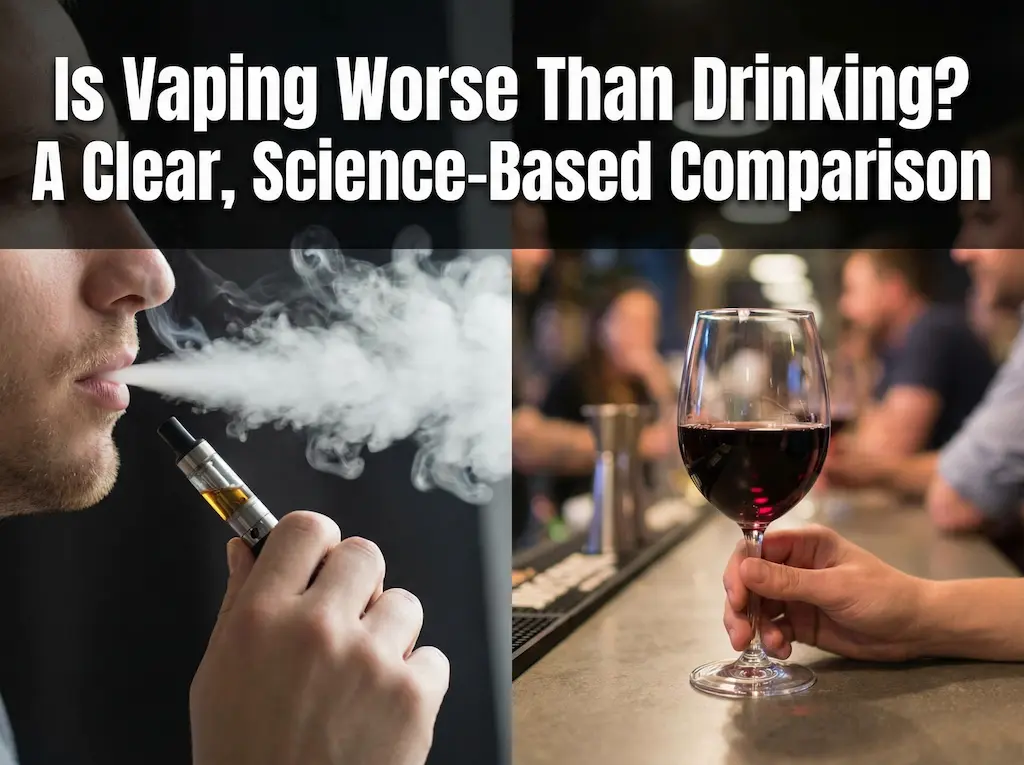
Many adults today use nicotine, alcohol, or both.
That naturally leads to one question: Is vaping worse than drinking?
Some people vape daily but rarely drink.
Others drink socially and never touch nicotine.
Both habits are common.
But they affect the body in very different ways.
This article compares vaping and drinking in a clear, practical way.
It focuses on addiction, mental health, physical effects, and long-term risks—without exaggeration or scare language.
Is Vaping Worse Than Drinking?
There is no single answer that applies to everyone.
Vaping is more closely tied to nicotine addiction and brain chemistry changes.
Drinking is more closely linked to organ damage and long-term disease risk.
So whether vaping is worse than drinking depends on what type of harm you are measuring.
Why Vaping and Drinking Are Often Compared
Both habits are legal for adults.
Both can reduce stress in the short term.
And both can quietly become routine behaviors.
As usage increases, people often notice changes in sleep, mood, or focus.
That’s when comparisons begin—not out of curiosity, but out of concern.
How Vaping Affects the Body
Nicotine and the Brain
Vaping delivers nicotine rapidly.
Nicotine directly stimulates dopamine release, reinforcing repeated use.
Public health agencies note that nicotine is addictive, but it is not the primary source of most smoking-related diseases.
In its explanation of vaping myths and the facts, the UK’s National Health Service clarifies that the major health harms from traditional cigarettes come from the toxic chemicals released during tobacco combustion, rather than from nicotine itself—a distinction that helps explain why vaping and smoking carry different risk profiles.
That distinction matters when comparing vaping and drinking.
Addiction and Dependence
Nicotine tolerance can build quickly.
Over time, many users notice:
- More frequent cravings
- Irritability between uses
- Difficulty focusing
- Heightened anxiety
A large scientific review published in PubMed Central discusses how nicotine exposure alters reward pathways in the brain, helping explain why vaping habits can feel hard to control even when physical harm appears limited.
Mental Health Effects of Vaping
Nicotine can temporarily improve alertness, but repeated stimulation may worsen baseline anxiety.
Regular users sometimes report:
- Restless sleep
- Mood swings
- Increased stress when not vaping
Medical experts caution that while vaping exposes users to fewer toxins than smoking, it is not risk-free.
As summarized by Johns Hopkins Medicine in 5 truths you need to know about vaping, nicotine and other aerosol components can still affect the heart, lungs, and nervous system, especially with frequent use.
How Drinking Affects the Body
Alcohol and the Nervous System
Alcohol is a central nervous system depressant.
It slows reaction time and impairs judgment.
Short-term relaxation often comes at the cost of poorer sleep and emotional regulation later on.
Long-Term Physical Risks of Drinking
Unlike nicotine, alcohol places a heavy strain on internal organs.
Long-term drinking is strongly linked to:
- Liver disease
- Cardiovascular problems
- Digestive damage
- Increased cancer risk
Cancer Research UK explains in its evidence-based review of whether vaping is harmful that e-cigarettes do not contain tobacco and are far less harmful than smoking, but they also emphasize that alcohol remains a well-established cancer risk factor.
This difference is central to the vaping vs drinking debate.
Vaping vs Drinking: Addiction Comparison
Addiction does not look the same for everyone.
Vaping tends to:
- Create a faster dependency
- Encourage frequent daily use
- Trigger withdrawal symptoms between sessions
Drinking often progresses more slowly but can cause deeper physical harm over time.
In simple terms:
- Vaping is more likely to reshape habits and brain chemistry
- Drinking is more likely to damage organs

Mental Health: Vaping Compared to Drinking
Both habits can affect mental health in different ways.
Nicotine stimulation may increase anxiety and restlessness.
Alcohol may worsen depression by disrupting sleep and emotional balance.
When nicotine and alcohol are used together, they often reinforce each other, making both habits harder to control.
Long-Term Health Considerations
Long-Term Effects of Vaping
Current evidence links long-term vaping mainly to:
- Nicotine dependence
- Cardiovascular strain
- Difficulty quitting due to withdrawal symptoms
Research is ongoing, but addiction patterns are already well documented.
Long-Term Effects of Drinking
Alcohol’s long-term effects are well established.
Chronic use significantly increases the risk of serious disease and long-term disability.
This is why many health professionals consider alcohol more dangerous from a physical disease standpoint.
So, Which Is Worse Overall?
The answer depends on perspective.
Vaping tends to be worse for:
- Addiction risk
- Anxiety cycles
- Habit frequency
Drinking tends to be worse for:
- Organ damage
- Long-term disease
- Physical safety
Neither habit is harmless.
They simply create different kinds of risk.
What If Someone Uses Both?
Using nicotine and alcohol together increases overall harm.
Nicotine can intensify alcohol cravings.
Alcohol can weaken self-control around vaping.
Over time, this combination often strengthens dependency on both.
FAQ
Is vaping worse than drinking?
Vaping is usually more addictive. Drinking causes more long-term physical damage.
Is vaping bad for mental health?
Frequent nicotine use may worsen anxiety and sleep quality.
Is alcohol worse than vaping long-term?
Alcohol has stronger links to chronic disease and cancer risk.
Is vaping addictive?
Yes. Nicotine dependence can develop quickly and lead to withdrawal symptoms.
Is nicotine or alcohol worse?
Nicotine hooks the brain faster. Alcohol harms the body more deeply.
You Can Read More
Is Dry Herb Vaping Safe? What Science and Health Studies Actually Show
Does Vaping Increase Cholesterol? What Science and Health Experts Say
When Did Vapes Come Out? A Complete History of Electronic Cigarettes