
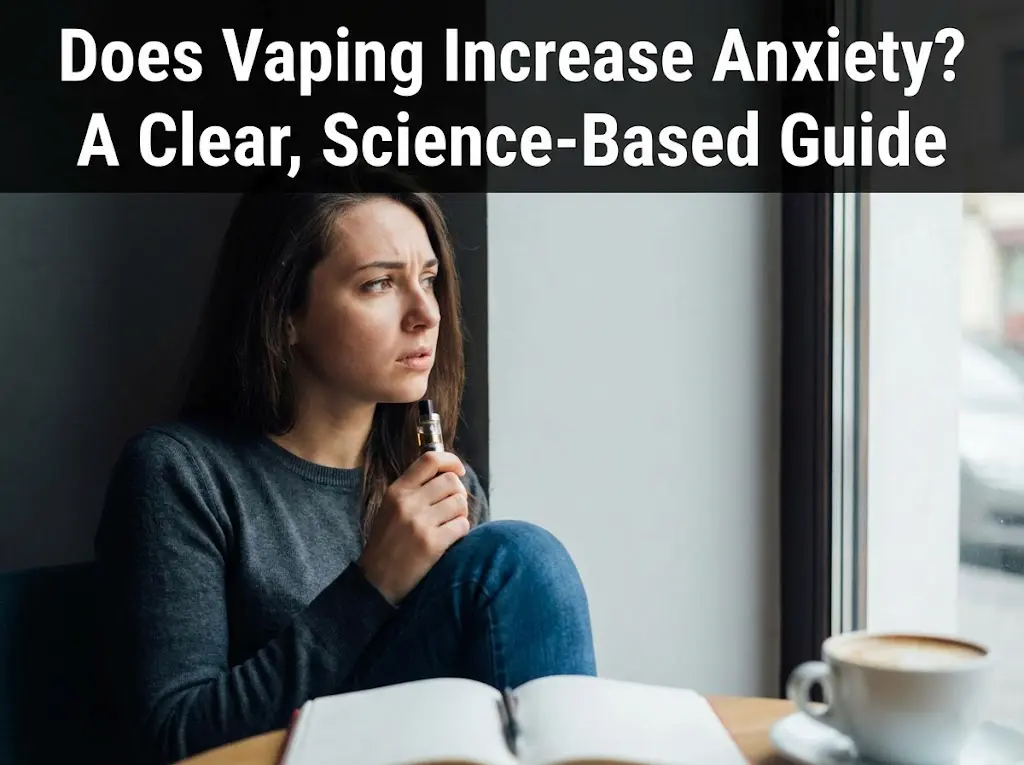
Beaucoup de gens ne pensent pas à l'anxiété lorsqu'ils commencent à fumer.
Au début, il peut sembler apaisant. La sensation en gorge est familière. Le corps se détend un peu. Pour certaines personnes, ce moment de soulagement est exactement ce qu'elles recherchent.
Mais au bout d'un certain temps, les choses se passent différemment.
Le calme ne dure pas.
Le sentiment de nervosité réapparaît.
Parfois plus fort qu'avant.
C'est alors que la question se pose : Le vapotage augmente-t-il l'anxiété ?
Ce que de nombreuses personnes remarquent après avoir vapé
Pour certains utilisateurs, le changement est subtil.
Ils se sentent un peu plus à cran.
Leur cœur s'accélère.
Le sommeil devient plus léger.
Il est plus difficile de se détendre complètement.
D'autres le remarquent plus clairement. L'anxiété monte en flèche. Des sentiments de panique apparaissent. L'envie de recommencer à fumer survient plus tôt que prévu.
Ces expériences ne sont pas rares.
Comment le vapotage peut affecter l'anxiété
Le vapotage fournit de la nicotine par l'intermédiaire de cigarettes électroniquesLa plupart des dispositifs de vapotage sont conçus pour faciliter l'administration de la nicotine. La plupart des dispositifs sont conçus pour faciliter l'administration de la nicotine.
Cette fonction de base de la electcigarettes roniques est ce qui les rend attrayants, mais aussi ce qui crée des problèmes d'anxiété.
La nicotine accélère les choses.
Le rythme cardiaque augmente.
Le système nerveux est plus alerte.
Le corps se met en mode de stress léger.
Pour les personnes qui souffrent déjà d'anxiété, cette stimulation peut s'avérer inconfortable au lieu d'être relaxante.
Pourquoi le vapotage peut sembler calme au début
C'est là que les choses deviennent confuses.
La nicotine peut brièvement atténuer la tension. Cette courte période de répit donne au vapotage un caractère utile. C'est pourquoi certaines personnes y ont recours dans les moments de stress.
Mais la nicotine ne reste pas active longtemps.
Lorsque son effet s'estompe, la tension réapparaît souvent. Pour de nombreuses personnes, l'anxiété revient plus forte. C'est alors que le cycle commence : on fume, on se sent mieux, on se sent moins bien, on fume à nouveau.
Les vapes contre l'anxiété sont-elles vraiment utiles ?
Certaines personnes utilisent vapes pour l'anxiété à dessein.
Ils ne sont pas à la recherche de nuages ou d'arômes.
Ils poursuivent le calme.
Au début, on pourrait croire que cela fonctionne. L'esprit ralentit. Le corps se détend un peu.
Mais la plupart des vapes contre l'anxiété contiennent toujours de la nicotine. Et la nicotine ne reste pas tranquillement en arrière-plan. Une fois qu'elle s'est dissipée, l'anxiété réapparaît souvent. Avec le temps, la vaporisation devient une boucle plutôt qu'une solution.
Signes physiques d'anxiété liée au vapotage
L'anxiété liée au vapotage n'est pas toujours émotionnelle au départ. Souvent, elle se manifeste dans le corps.
Les signes les plus courants sont les suivants
- Rythme cardiaque accéléré ou battant
- Tremblements ou agitation
- Oppression thoracique
- Difficultés de mise au point
- Difficultés à dormir
Certaines personnes ressentent également des crises de panique ou des vagues soudaines d'irritabilité, en particulier lorsque la consommation de nicotine est élevée.
La nicotine peut-elle déclencher des sentiments de panique ?
Oui, c'est possible.
La nicotine augmente l'adrénaline et le rythme cardiaque. Pour les personnes sensibles à l'anxiété, ces changements physiques peuvent sembler insurmontables. Le corps réagit d'abord, puis l'esprit suit.
Recherche médicale sur comment la nicotine affecte l'anxiété montre que la nicotine peut perturber les systèmes de réponse au stress du cerveau, ce qui contribue à expliquer l'apparition de symptômes de panique chez certains utilisateurs.
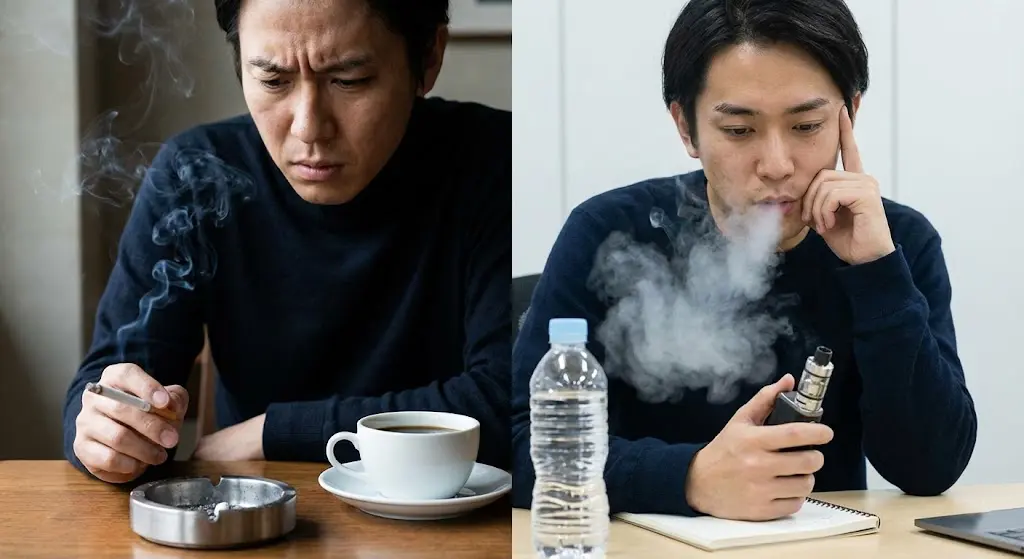
Vaping vs Smoking et anxiété
Le tabagisme et le vapotage fournissent tous deux de la nicotine, mais l'expérience n'est pas la même.
Le vapotage permet souvent :
- Taux de nicotine plus élevé
- Utilisation plus fréquente
- Consommation de nicotine répartie sur l'ensemble de la journée
C'est pourquoi certaines personnes ressentent plus d'anxiété après être passées de la cigarette au vapotage, même si elles s'attendaient à ce que le vapotage soit plus léger ou plus facile.
Anxiété, dépression et santé mentale
L'anxiété existe rarement seule.
De nombreuses personnes qui se sentent plus anxieuses lorsqu'elles vapotent remarquent également des changements d'humeur, de motivation ou d'équilibre émotionnel. La nicotine affecte les systèmes dopaminergiques liés à l'anxiété et à la dépression.
Les autorités sanitaires expliquent que le effets des e-cigarettes sur la santé vont au-delà de la simple dépendance à la nicotine. L'aérosol de l'e-cigarette contient des substances qui peuvent affecter le cerveau et le système nerveux, ce qui contribue à expliquer ces changements au niveau de la santé mentale.
Ce qui se passe lorsque vous arrêtez de fumer
L'arrêt du vapotage peut s'avérer désagréable au début.
Le sevrage de la nicotine entraîne souvent :
- Augmentation de l'anxiété
- Agitation
- Troubles du sommeil
Cette phase ne dure pas éternellement. Au fur et à mesure que le cerveau s'adapte, de nombreuses personnes remarquent que leur anxiété de base diminue lentement. Le sommeil s'améliore. Le système nerveux se calme.
Pour de nombreux utilisateurs, l'anxiété est plus facile à gérer après avoir arrêté de fumer qu'elle ne l'était lorsqu'ils fumaient régulièrement.
Lire la suite : Que se passe-t-il lorsque vous arrêtez de fumer ? Un guide simple et clair
L'arôme ou le type de dispositif ont-ils de l'importance ?
Le choix de l'arôme et le rapport PG/VG ne sont pas directement à l'origine de l'anxiété.
Ce qu'elles peuvent faire, c'est encourager le vapotage plus fréquent. Une vapeur plus douce et des arômes puissants facilitent l'utilisation fréquente de la nicotine. Une utilisation plus fréquente signifie plus de stimulation - et plus de chances pour l'anxiété de se manifester.
L'intensité de la nicotine est encore bien plus importante que le dispositif ou l'arôme.
Réduire l'anxiété en cas de vapotage
Si le vapotage semble aggraver l'anxiété, de petits changements peuvent aider :
- Un taux de nicotine plus faible
- Éviter le vapotage constant ou automatique
- Ne pas fumer tard dans la nuit
- Attention au mélange de nicotine et de caféine
La réduction de la consommation de nicotine est la mesure la plus efficace pour atténuer l'anxiété liée au vapotage.
SnagVape Note sur le choix du dispositif
Certains utilisateurs préfèrent des dispositifs plus doux et un dosage équilibré de la nicotine afin de réduire l'irritation de la gorge et la surconsommation. Bien que cela puisse améliorer le confort, il n'élimine pas l'effet de la nicotine sur l'anxiété.
FAQ
Le vapotage augmente-t-il l'anxiété ?
Pour de nombreuses personnes, oui. La stimulation par la nicotine augmente souvent l'anxiété au fil du temps.
Le vapotage peut-il aider à lutter contre l'anxiété à long terme ?
L'effet calmant est généralement de courte durée et est souvent suivi d'une augmentation de l'anxiété.
Les vapes pour l'anxiété sont-elles une bonne idée ?
La plupart contiennent de la nicotine, qui peut aggraver l'anxiété au lieu de l'atténuer.
Le vapotage peut-il déclencher des crises de panique ?
La nicotine peut provoquer des sensations physiques qui conduisent à la panique chez les utilisateurs sensibles.
L'anxiété s'améliore-t-elle après l'arrêt du vapotage ?
Pour de nombreux utilisateurs, l'anxiété devient plus facile à gérer une fois le sevrage passé.
Vous pouvez lire la suite
Pourquoi le vapotage me fait-il tousser ? Un guide clair et simple
Pourquoi les cigarettes électroniques ont-elles une odeur plus faible que les cigarettes ?
Guide complet de l'expert : Types de noyaux d'atomiseurs pour les cigarettes électroniques