

Coughing after vaping is one of the most common concerns among both new and experienced users. Some people notice coughing almost immediately, while others begin coughing only after weeks or months of regular use. In many cases, the coughing feels persistent enough to raise concerns about whether something is wrong or whether vaping itself is the cause.
The experience of coughing while vaping varies widely. For some, it is mild and temporary. For others, it becomes frequent and disruptive. Understanding why vaping can trigger coughing—and what factors make it more likely—helps separate normal irritation from signs that deserve closer attention.
This article explains why vaping may lead to excessive coughing, how usage habits and device choices influence irritation, and what adjustments may help reduce discomfort, all while staying within evidence-based and non-medical guidance.
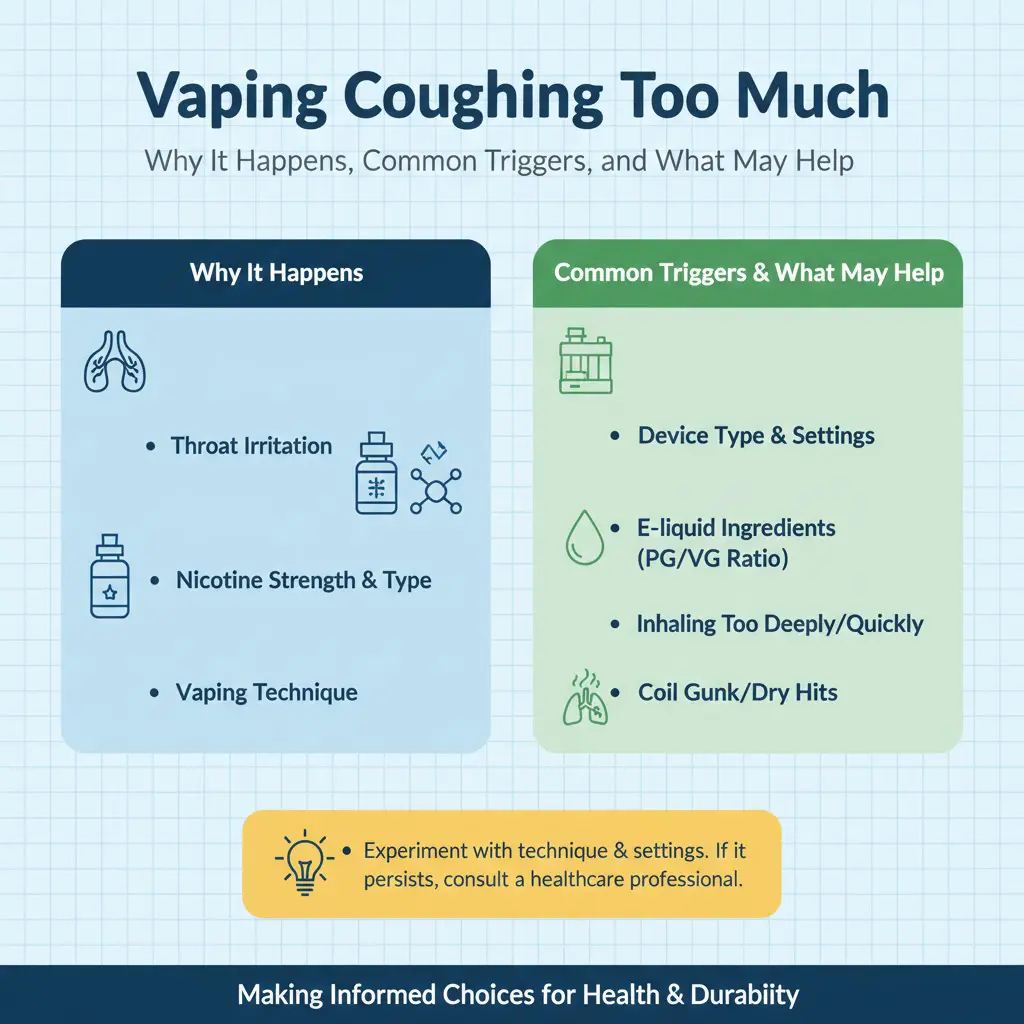
Key Takeaways
- Coughing while vaping is a common reaction, especially among new users
- Throat and airway irritation are frequent contributors
- Nicotine strength, PG/VG ratio, and inhalation technique matter
- Disposable vapes may feel harsher for some users
- Persistent or worsening coughing should not be ignored
Why Does Vaping Make Some People Cough So Much?
Coughing is a natural protective reflex. When the throat or airways detect irritation, dryness, or unfamiliar substances, the body responds by coughing to clear the airway. Vaping introduces vapor, flavorings, and nicotine into areas that are sensitive and not accustomed to constant exposure.
Several factors may contribute to why coughing occurs more often with vaping.
Throat and Airway Sensitivity
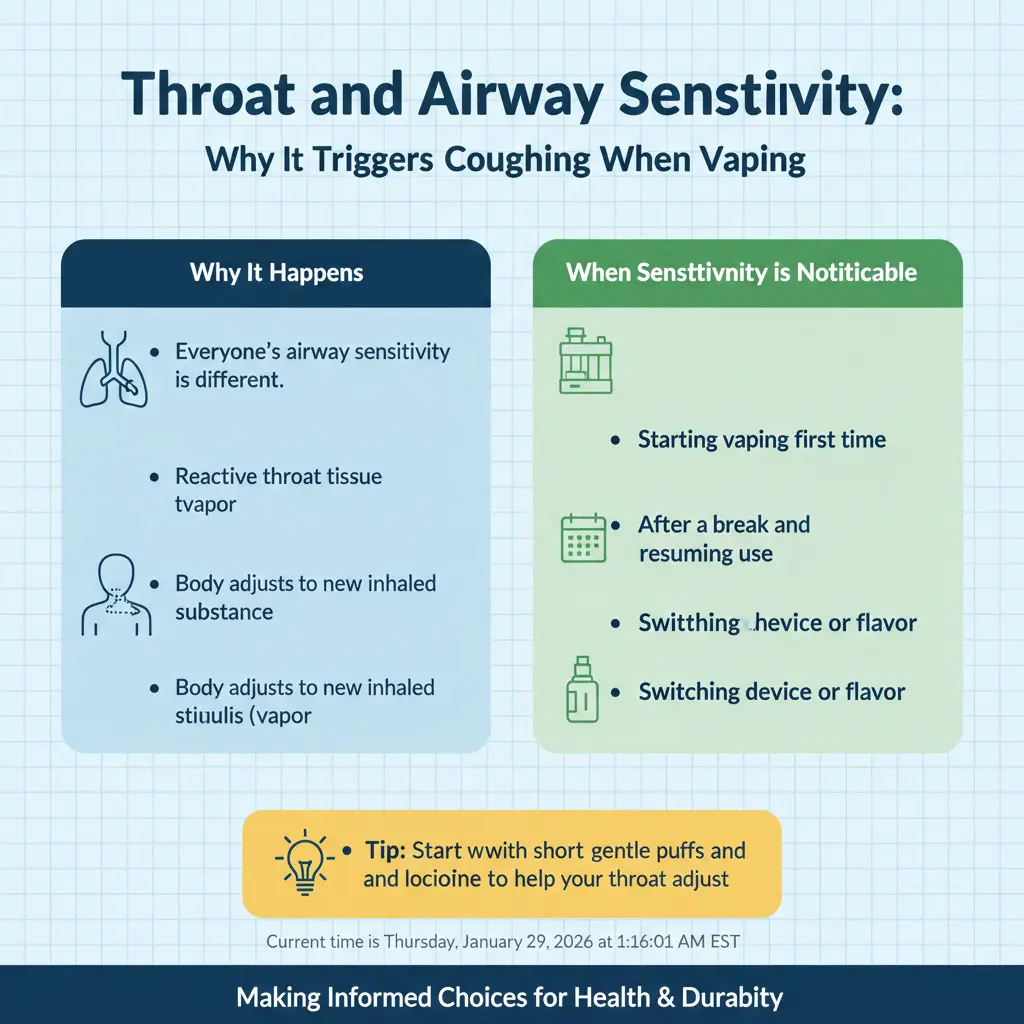
Everyone’s airway sensitivity is different. Some people have more reactive throat tissue or airways that respond strongly to new stimuli. Vapor, even without smoke, can still feel unfamiliar and trigger a cough response.
This sensitivity is especially noticeable:
- When starting vaping for the first time
- After taking a break and resuming use
- When switching to a new device or flavor
In these cases, coughing does not necessarily indicate damage. It often reflects the body’s adjustment to a new inhaled substance.
Nicotine Strength and Harshness
Nicotine itself can be irritating, particularly at higher concentrations. Stronger nicotine levels tend to create a sharper sensation at the back of the throat, which may provoke coughing.
People who switch from lower-strength products to higher-strength ones often report:
- Increased throat irritation
- More frequent coughing
- A “burning” or “tickling” sensation
Reducing nicotine strength gradually may help some users experience less irritation.
PG vs VG Ratio and Dryness
E-liquids typically contain propylene glycol (PG), vegetable glycerin (VG), or a combination of both.
- PG carries flavor well, but can feel drying or sharp
- VG produces smoother vapor but thicker clouds
Higher-PG liquids are more likely to cause dryness and throat irritation, especially for people prone to coughing. Dehydration can amplify this effect, making coughing more frequent.
Inhalation Technique
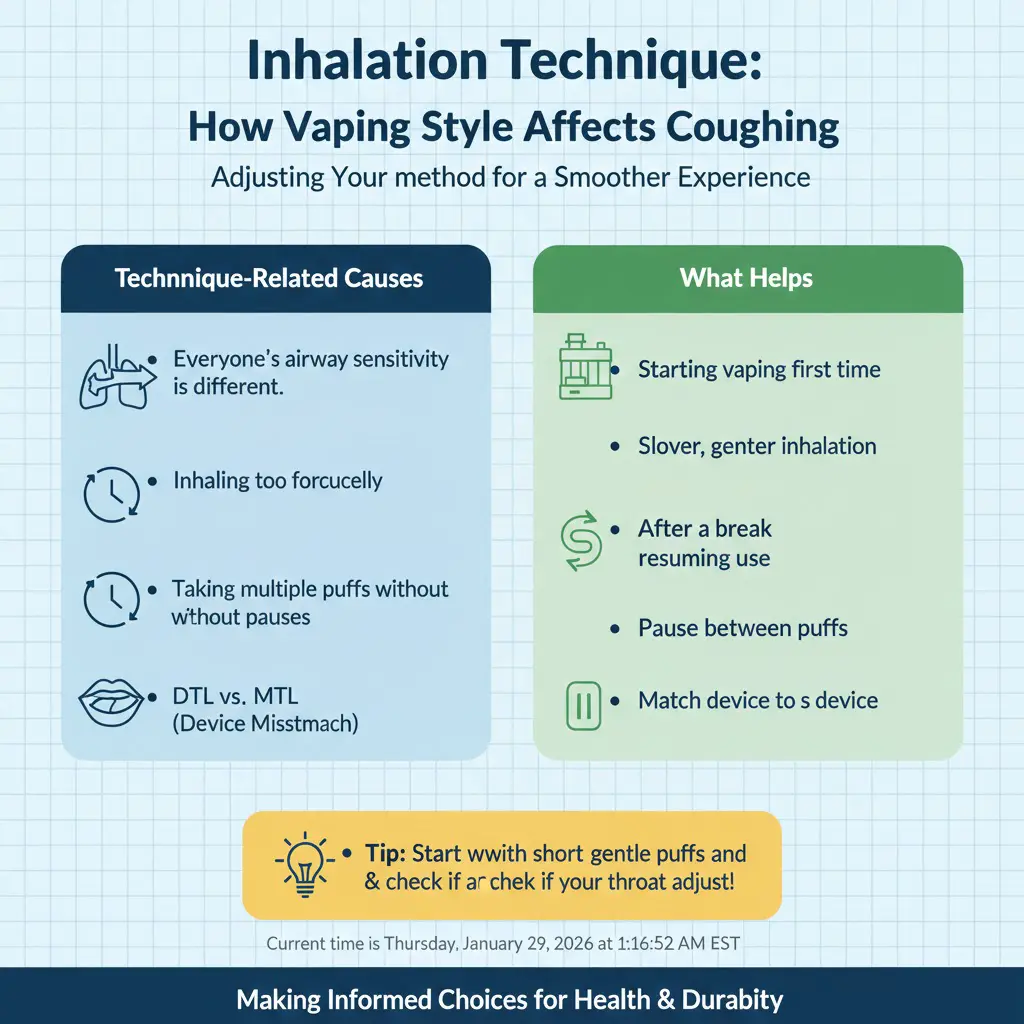
Vaping does not involve inhaling the same way as smoking for many devices. Taking deep, fast inhalations can overwhelm the throat and lungs, triggering coughing.
Common technique-related causes include:
- Inhaling too forcefully
- Taking multiple puffs without pauses
- Using direct-to-lung inhalation when the device is designed for mouth-to-lung use
Slower, gentler inhalation often reduces irritation.
Is Coughing After Vaping Normal?
Coughing after vaping is commonly reported, particularly during early use or after changes in vaping habits. Short-term coughing can occur as the body reacts to vapor exposure or adjusts to new conditions.
Short-Term vs Ongoing Coughing
- Short-term coughing often appears during the first few days of use or after switching products
- Ongoing coughing that persists daily or worsens over time may indicate irritation that should be addressed
Occasional coughing is common. Persistent coughing should prompt a closer look at usage patterns and device choices.
Situations Where Coughing Is More Likely
Coughing is reported more frequently:
- When starting vaping
- When the frequency of use increases
- After switching nicotine strength
- After changing flavor types
Understanding these triggers can help identify what may be contributing to the problem.
Vaping Cough vs Smoking Cough
Although both involve coughing, vaping-related coughing and smoking-related coughing often feel different.
A smoking cough is typically linked to smoke inhalation and combustion byproducts. Vaping cough, by contrast, is more often associated with irritation, dryness, or sensitivity rather than smoke exposure.
Some people transitioning from smoking to vaping may notice a temporary increase in coughing as their airways respond differently. This experience varies widely and does not follow a predictable pattern.
Common Vaping Habits That Can Make Coughing Worse
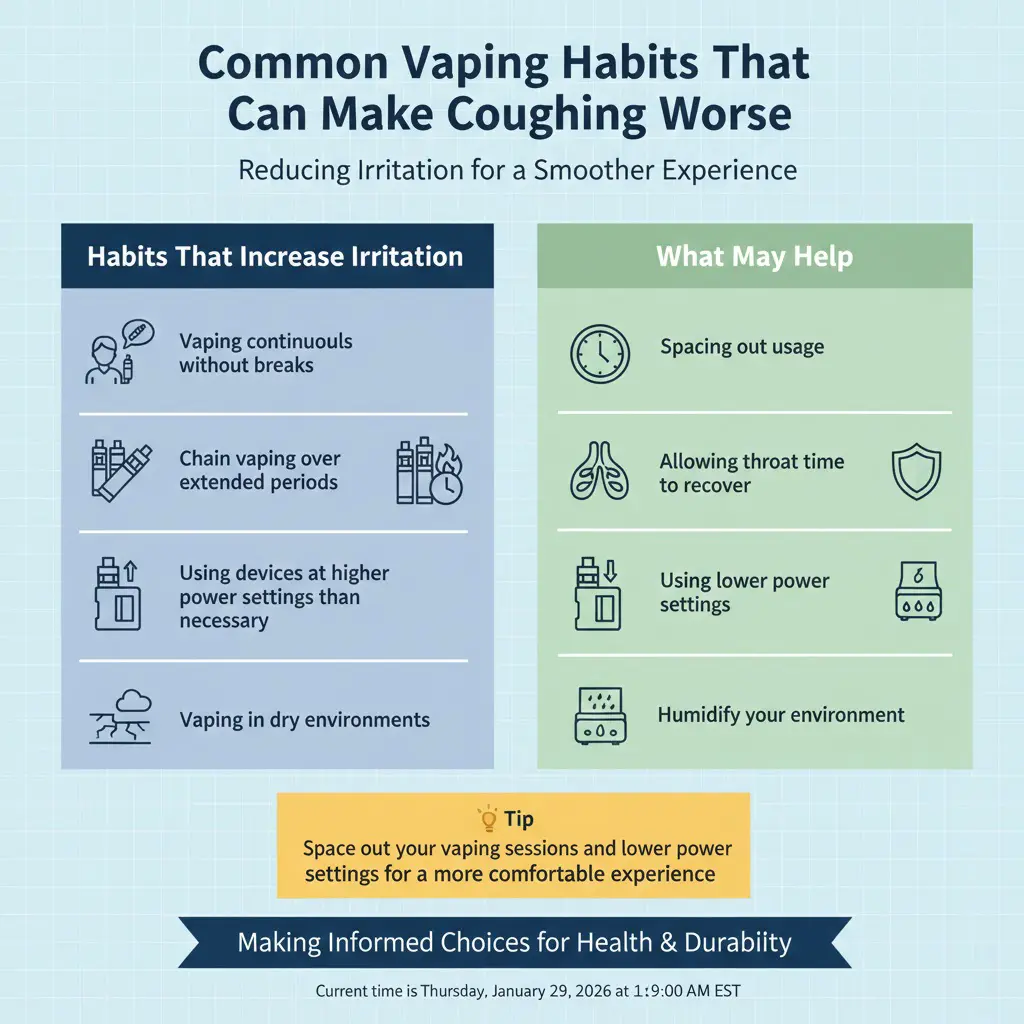
Certain habits can increase irritation even if the device itself is not the primary issue.
These include:
- Vaping continuously without breaks
- Chain vaping over extended periods
- Using devices at higher power settings than necessary
- Vaping in dry environments
Spacing out usage and allowing the throat time to recover may help reduce coughing frequency.
Disposable Vapes and Excessive Coughing
Disposable vapes are convenient, but some users report that they feel harsher than other devices.
Why Disposable Vapes May Feel Harsher
Several characteristics of disposable vapes may contribute to coughing:
- Often higher nicotine concentrations
- Fixed airflow design
- Limited ability to adjust power or vapor output
Because disposables are designed for simplicity, users have fewer options to fine-tune the experience.
Flavorings and Cooling Agents
Certain flavor profiles, especially those with strong cooling or menthol-like sensations, may intensify throat irritation. Synthetic cooling agents can create a smooth sensation initially, but may still trigger coughing afterward.
Switching to milder flavors may help reduce irritation for sensitive users.
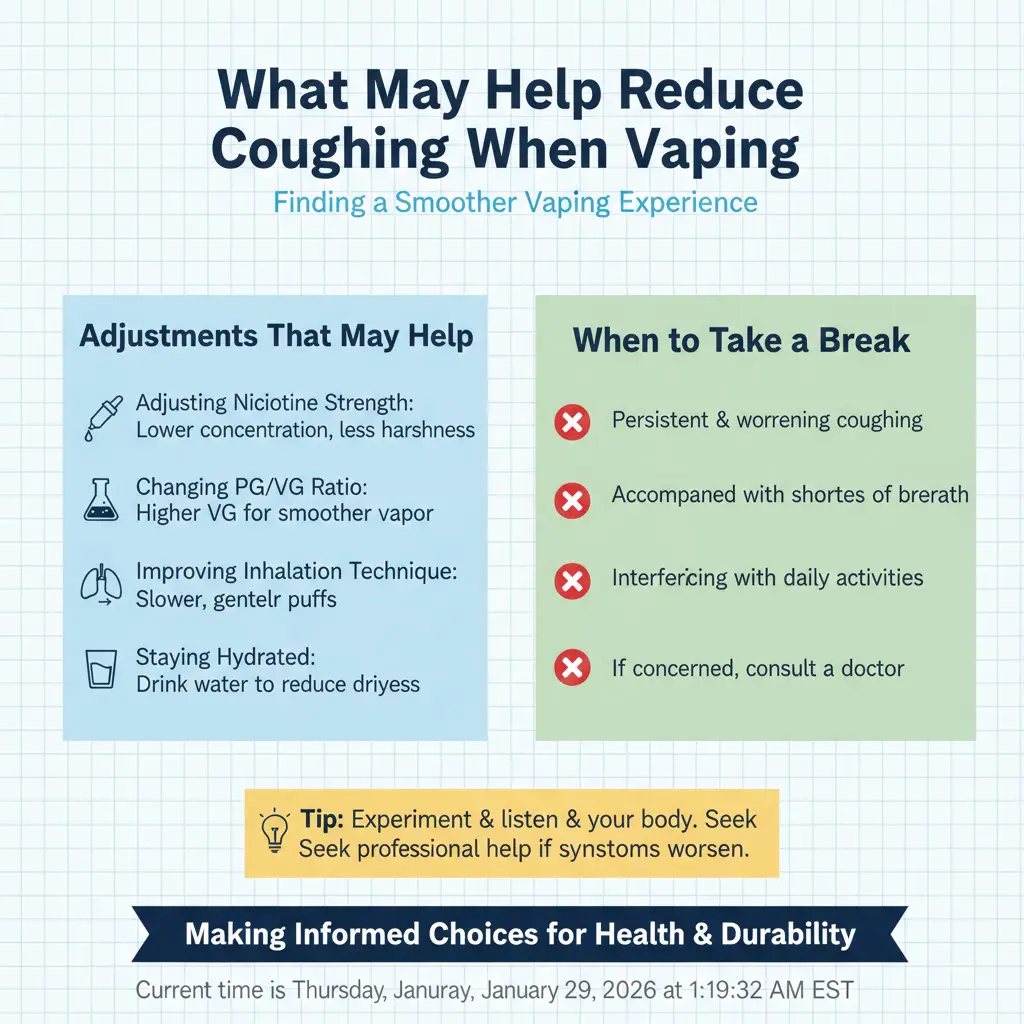
What May Help Reduce Coughing When Vaping
There is no single solution that works for everyone, but several adjustments may help reduce coughing.
Adjusting Nicotine Strength
Lowering nicotine concentration can reduce throat harshness. Many users find that stepping down gradually allows the body to adjust without increasing cravings.
Changing PG/VG Ratio
Choosing liquids with higher VG content may feel smoother for some users. This change often reduces dryness and throat irritation.
Improving Inhalation Technique
Using a slower, gentler inhalation and allowing brief pauses between puffs can significantly reduce coughing for many users.
Staying Hydrated
Vapor can dry out the throat. Drinking water regularly helps maintain moisture and may reduce coughing caused by irritation.
When Coughing Might Be a Sign to Take a Break
While coughing is common, certain signs may indicate it’s time to pause or seek guidance.
Consider taking a break or seeking professional advice if coughing is:
- Persistent and worsening
- Accompanied by chest discomfort
- Associated with shortness of breath
- Interfering with daily activities
Listening to physical signals is important.
Should You Be Concerned About Long-Term Coughing From Vaping?
Long-term coughing should not be ignored. While many cases involve irritation or habits, ongoing symptoms warrant attention. Reducing exposure, adjusting usage, or consulting a healthcare professional may be appropriate depending on the situation.
This article provides general information, not a medical diagnosis.
Final Thoughts on Vaping and Excessive Coughing
Coughing while vaping is a common experience, particularly during early use or after changes in habits. In many cases, it is linked to irritation, nicotine strength, or inhalation technique rather than serious harm.
However, persistent coughing is a signal worth paying attention to. Making informed adjustments, reducing exposure, and seeking guidance when necessary helps users make safer, more comfortable decisions.
Frequently Asked Questions
Why do I cough more when using disposable vapes?
Disposable vapes often have higher nicotine levels and fixed airflow, which can feel harsher and increase throat irritation for some users.
Is coughing from vaping normal?
Occasional coughing is commonly reported, especially among new users or after changing products. Persistent coughing should be evaluated.
Can vaping cause a dry cough?
Yes. Vapor can dry out the throat, particularly with higher PG content or frequent use.
Will lowering nicotine reduce coughing?
For many users, lowering nicotine strength reduces throat irritation and coughing.
Should I stop vaping if I keep coughing?
If coughing continues or worsens despite adjustments, taking a break and seeking professional advice is recommended.
You Can Read More
How to Do Vape Tricks (Step-by-Step Guide for Beginners)
Disposable Vape vs Refillable Vape Maintenance: Health, Longevity, and What to Know