
Understanding Nicotine Strength, Cigarette Comparisons, and Long-Term Health Questions
Disposable vapes are often marketed as convenient and smooth, which leads many users—especially beginners—to underestimate how much nicotine they actually contain. Questions like “Is 5% nicotine a lot?“, “How many cigarettes equal a few puffs of a vape?” and “Is vaping really easier on the lungs?” are extremely common.
This guide breaks down how much nicotine is in a disposable vape, how it compares to cigarettes, what puff counts really mean, and what science says about lung recovery after long-term vaping.
Key Takeaways
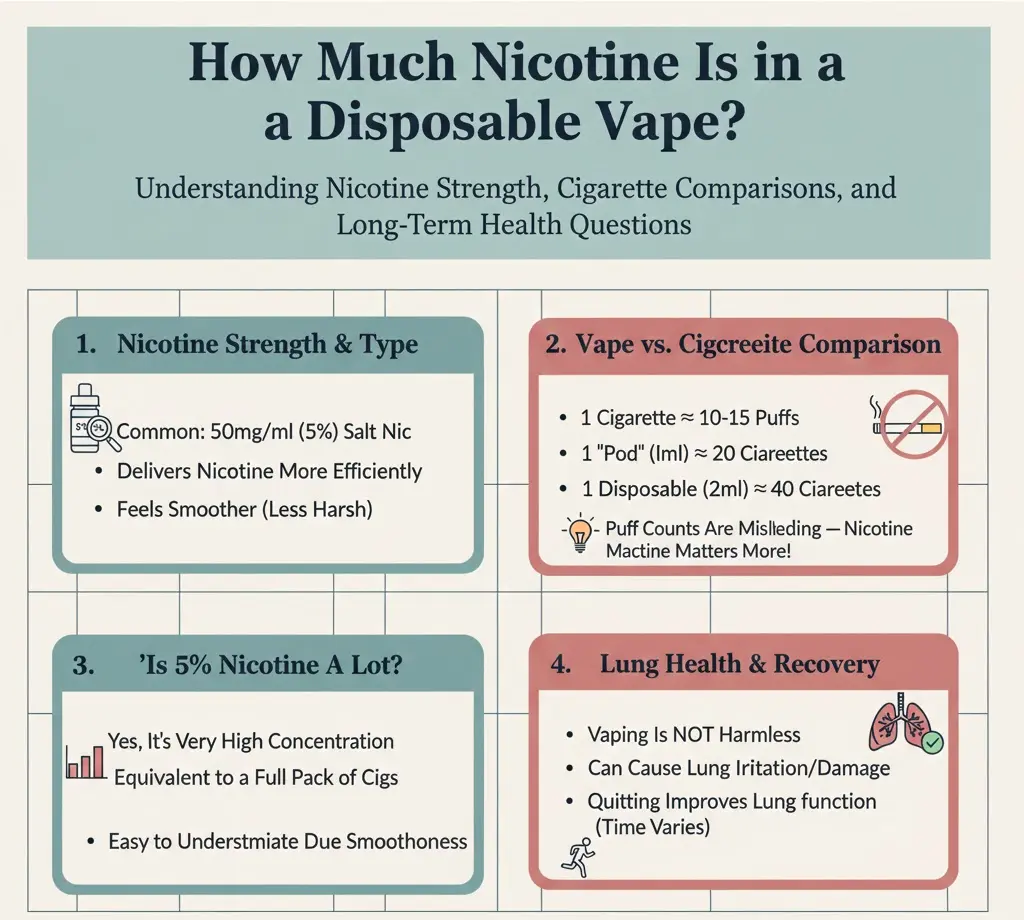
- Disposable vapes can contain as much or more nicotine than a pack of cigarettes, depending on strength and size.
- 5% (50 mg/mL) nicotine is considered very strong, especially for non-smokers or light users.
- Puff-to-cigarette comparisons are estimates, not exact equivalents.
- Nicotine salts allow smoother inhalation, which can increase total nicotine intake.
- Lung recovery after years of vaping is possible, but it depends on duration, intensity, and individual health factors.
What Does Nicotine Percentage Mean in Disposable Vapes?
When a disposable vape is labeled 5% nicotine, it means the e-liquid contains 50 milligrams of nicotine per milliliter (mg/mL). Likewise:
- 2% nicotine = 20 mg/mL
- 3% nicotine = 30 mg/mL
Most disposable vapes use nicotine salts, not freebase nicotine. Nicotine salts are chemically modified to reduce throat irritation, allowing users to inhale higher nicotine levels more comfortably.
Why this matters: smoother inhalation often leads to longer puffs and more frequent use, increasing total nicotine exposure.
Is 5% Nicotine a Lot for a Vape?
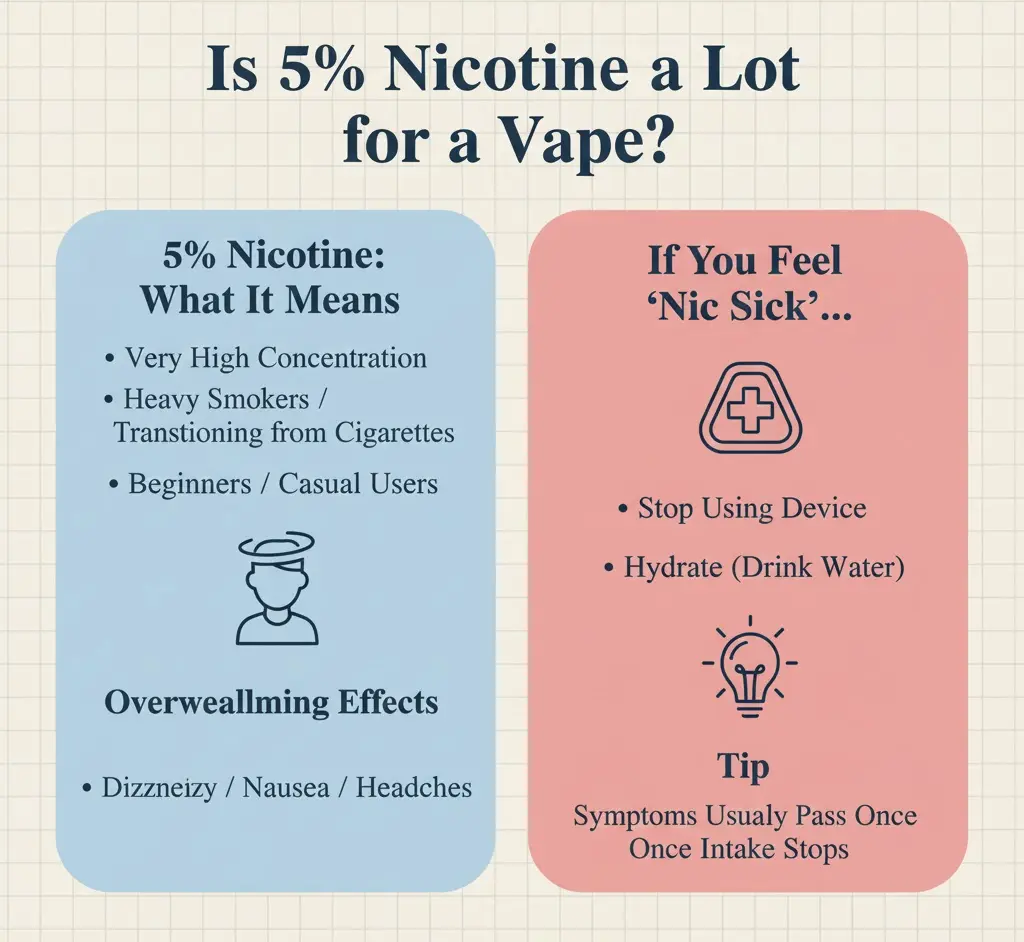
Yes—5% nicotine is considered high.
A 5% disposable vape is typically designed for:
- Heavy smokers
- Users transitioning directly from cigarettes
- People with high nicotine tolerance
For beginners or casual users, 5% can feel overwhelming and may cause:
- Dizziness
- Nausea
- Headaches
- Rapid heartbeat
Tip: If you feel “nicotine sick,” stop using the device and hydrate. Symptoms usually pass once intake stops.
How Much Nicotine Is in a Disposable Vape?
The total nicotine content depends on two factors:
- Nicotine strength (mg/mL or %)
- E-liquid volume (mL)
Example
A disposable vape with:
- 12 mL of e-liquid
- 5% nicotine (50 mg/mL)
Contains about 600 mg of nicotine total.
Not all of that is absorbed, but it shows how much nicotine is available in one device.
How Much Nicotine Is in a Cigarette vs a Disposable Vape?
Here is a clear comparison table you can use directly in your article.
Nicotine Comparison Table
| Product | Typical Nicotine Content | Absorbed Nicotine (Approx.) |
| One cigarette | 10–12 mg | 1–2 mg |
| One pack (20 cigarettes) | ~200–240 mg | ~20–40 mg |
| Disposable vape (5%, 10–12 mL) | ~500–600 mg | Varies by usage |
| Disposable vape (2%, 10–12 mL) | ~200–240 mg | Varies by usage |
Important: Smoking burns off most nicotine. Vaping aerosolizes nicotine, which changes how efficiently it is absorbed.
How Many Cigarettes Are 10 Puffs of a Vape?
There is no exact conversion, but research-based estimates suggest:
- One cigarette ≈ 10–15 puffs
- One vape puff delivers less nicotine than one cigarette puff—but users often take longer puffs
Estimated Comparison
| Vape Puffs | Rough Cigarette Equivalent |
| 5 puffs | ~½ cigarette |
| 10 puffs | ~1 cigarette |
| 50 puffs | ~5 cigarettes |
| 100 puffs | ~½ pack (estimate) |
Why does it vary:
- Puff duration
- Nicotine strength
- Device efficiency
- User inhalation style
Why Disposable Vapes Can Deliver Nicotine Faster Than Cigarettes
Disposable vapes often feel “lighter” than cigarettes, but they can deliver nicotine more efficiently due to:
- Nicotine salt formulation
- Reduced throat harshness
- No combustion byproducts
- Consistent nicotine concentration per puff
This is why users may unintentionally consume more nicotine while vaping than they ever did while smoking.
Can Lungs Heal After 7 Years of Vaping?
This is a complex and important question, and the honest answer is that it depends. Lung tissue does have a certain ability to recover, but recovery is influenced by how long and how intensely the lungs were exposed, as well as whether vaping replaced smoking or was used in addition to it.
What Science Currently Knows
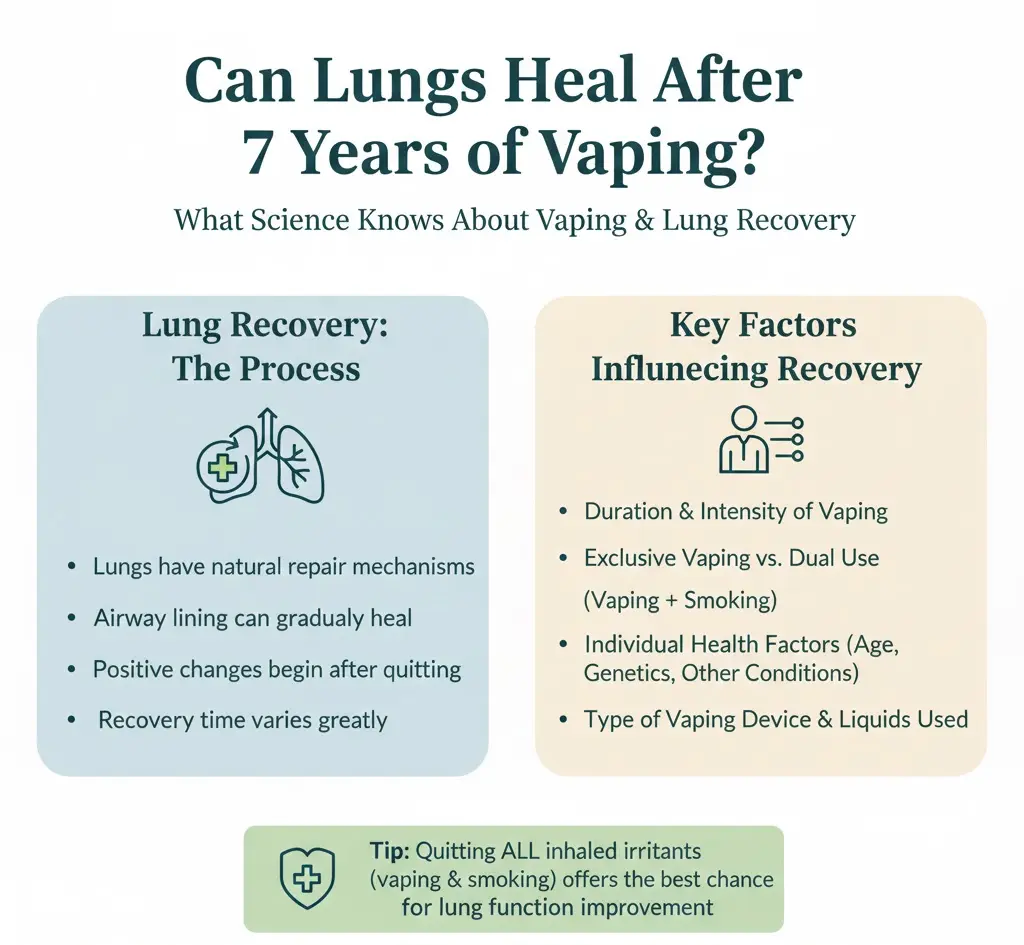
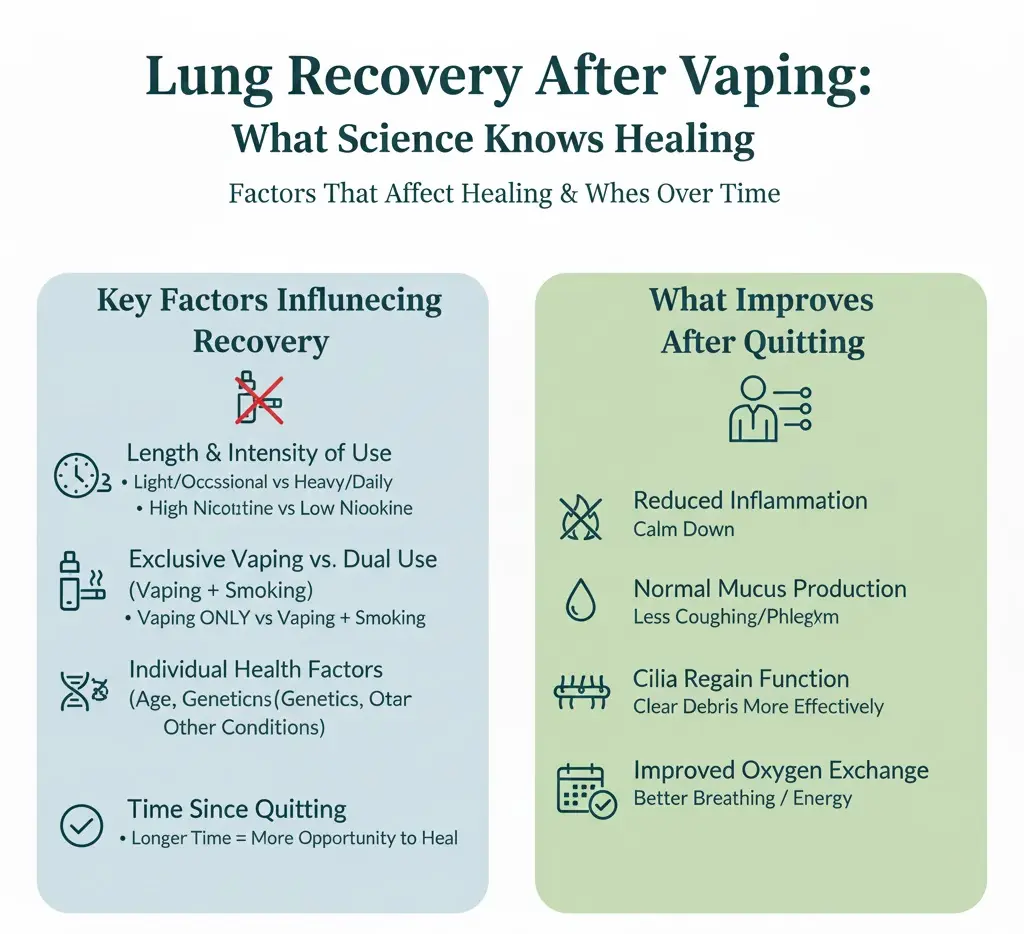
Research shows that the lungs are not static organs. They have natural repair mechanisms, especially in the airway lining. When exposure to inhaled irritants stops, several positive changes can occur over time:
- Inflammation in the airways may gradually decrease
- Mucus production can normalize
- Cilia (tiny hair-like structures that clear debris) can regain function
- Oxygen exchange efficiency may improve
Quitting inhaled substances—whether cigarettes or e-cigarettes—generally allows the lungs to begin a recovery process. However, recovery does not mean complete reversal of all changes, especially after long-term exposure.
How Vaping Differs From Smoking in Lung Impact
Compared with traditional smoking, vaping exposes the lungs to:
- Fewer combustion-related toxins
- No tar or carbon monoxide from burning tobacco
- Lower levels of many known carcinogens
This is why some former smokers who switch entirely to vaping report improvements in breathing and coughing. However, vaping still introduces:
- Nicotine
- Aerosolized chemicals
- Flavoring compounds
- Fine particles that reach deep lung tissue
These substances can still irritate lung cells and trigger inflammatory responses, particularly with long-term use.
Factors That Affect Lung Recovery After 7 Years of Vaping
Lung healing is not the same for everyone. Several key factors play a role:
1. Length and Intensity of Use
Seven years of light, occasional vaping is very different from seven years of heavy, daily use with high-nicotine disposables.
2. Nicotine Strength and Frequency
Higher nicotine levels often lead to more frequent inhalation, increasing overall lung exposure.
3. Exclusive Vaping vs Dual Use
People who vaped instead of smoking often experience better lung outcomes than those who both smoked and vaped.
4. Individual Health and Genetics
Pre-existing asthma, allergies, or lung conditions can slow or limit recovery.
5. Time Since Quitting
The longer the lungs are free from inhaled aerosols, the more opportunity they have to recover.
What Improvements Do Former Vapers Commonly Report?
While individual experiences vary, many people who stop vaping after long-term use report gradual improvements such as:
- Reduced chronic coughing
- Less chest tightness
- Improved exercise tolerance
- Better breathing during physical activity
- Fewer throat and airway irritations
These changes often occur over months, not weeks, and progress may be gradual rather than dramatic.
What Is Still Uncertain
It is essential to be clear: long-term data on exclusive vaping over decades remains limited. Modern e-cigarettes have not existed long enough for scientists to fully assess outcomes such as:
- Long-term lung scarring
- Chronic airway remodeling
- Cancer risk related specifically to vaping
Because of this, health organizations remain cautious. While vaping may be less harmful than smoking, it is not considered harmless, especially for non-smokers.
Bottom Line on Lung Healing
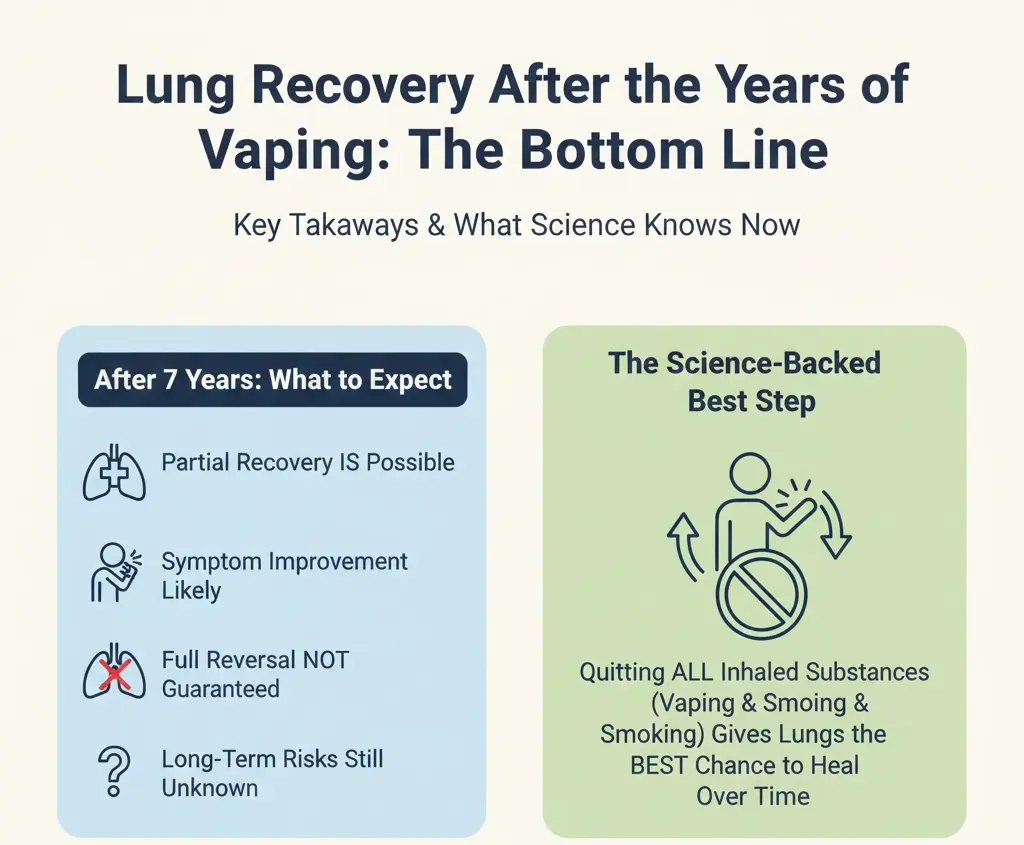
After seven years of vaping:
- Partial lung recovery is possible, especially after stopping
- Improvements in symptoms are common
- Full reversal of all changes is not guaranteed
- Long-term risks are still being studied
The most consistent finding across studies is that reducing or eliminating inhaled exposures gives the lungs the best chance to recover over time.
Who Should Be Especially Cautious With High-Nicotine Disposables
High-nicotine disposable vapes may not be suitable for:
- Non-smokers
- First-time users
- People sensitive to stimulants
- Individuals with heart or anxiety conditions
Signs of excessive nicotine intake include:
- Shakiness
- Nausea
- Headaches
- Trouble sleeping
How to Choose the Right Nicotine Strength
General guidance:
- Heavy smokers → 3%–5%
- Light smokers → 1%–2%
- Non-smokers → 0% recommended
Common Myths About Nicotine in Disposable Vapes
- “Vaping always has less nicotine than smoking” → ❌ Not always
- “More puffs means more control” → ❌ Puff count is misleading
- “Smoother means safer” → ❌ Smoothness often means higher intake
FAQ – Disposable Vape Nicotine
Is 5% nicotine a lot for a vape?
Yes. 5% (50 mg/mL) is considered high and intended mainly for heavy smokers.
How much nicotine is in a disposable vape?
It depends on strength and liquid volume, but many disposables contain hundreds of milligrams of nicotine total.
How much nicotine is in a cigarette vs a disposable vape?
One cigarette delivers about 1–2 mg of absorbed nicotine. A disposable vape can deliver much more over time.
How many cigarettes are 10 puffs of a vape?
Roughly equal to one cigarette, but this varies by device and puff style.
Can lungs heal after 7 years of vaping?
Some recovery is possible, especially after stopping, but long-term effects are still being studied.
See more
What Causes a Burnt Taste in Disposable Vapes? Reasons, Fixes, and Safety Tips
How to Use a Disposable Vape Pen with a Button: A Beginner’s Step-by-Step Guide